
FLORIDA — A new federal housing law could change how manufactured homes are financed and, over time, how some are built.
The 21st Century ROAD to Housing Act, signed into law July 11, raises FHA-insured loan limits for manufactured housing and changes the federal definition of a manufactured home by allowing homes to be built with or without a permanent chassis.
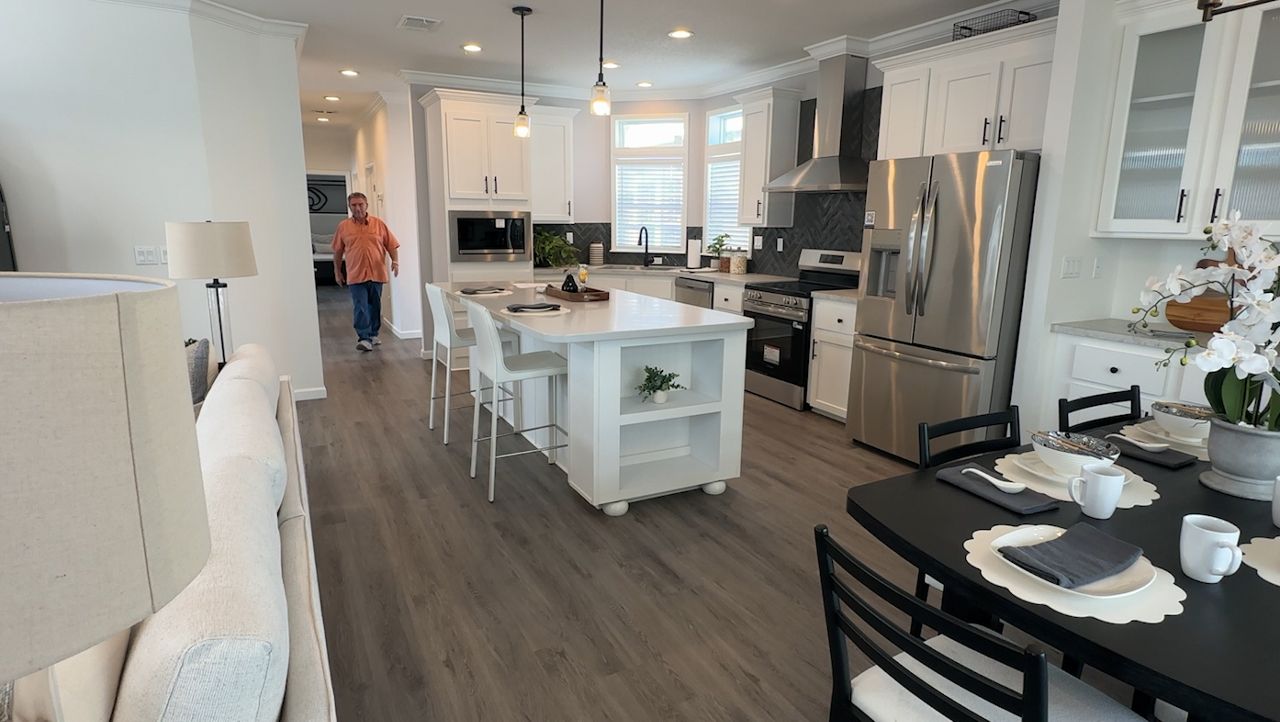
At Jacobsen Homes in Florida, longtime industry veteran Mike Wnek said manufactured housing has changed dramatically since he entered the business in 1978.
“Night and day. Back in ’78, we were building trailers. We were building a new modern manufactured home, but it was still essentially a trailer,” Wnek said. “Today, we build a true manufactured home that is built to codes that meet or exceed all the standard building codes in America.”
Federal manufactured housing standards have evolved over decades, including stronger wind requirements adopted after Hurricane Andrew devastated South Florida in 1992.
Wnek said those changes improved construction standards, but he believes additional regulation has also increased costs.
“Every HUD house built in the state of Florida has been forced to that new construction standard. And that was terrific,” Wnek said. “But then they keep coming back and adding and adding and layering on more regulation.”
The ROAD to Housing Act makes several changes aimed at manufactured housing.
One provision raises FHA-insured manufactured housing loan limits. Those increases took effect with enactment, while HUD is also required to develop a permanent methodology for updating the limits in the future.
Wnek said access to affordable financing remains one of the industry’s biggest concerns.
“I think everything that the government does to help in that arena is spectacular,” Wnek said. “Everything we can do to reduce the cost and increase loan limits for our customers … we’ve got to be treated on par. Today we are ostracized and penalized for being a manufactured home. And typically interest rates are a point or two points or three points higher.”
Another major change removes the requirement that a manufactured home be constructed on a permanent chassis from the federal definition. The chassis is the steel frame beneath the home that supports it during construction and transportation.
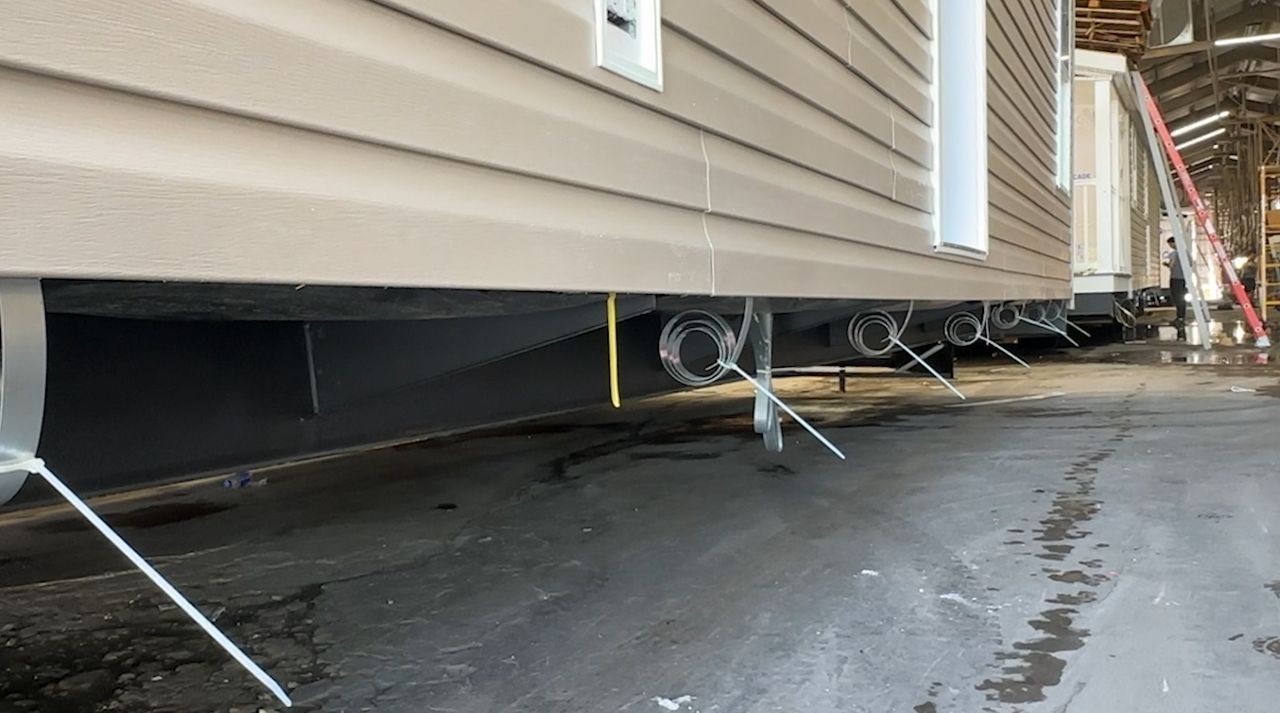
The law directs HUD to establish revised construction and safety standards for manufactured homes built without a permanent chassis. (Spectrum News/Fadia Patterson)
The law directs HUD to establish revised construction and safety standards for manufactured homes built without a permanent chassis. That means the statutory change is now law, but chassis-free HUD-code homes still depend on additional federal standards being developed.
Supporters say removing the permanent-chassis requirement could give manufacturers greater design flexibility, including for homes intended for permanent foundations or some infill developments.
But the change does not allow manufactured homes to be placed anywhere. State and local land-use and zoning rules will continue to affect where manufactured housing can be located.
U.S. Rep. Kathy Castor said Florida will continue to maintain safety and siting requirements while the federal change could reduce some construction-related barriers.
“For manufactured homes in Florida, there are significant requirements that they are safe, that they are allowed in the appropriate areas,” Castor said. “But now this will take away some of that red tape and the requirement for that very expensive chassis system.”
At Jacobsen Homes, Wnek said the factory can produce about 15 homes a day. He said federal policy is only one factor affecting affordability, pointing to financing, inspections and local permitting as continuing costs.
“Just look at permitting and inspection, the things that go on on-site,” Wnek said. “As a percentage of the selling price, it affects manufactured housing more … because it’s a lower-priced product. So the percentage impact is much higher.”
Wnek said the broader goal should be expanding access to housing.
“We need to do everything we can to get as many people as we can into housing, period,” he said.
How much the new federal law ultimately changes the manufactured housing market will depend in part on HUD’s implementation of the new standards and how states and local governments apply their own rules.