
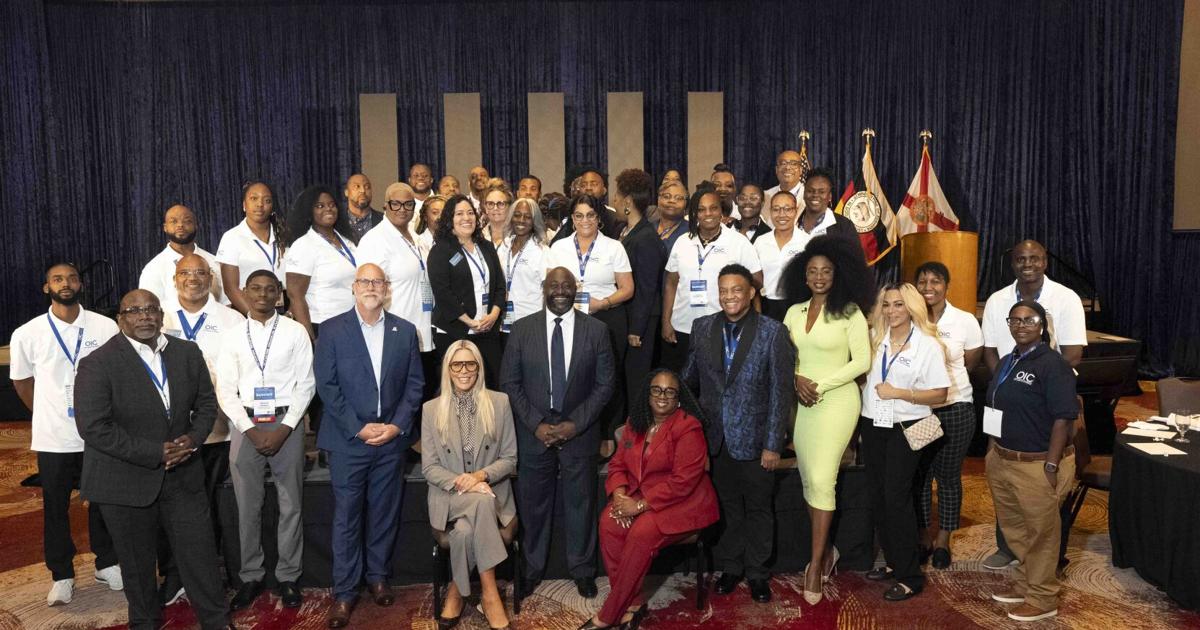
As OIC of South Florida celebrates 25 years, the organization’s leaders are turning their attention to preparing the workforce for the future of the job market. The mission of the organization — to provide training and skill development to underserved youth and adults — has a renewed fervor, addressing the growing need for competent employees in the age of artificial intelligence.
President and CEO Newton Sanon began OIC’s South Florida expansion in 2001 with just himself and a part-time secretary, according to the organization’s website. Since then, the staff has grown to include over 185 individuals in the last 25 years. The organization has two divisions: the first, a nonprofit, and the second, a for-profit enterprise known as OIC Strategic Integration.
“Our tax status is a 501(c)(3), but we’re a bona fide business,” said Sanon. “I recognize the importance of getting the right talent to move our business forward, and how critical that is. So, I just don’t think it’d be appropriate to approach businesses to say, ‘Well, I know he or she doesn’t have the skill set, but can you please just give them a chance?’ It’s not right. That’s not business.”

Newton Sanon is the president and CEO of OIC of South Florida.
(The Echelon Consulting Firm)
Sanon emphasized that the focus of the organization is not to place people in jobs, but to give them the means and the skill set necessary to become contenders in a competitive workforce environment.
The job training offered by the organization focuses on the unemployed, underemployed and unskilled, helping individuals overcome barriers to self-sufficiency and become contributing members of the workforce.
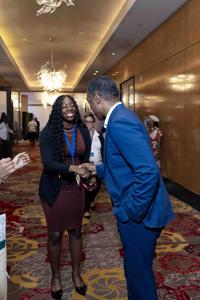
OIC helps their clients network and connect with businesses and professionals from around South Florida.
(The Echelon Consulting Firm)
According to Sanon, OIC’s job placement rates hover between 78 and 85 percent, occasionally reaching as high as 90 percent. Sanon attributes these variations to the “season of the economy.”
“I think the reason we’ve had a fair amount of success is because we tend to make sure that we recognize that the employer is also a customer, and you have to make sure they have what they need,” said Sanon.

Stakeholders from both Miami-Dade and Broward counties attended the 2026 Middle Class Summit.
(The Echelon Consulting Firm)
As the nonprofit expands, however, its mission must continually adapt to the times. Sanon believes that now is the “most dynamic, evolutionary and iterative time in the workforce and the marketplace” — namely because of AI.
“I still think we’re at the relatively early stage of full adoption, especially [among] small businesses,” said Sanon. “Some [small businesses] don’t have capacity, broadly speaking, for full adoption. Yet we know this thing is highly pervasive in terms of where the world of work is going.”

Eugene Pettis is the chairman of the board of OIC of South Florida.
(The Echelon Consulting Firm)
OIC Board Chairman Eugene Pettis highlights the organization’s goal of training individuals for the types of jobs that will be hiring in the future rather than the types of jobs that have provided employment in the past. OIC aims to be ahead of the curve, giving its clients the best and most applicable training in a changing job market.
“The jobs of today are not the jobs that are going to be around in 2030 — the jobs of 2030-35 haven’t been invented in many instances,” said Pettis. “We have to make sure, as the job market gets redefined, being a workforce empowerment entity, we are training people to be valuable to the new marketplace.”
According to Sanon, the average age of those served by OIC of South Florida is 35 years. But the organization also has a Youth and Family Services division that caters to young people aged 10 to 21, hoping to preempt unemployment and provide career awareness planning.

The theme of the 2026 Middle Class Summit was “Imagine. Innovate. Elevate.”
(The Echelon Consulting Firm)
“Training these kids of what the job is today is probably going to be a worthless certification when they get out four years from now,” said Pettis. “We have to recognize the changes, not to forego everything we’ve been teaching, but to modify it in a sense that it has additional skills that make them competitive in the changing world.”
Teddra Orlando is currently the president of OIC’s Youth Leadership Council and a freshman in college. She studies international business as well as computer science and was recently featured as a speaker at OIC’s 2026 Middle Class Summit. She was first introduced to OIC through the organization’s school programs and continued her relationship with them for several years. She credits OIC for giving her exposure to potential career paths.

The two-day summit brought together over 500 business executives, policymakers, workforce innovators, educators and national thought leaders to discuss the pressures facing working families and the future of work.
(The Echelon Consulting Firm)
“They taught us how to build résumés, they showed us how to actually sign up for college, how to do your financial aid properly, manage our money, be interview-ready and have jobs in the future,” said Orlando.
As chairman of the board, Pettis approaches preparing individuals for the job market comprehensively, making a point of the need for partnerships across Miami-Dade and Broward counties.

AI has become a priority in OIC’s training model for the next generation of job holders.
(The Echelon Consulting Firm)
“No one organization is going to be able to meet the demands of tomorrow,” said Pettis. “It’s going to take all of us coming together: the education realm, the workforce entities like OIC, and the marketplace… OIC is very excited to be a part of that transformation and be on the cutting edge of what tomorrow looks like from an employment standpoint.”
From the standpoint of those employed, President and CEO Sanon offers a challenge.
“Now more than ever, people need to pay attention to what’s going on,” he said. “Educate yourselves on the policies that our legislatures are putting forward. Celebrate those who champion the right ones. Engage. Hold accountable. Even offer solutions and partner with those who may not have it right yet… I think our broader society will be better off as a result of it.”