
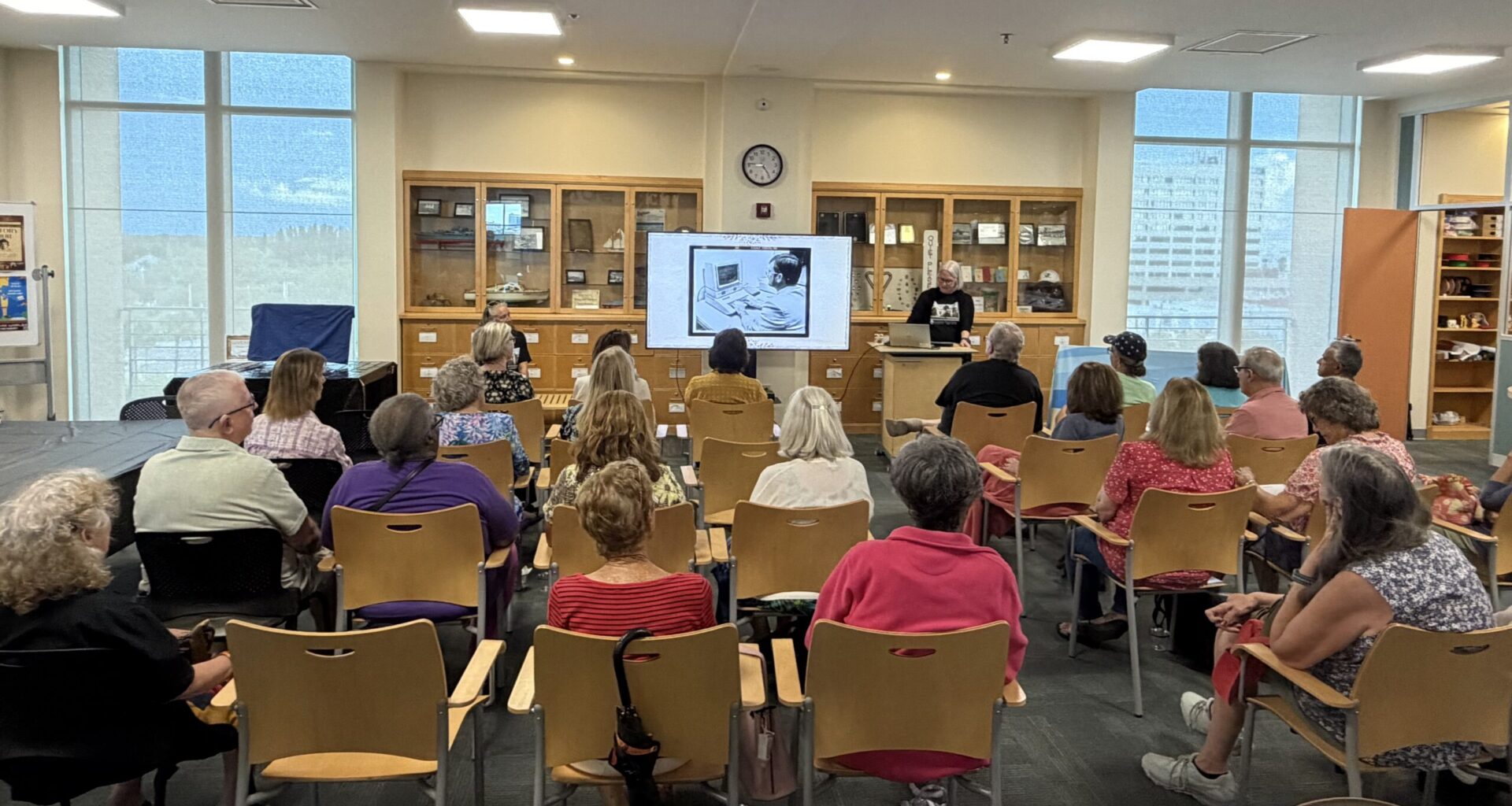
Clearwater’s public library system has a storied history.
It all began in 1911, when the Clearwater Library Association opened a subscription-based library above the Peoples Bank on Cleveland Street. However, over time, the spatial requirements of the service increased.
Prominent businessman Andrew Carnegie donated $10,000 to the City of Clearwater to help build its first public library, which opened in September 1916. Over 2,700 books were available at the time. While the initial structure is no longer standing, the property is now the site of Clearwater’s Main Library.
In recognition of the gift’s anniversary, the Clearwater Public Library System hosted the “Celebrating 110 Years: The Carnegie Legacy Continues” event Monday.
“I think it’s very important for people to know, whether they’ve lived here long-term or are newcomers, the history of their community,” City of Clearwater library director Jennifer Obermaier told the Catalyst. “That’s what libraries do. We promote, curate and preserve local history.”
“We’re just so honored and proud to still be here 110 years later,” she continued. “Libraries have definitely changed over the years. We’ve transformed and evolved our services, but our mission has always remained the same.”
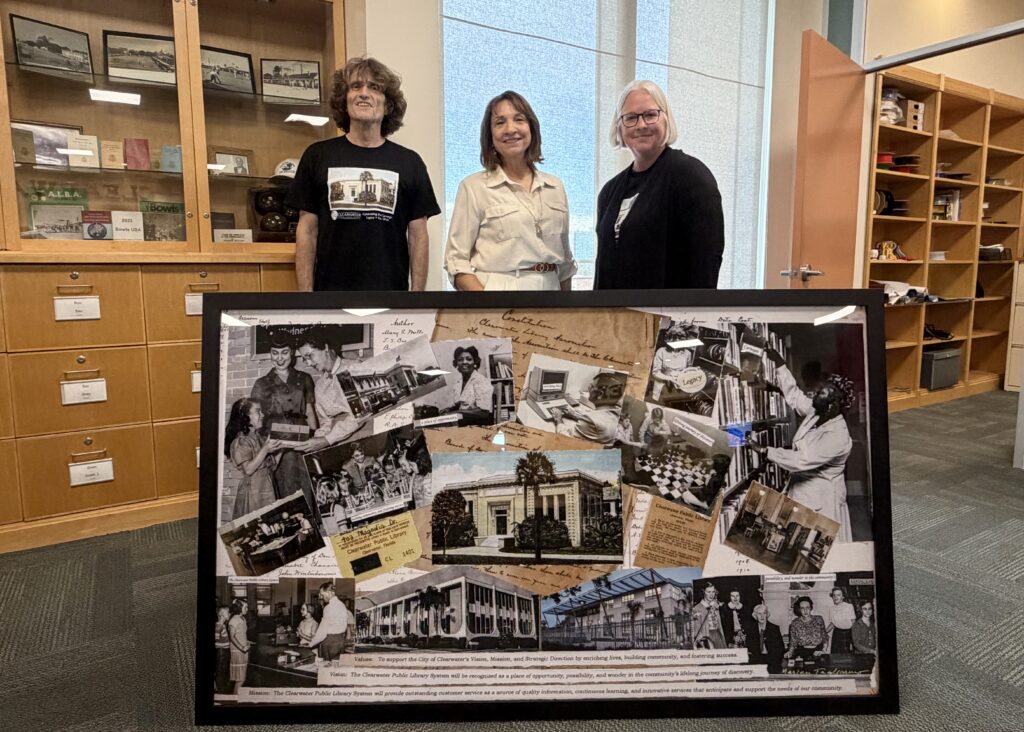
From left, historian Keith Law, artist Marian Tagliarino and City of Clearwater library director Jennifer Obermaier at the Monday celebration. Tagliarino’s collage honors the Clearwater Public Library System’s 110th anniversary.
Historian and librarian Keith Law gave a lecture at the gathering to provide some context on Carnegie’s donation.
Born in 1835 in Dunfermline, Scotland, Andrew Carnegie would eventually move to Pittsburgh. After initially working at a cotton factory and then as a telegraph messenger, he would enter the railroad industry. In 1859, Carnegie would become a division superintendent of the Pennsylvania Railroad.
During this time, he would invest in iron and oil companies, among others. Eventually, Carnegie became involved in the steel industry, where he earned most of his fortune. His organization, the Carnegie Steel Company, would become one of the largest businesses in the country.
While Carnegie’s corporate practices were questionable, Law explained, the entrepreneur became a prolific philanthropist. In the essay “The Gospel of Wealth,” Carnegie discussed his belief that affluent individuals should invest their money into “good works” and give back to society.
The first library Carnegie funded was in his hometown of Dunfermline. Pittsburgh would follow.
“Carnegie absolutely adored libraries,” Law said. “They were exactly his definition of ‘the good work.’ This was because he himself was eternally grateful to a guy called Colonel James Anderson, who was a successful man back in his adopted hometown of Pittsburgh, and Anderson had had quite a large private library with 200 to 400 volumes.”
Working boys were allowed to visit Anderson’s library for free.
“This is where Carnegie got most of his education,” Law explained. “He never forgot it. Carnegie earnestly believed that everybody should have the chance to do that, but they shouldn’t have to rely on being lucky enough to live near to a Colonel Anderson. By 1911, there were about 3,000 public libraries in the United States. Carnegie had funded 1,500 of them. He went on to do over 3,000 libraries worldwide.”
Here’s how it worked. Carnegie had a system in place to ensure that the libraries he funded would survive long-term.
Cities and towns would have to approach the Carnegie organization first and representatives would have to demonstrate a need for a public library. Municipalities would have to provide a building site, pay staff and maintain the community asset. Additionally, a local government had to use public funds to operate the funded library, not just private donations. Perhaps most importantly, the service had to be free to all.
These conditions ultimately led Clearwater leaders to pursue a different path. The existing subscription-based library ceased operations and the city’s public library system was established.
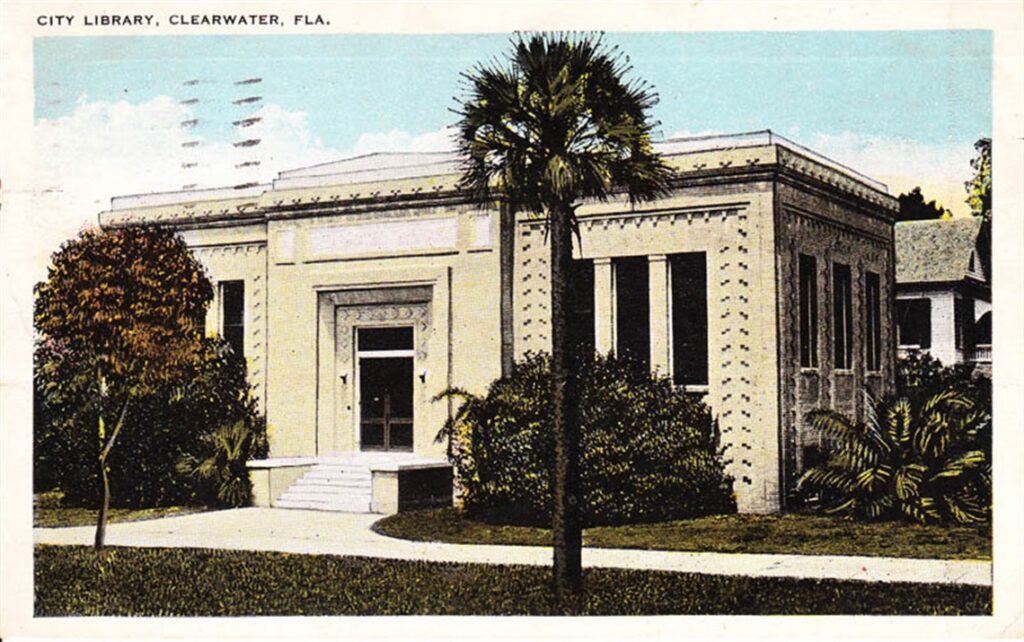
A postcard of the original Clearwater library that Andrew Carnegie funded. Image: City of Clearwater
Law emphasized the work of the Clearwater Library Association.
“They put in a lot of their own time and donated a lot of their own money to this effort,” he said. “When it got too much, they found a way to ensure that it could be continued thanks to the philanthropy of Andrew Carnegie. This wasn’t easy.”
In honor of the United States’ 250th anniversary, the Carnegie Foundation awarded the Clearwater Public Library System a $10,000 grant. Obermaier and her team decided to use some of these funds to commission a collage from local artist Marian Tagliarino to commemorate the 110th anniversary.
“The wonderful thing was the library had a lot of information,” Tagliarino explained. “I came to the Main Library and there’s three collages downstairs. I looked at all of those. What stood out to me was they featured predominately men. A lot of women are involved with libraries and running libraries everyday. So, I knew that was something that would be important to me.”
“The way it worked was that they had certain images they wanted in the collage,” she added, “and then they gave me an entire collection of hundreds of images that I was free to use and add to it. So, what was important to me was really the composition.”
Since the piece is “busy,” Tagliarino decided to incorporate diagonals, circles and triangles to help group sections.
“If you don’t know your history, you’ll repeat it,” she said. “A library is so foundational in a community. It’s a safe place and a place of education, harmony and community. I think by them recognizing this anniversary, it really grounds it. It says ‘we are important, we have been important and what these people before us did was really important and we are not going to forget that.’”