
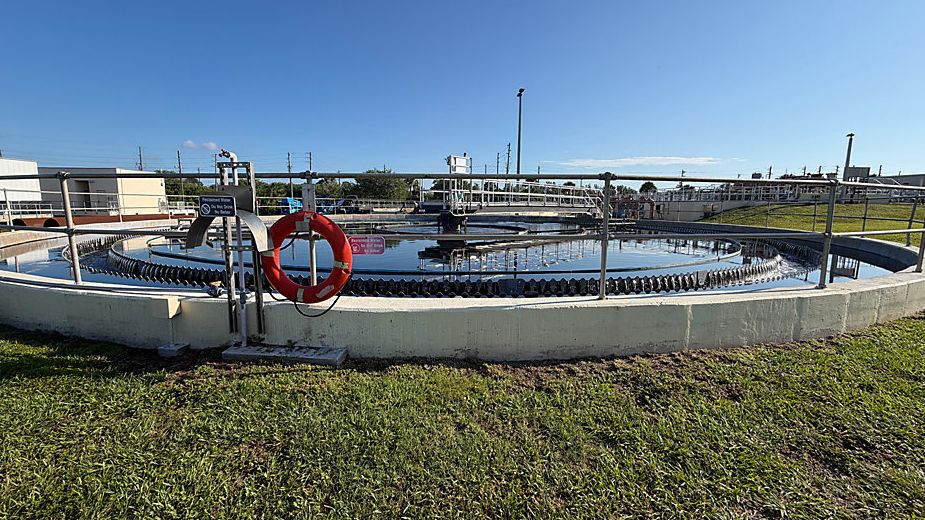
LARGO, Fla. — The city of Largo’s wastewater treatment plant is undergoing a study to make it more resilient in future major storms.
The plant survived the 2024 hurricanes, but those storms exposed the need for upgrades.
That’s why recent funding was approved to see what could be strengthened.
The plant serves about 100,000 residents, treating about 11 million gallons a day.
Largo’s wastewater treatment plant manager, Kyle Hicks, called the plant important.
“Collecting and treating wastewater keeps it out of the rivers, keeps it out of the water system, keeps it out of the groundwater and it really has made massive differences in the last 100 to 200 years in terms of public health and environmental pollution,” Hicks said.
He is protective of the place, especially after 2024.
“Helene was especially unique because we’d seen a lot of rain before, you know, Debby and Milton gave us a lot of rain, but we’d never seen storm surge like that,” Hicks said.
Water, the very thing the plant is designed to manage, affected their operations.
“That was eye-opening to us, and so that was six to eight feet of surge, and we were thankfully able to keep operating. It didn’t overtop the tanks,” Hicks said.
Shutting down was the last resort.
That’s why Hicks applauded his team for keeping the plant running.
“Everybody’s locked into their homes and so to be able to flush their toilets, use the sink, all of those kinds of things, that water has to go somewhere,” he said.
USF professor and wastewater expert Sarina Ergas recognized Florida’s investment to wastewater infrastructure, but noted there’s still work to do.
“Florida’s really led the nation in a lot of ways. The downside of that, looking at it now, is a lot of those facilities that were built in the 60s and 70s are using really old technology, and there are ways that scientists and engineers have developed new ways of treating wastewater that require less land area, that are more energy efficient, that don’t require a lot of chemicals that are easier to operate for the operators,” Ergas said.
In order to keep up, Largo’s city commissioners approved $173,000 over the summer to conduct a storm flooding and surge resiliency study, hiring a St. Petersburg engineering consultant.
Hicks said minor tweaks have already been made, but he said that more needs to be done.
“What this study will really help us do is figure out what the right way to elevate those components are. If there are barriers or storm doors that we can put in place to protect the buildings and facilities out here,” he said. “We’ve got a lot of electrical buildings out here that thankfully didn’t take the water during Helene, but if the storm surge had been another three or four feet, it would have started to get into those buildings.”
The study intends to make them stronger, preparing for worst-case scenarios.
The goal is to do this while maintaining risk reduction, feasibility and costs.
“I think the major outcomes of the study and project, as a whole, that we’d be happy with, are to leave the plant better for the next generation of operators and maintainers,” Hicks said.
Hicks said the engineering consultant expects to wrap up its analysis in the coming weeks. This will pinpoint the plant’s most vulnerable spots and create specific recommendations.
Those recommendations could mean elevating equipment, improving drainage or adding flood barriers to help the plant against another major storm.