
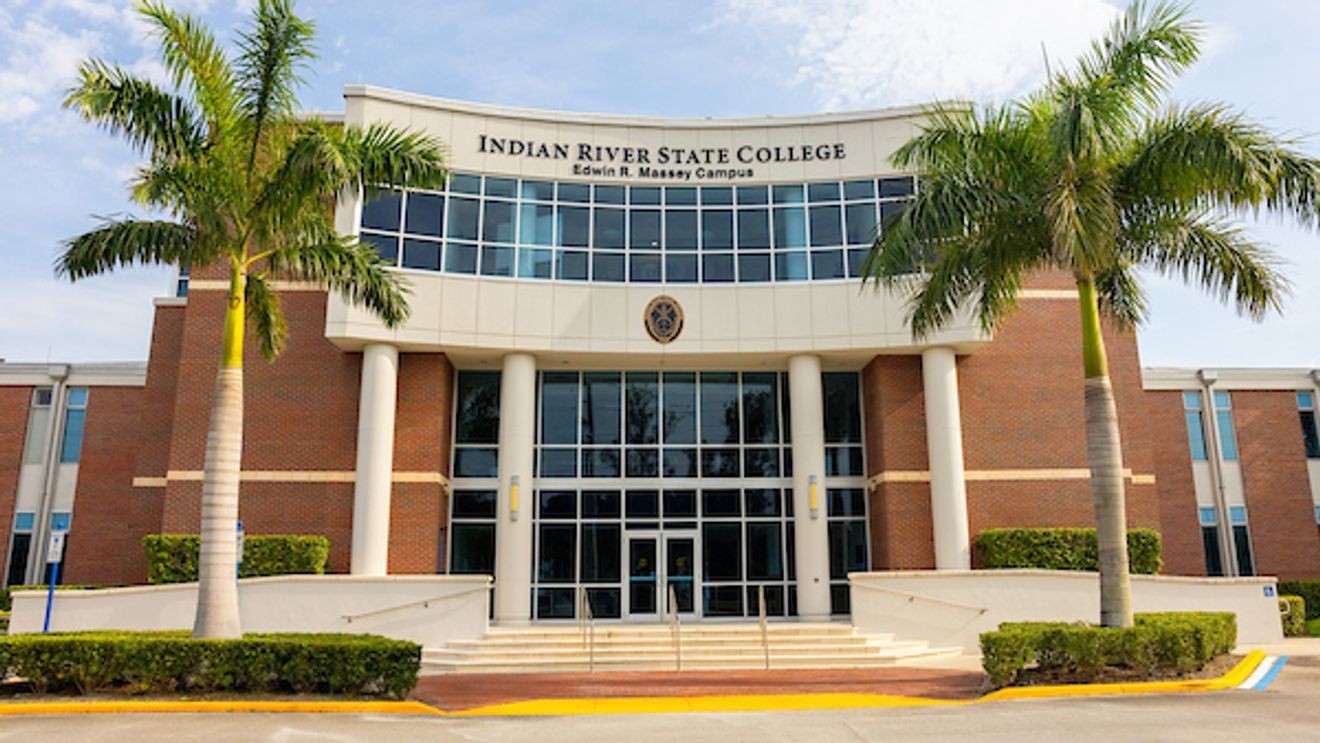
FORT PIERCE, Fla. (CBS12) — A federal judge ruled that a Muslim former Indian River State College adjunct professor can take his religious discrimination claim to trial, finding a jury could conclude his religion played a role in the college’s decision to fire him over an unverified terrorist-watchlist claim.
The ruling keeps one Title VII religious discrimination claim alive against Indian River State College. It dismisses Syed Ammar Ahmed’s race and national origin discrimination claim and grants qualified immunity to IRSC President Timothy Moore on Ahmed’s First Amendment retaliation claim.
Ahmed and IRSC also reached an impasse during court-ordered mediation earlier this month, according to a report filed Sept. 9. The parties, their attorneys and a satisfactory party surrogate participated in the Zoom mediation Sept. 2, but did not reach a settlement.
Ahmed, a Muslim American whose parents were born in Pakistan, began teaching as an adjunct professor at IRSC in June 2019. He was fired March 1, 2024, hours after the college’s then-chief of security received information about a 2020 online article that accused Ahmed of making threats years earlier and linked his Muslim advocacy affiliations to terrorism.
The court order says the security chief could not identify who called him with the information or say for certain whether the caller was affiliated with law enforcement. The chief later told IRSC’s human resources department Ahmed was in a terrorist database, though the court said it was undisputed Ahmed was not in such a database or on a watchlist.
U.S. District Judge Donald M. Middlebrooks wrote that the events leading to Ahmed’s firing “can only be characterized by rash decision making on uncertain foundations.”
The order says an HR official wanted the college to investigate before terminating Ahmed. But Moore, who had sole decision-making authority, fired Ahmed the same day the allegation surfaced.
AHMED VS TRUSTEES OF IRSC MOTION FOR SUMMARY JUDGEMENT ORDERPDF previewPreview PDF
Ahmed was cleared as a threat by April 5, 2024, according to the order, but was not reinstated until August. His teaching certification expired in May, and he was not able to resume teaching until January 2025, the court said.
See also: Sebastian Police identify man killed in officer-involved shooting; FDLE investigating
Ahmed alleges he lost wages and teaching opportunities and suffered reputational harm and emotional distress.
Middlebrooks found Ahmed did not present sufficient evidence to send his race and national origin claim to trial. The judge also ruled Moore was protected by qualified immunity on the First Amendment retaliation claim. Ahmed withdrew a civil conspiracy claim.
But the judge found the remaining religious discrimination claim presents a factual question for a jury.
The ruling cites the alleged terrorist-database rumor, Ahmed’s “Arab-sounding name,” the speed of his termination and the lack of an investigation as circumstances a jury could consider in deciding whether religious bias was a motivating factor.
The judge stressed that the case is a close call and that college leaders face real security concerns. Still, he wrote that employment decisions cannot be a “frenzied rush to judgment” based on perceived threats tied to an employee being Muslim, or assumed to be Muslim.
CBS12 previously reported that Ahmed’s lawsuit alleged the college fired him based on false information that he appeared in an FDLE Homeland Security database.