
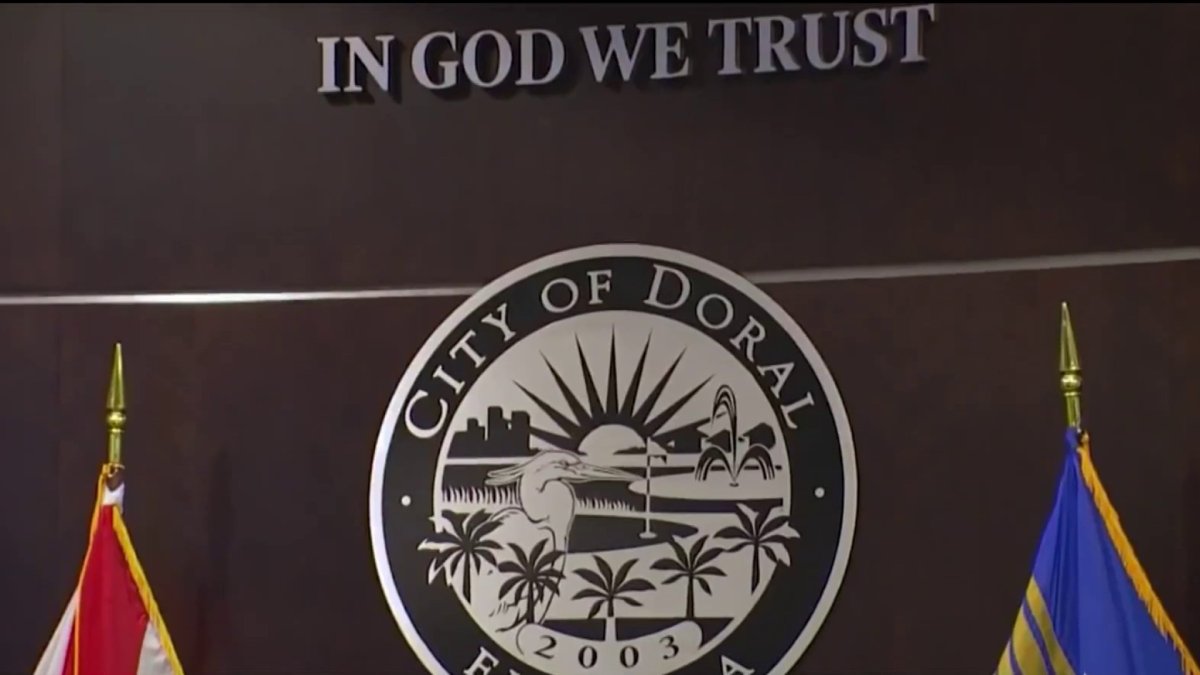
South Florida leaders are calling on the city of Doral to end ICE partnership amid concerns over immigration enforcement.
The group says rescinding the city’s 287(g) agreement would help restore trust between residents and local police, but federal immigration operations could continue in Doral.
A group of South Florida Democratic leaders and community members gathered outside Doral City Hall Tuesday, calling on city officials to end their partnership with U.S. Immigration and Customs Enforcement.
The group says increased immigration enforcement in Doral has created fear among residents and is hurting local businesses. They are urging Mayor Christi Fraga and the City Council to rescind the city’s 287(g) agreement with ICE, which allows designated local police officers to perform certain federal immigration enforcement functions.
The Doral City Council voted unanimously in April 2025 to authorize the partnership.
Former congressman Joe Garcia was among those criticizing the city’s decision.
“It’s undignified what these leaders did,” Garcia said.
South Miami Mayor Javier Fernández also attended the press conference, pointing to his own city, which never entered into a 287(g) agreement with ICE. He said Doral should reconsider its decision to participate in the program.
“Hard-working people, people that run our small businesses, cook our meals, care for our elderly, and build our homes, people who are contributing to our local economy did not have to be removed from our communities with our help,” Fernández said.
Speakers at Tuesday’s press conference argued that the city’s partnership with ICE has contributed to growing concerns among residents amid increased immigration enforcement operations.
Thomas Kennedy, a policy consultant with the Florida Immigrant Coalition, said ending the agreement would help rebuild trust between residents and local law enforcement.
“Most importantly, it would restore trust between community members and the police,” Kennedy said. “There are a ton of people that are not reporting crime right now because they think they are going to be the target of enforcement.”
However, when asked whether they could identify specific instances of Doral police using the 287(g) agreement to assist ICE, the speakers could not provide any examples.
“I can’t tell you of specific incidents where Doral police have worked with ICE, but what I can tell you is there’s been several incidents in Florida alone where people that have called the police have been detained and ended up in immigration detention centers,” Kennedy said.
The 287(g) program allows ICE to delegate certain immigration enforcement responsibilities to trained state and local law enforcement officers under federal supervision. Depending on the agreement, those responsibilities can include exercising limited immigration authority during routine police duties or participating in ICE-led operations.
Rescinding Doral’s agreement would end the additional immigration enforcement authority granted to its officers through that partnership. However, it would not prevent federal ICE agents from continuing to conduct immigration operations in the city.
It also remains unclear whether Doral police officers have exercised their immigration enforcement authority under the program.
NBC6 has reached out to the City of Doral to find out whether officials are considering rescinding the agreement and whether Doral police officers have used their authority under the program.
The city has not yet responded to those questions.