
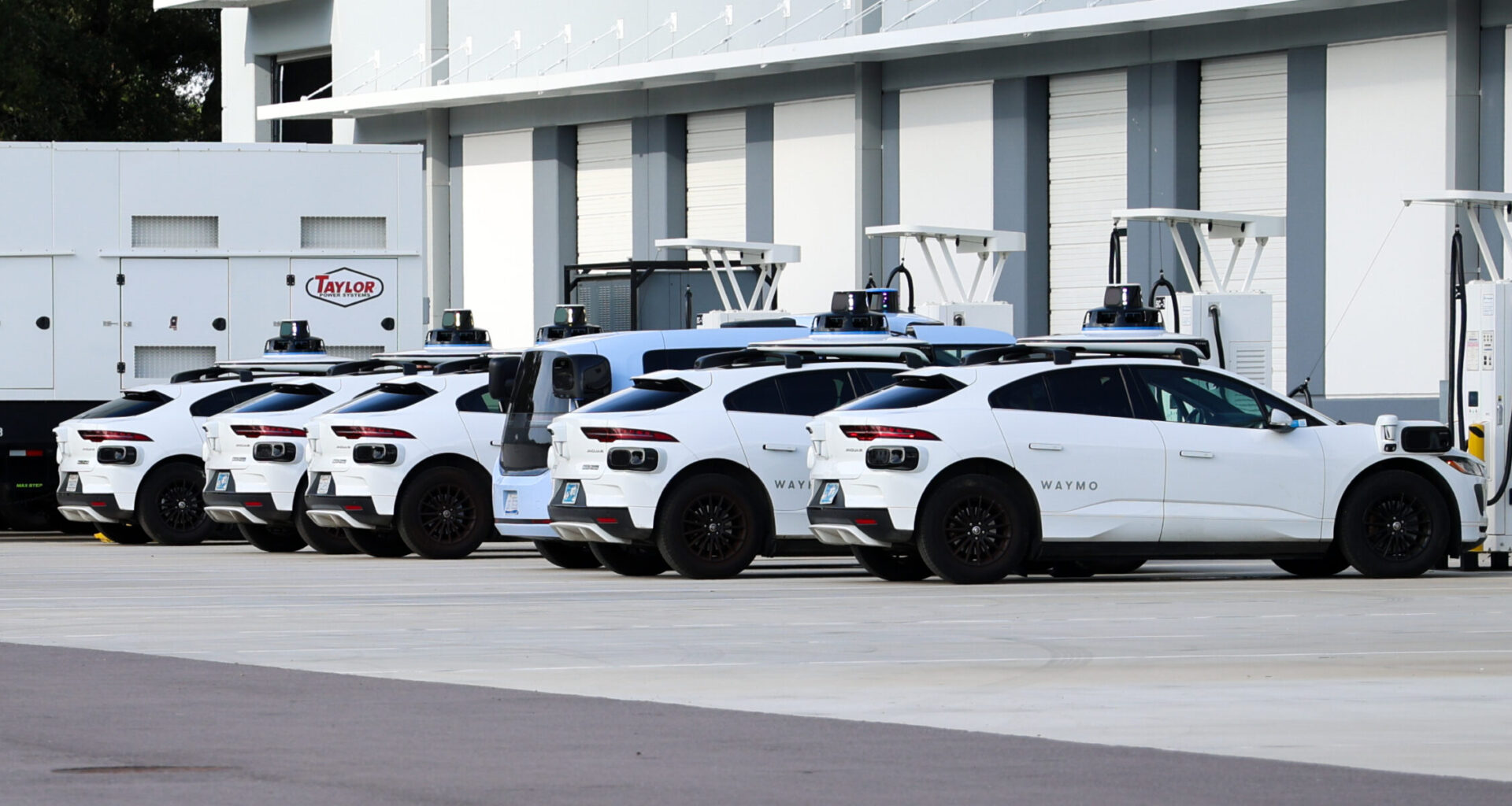
 Waymo, a driverless ride-hailing service, became available in about 50 square miles of the Tampa Bay area on Sept. 1. ORACLE PHOTO / ALEXIS CARUTHERS
On Sept. 1, 2026, Waymo launched public, fully autonomous trips in Tampa.
Waymo is a fully autonomous robotaxi company with a fleet of cars fully run by AI – meaning there are no physical drivers in any Waymo you can take.
Currently, driverless services are only available to select customers, with more passengers being added in the coming months, according to Waymo.
This comes after an initial period during which the services were available only to employees.
Because of the phased rollout, anyone interested must download the app and join the waitlist for access, according to Waymo.
Waymo is not the only autonomous service seeking to expand into Tampa. Tesla announced Tampa would get access to its driverless robotaxi service in July 2026.
So far, Waymo’s services are limited to about 50 square miles, including areas such as Hyde Park, Ybor City and Temple Crest, according to Fox 13.
It has not yet been expanded to Temple Terrace or the University of South Florida.
The robotaxi company first rolled out its fully driverless services in Phoenix, Arizona, on Oct. 8, 2020, before expanding to cities such as Orlando and Los Angeles.
On July 8, 2026, Waymo announced its autonomous launch in Tampa along with three other cities: Denver, Las Vegas and San Diego, for a total of 14 cities as of September 2026.
Similar to the process in other cities, Waymo conducted months of driver-supervised testing in the Tampa area before transitioning to fully driverless services, according to Waymo.
Testing started in December 2025, with human drivers mapping the area and traffic patterns. Local law enforcement was trained on how to properly interact with the robotaxis.
Related: USF police urge students to follow traffic laws after campus incidents
Despite extensive testing, many are still concerned about the safety of driverless taxis.
A July 2026 study by the Insurance Institute for Highway Safety found that Waymo had a 68% lower crash-involvement rate than human drivers in the same area, though the study applied only to vehicles operating driverlessly during the study period.
Isabelle Sandridge-Suarez, a senior majoring in management, said that she was not aware of Waymo’s Tampa expansion and, as a Tampa Bay native, is nervous about the future.
She said that Tampa residents should not have to face Waymo concerns.
“I already have trust issues with driving next to distracted drivers, but imagine the driver quite literally is not even there,” said Sandridge-Suarez. “Waymo is a scary reality that I do not think Tampa drivers should have to accept.”
Sandridge-Suarez finds herself walking through the Tampa area daily, leading to more concerns about pedestrian safety.
”I am very concerned that a Waymo may run over [me] or someone I care about because they have hit people before,” Sandridge-Suarez said. “I think getting run over by a Waymo on the way to class would make college life harder.”
Related: Why some USF students are turning to cats for companionship
Emma Anderson, a senior history major, also said she struggles to trust the driverless system.
“Personally, my biggest qualm with [Waymo] is that I do not trust their maps/piloting system,” she said. “When I use programs to navigate when I’m driving, I’ve noticed that sometimes maps will direct me to make a turn where I am not allowed to, as is notated by signage that I am able to see, but the computer can not.”
Anderson said she believes driving in Tampa is already difficult, and that Waymos would make the streets less safe and more congested.
“I’ve also seen videos of Waymos turning down one-way streets going the wrong way or turning into oncoming traffic,” Anderson said. “If that is the kind of maps system these cars are running on, I absolutely do not trust them.”
She said she does not see Tampa natives’ lives getting easier due to Waymo and does not know any students or residents who intend to use the product.
“They’re offering a service that already exists in various forms, and I think they just clog up the road,” she said. “I don’t really like the idea of a Waymo being anywhere near me.”
Anderson said existing rideshare apps like Uber and Lyft are already effective, while also providing jobs.
Manuel Monasterio, a sophomore majoring in biomedical sciences, said this is a major concern.
“I don’t particularly like Waymo as they take jobs away from humans, as Uber is one of the main ways people make money when struggling to get a job,” Monasterio said.
Monasterio said this is a risky time for Waymo to expand, as many people rely on driving jobs in the current job market.
“The job market nowadays is in an especially bad position where more people than ever are struggling to find work,” he said. “So to make ends meet, many people resort to things like Uber, DoorDash [and] Postmates.”
Monasterio also said he believes Waymo will make life harder for Tampa residents.
“I think Waymo makes people’s lives harder [by] having more cars on the roads [that] are using new technology, which could have failures [that] harm those in the area.”
While Waymo’s company goals are to “create a sustainable, efficient transportation ecosystem,” some students at USF don’t think they’re up for the task.