
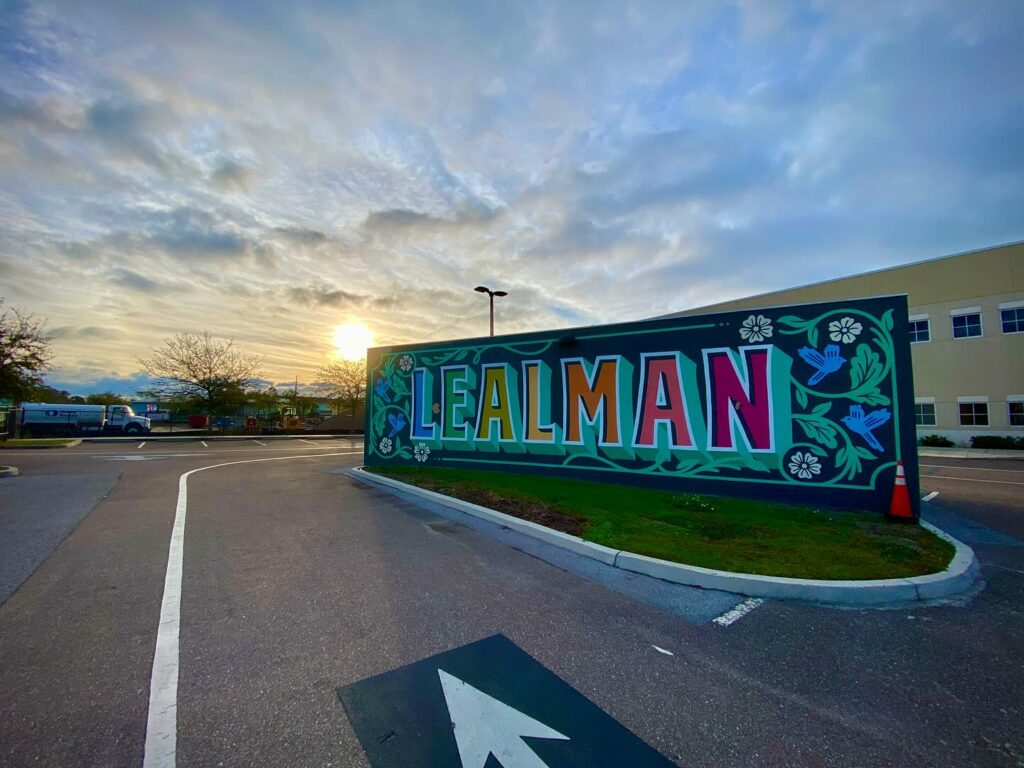
Pinellas County is putting more than $18 million into Lealman next year to tackle long-standing problems with housing, drainage, sidewalks and commercial redevelopment.
County commissioners unanimously approved the Lealman Community Redevelopment Area’s fiscal year 2027 work plan and budget Thursday. The $18.32 million plan is about $2.75 million larger than this year’s budget, with $13.2 million set aside for capital projects.
Lealman covers roughly 2,525 acres of central Pinellas County. St. Petersburg borders much of the community to the south and east, Pinellas Park sits to the north and Kenneth City to the west, but Lealman itself is not part of a municipality.
Pinellas created the redevelopment area in 2015 after finding conditions of blight and economic distress. The county’s original plan identified aging housing, struggling commercial corridors and infrastructure that was deficient or nonexistent in parts of the community. Planners said those shortcomings made it harder to attract private investment and left Lealman without the same level of infrastructure found elsewhere in Pinellas.
The new budget tackles several of those problems at once, beginning with Joe’s Creek Industrial Park.
Pinellas has budgeted about $4.3 million for infrastructure and potential property acquisition in the industrial district. Stormwater, transportation and utility improvements are under consideration, while a separate $2.58 million project would replace and enlarge a drainage culvert beneath 34th Street North to reduce flooding and improve stormwater capacity.
The work is still early. County staff is researching possible property purchases for the broader industrial improvements, and the culvert project is in preliminary design. The aim is to remove infrastructure problems that have made redevelopment more difficult in an area the county has identified as an important employment center.
Housing is another major piece of the plan, and county officials can already point to results from earlier investment. Through a partnership with Habitat for Humanity Tampa Bay Gulfside, the CRA has contributed about $1.51 million toward 49 new single-family homes sold to families earning less than 80% of area median income. Those homes now carry a combined appraised value of roughly $17.7 million, according to county records.
The county plans to put another $1.5 million into that program next year. It is also increasing support for people who already own homes in Lealman through a residential improvement program that offers qualifying homeowners up to $15,000 for exterior work.
Interest in that program has grown after the county began advertising it more aggressively. Staff has processed 93 applications this year, with 23 under contract and another 19 under review.
Businesses are getting a similar push. The county expanded its commercial improvement program earlier this year, allowing matching assistance of up to $100,000 for qualifying work on buildings and sites. The changes were designed to help businesses pay for improvements tied to changes of use, stormwater requirements and broader property upgrades.
The work plan also puts money into the smaller pieces of infrastructure that shape daily life in the neighborhood. The FY27 plan includes $2 million for “Linking Lealman,” an initiative focused primarily on closing sidewalk gaps and improving connections between neighborhoods and community destinations. A new alley-grading program will target routes used by heavy vehicles, while separate funding will support pedestrian and bicycle connections through signage, beautification and other improvements.
The CRA is keeping another $2 million available for land purchases tied to redevelopment or public uses. It is also contributing $1.76 million toward hardening the gymnasium at the Lealman Exchange, part of a roughly $5.4 million project intended to expand the community center’s ability to serve as an emergency shelter. The county is seeking a $2.61 million federal grant for that work, with another $1.03 million expected from other county funds.
The redevelopment effort is funded largely through tax increment financing, which sends a portion of the growth in property tax revenue generated inside the district back into Lealman. Rising property values have increased that revenue and given the county more money to reinvest in the area.
Commissioners approved the work plan and budget together without discussion or opposition. The county’s long-term goal is to improve the conditions that have held back private development, strengthen the tax base and make Lealman more economically self-sustaining.
Earlier in the meeting, Commissioner Kathleen Peters put Lealman’s economic challenges more plainly, calling it “probably the poorest community we’ve got.”