
WEST PALM BEACH, Fla. (CBS12) — A renter who uses a fake ID, doctored pay stub or forged bank statement to get the keys to a Florida home could face a felony charge starting next week.
A new Florida law taking effect Oct. 1 creates the crime of “fraudulent entry of a residential dwelling unit,” targeting people who knowingly use false identity information, counterfeit documents or another person’s identity to secure a residential rental.
The new law comes as Palm Beach County investigators pursue a Wellington woman in an alleged rental-fraud scheme authorities say relied on fake identities, altered financial documents and bounced payments to secure luxury homes.
The measure, HB 1293, makes that conduct a third-degree felony. It also gives landlords a new path to end the lease without allowing the tenant an opportunity to correct the violation.
Under the law, a person may not enter into and take possession of a rental home by knowingly and willfully:
Making a materially false written statement about their identity on a rental application.Giving a landlord forged, fictitious or counterfeit documents, including a driver license, identification card, bank statement or pay stub.Impersonating someone else whose name is used on the rental application.
The law applies to fraud used to obtain and take possession of the rental. It does not make it a crime for a tenant who truthfully qualified for a lease to later fall behind on rent or have a routine disagreement with a landlord.
For an alleged fraudulent entry, the law treats the violation as non-curable lease noncompliance. A landlord may give written notice terminating the rental agreement, and the tenant has seven days from delivery of the notice to leave.
The law does not authorize landlords to bypass Florida’s legal eviction process or physically remove a tenant themselves. It says a landlord may pursue the lease termination regardless of whether criminal proceedings have begun.
The legislation could address conduct similar to the allegations in the case of Wellington resident Turia Grantlin, 54.
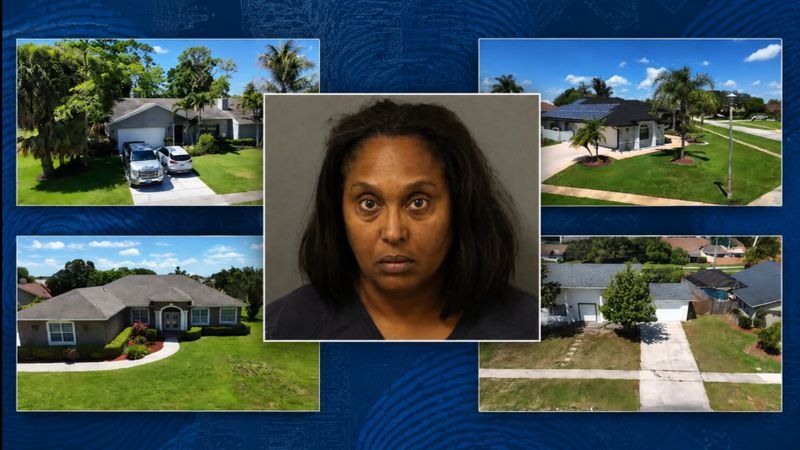
A Wellington woman is accused of carrying out a years-long rental fraud scheme that investigators say targeted landlords across Wellington. According to the Palm Beach County Sheriff’s Office, 54-year-old Turia Grantlin is accused of using fake identities and fraudulent financial documents to secure leases for luxury homes then never paying rent. (WPEC)
As CBS12 News previously reported, Palm Beach County sheriff’s investigators accused Grantlin of using fake identities, false pay stubs, fake credit reports, altered bank statements and fraudulent background checks to qualify for leases on high-end Wellington homes.
Investigators alleged Grantlin moved between properties and repeated the scheme nearly 30 times over two decades. They said she was named in at least 26 eviction cases dating to 2005.
In one case, deputies alleged Grantlin submitted screenshots showing more than $23,000 in bank accounts to lease a Meadow Wood Drive home, though investigators later determined the accounts held less than $10. The homeowner reported losses of more than $32,000, according to the sheriff’s office.
Grantlin was arrested in April and remains jailed without bond, facing organized fraud and worthless-check charges. The allegations have not been proven in court.
West Palm Beach attorney Spencer Kuvin, who is not connected to Grantlin’s case, previously told CBS12 that Florida’s 2024 anti-squatter law can be difficult to use when an occupant has signed a lease — even if the lease was allegedly obtained under false pretenses.
The new law specifically addresses that scenario. It allows a landlord to issue a seven-day termination notice for fraudulent entry, whether or not a criminal case has begun.
The Florida Senate’s bill analysis says the new statute is aimed at people who use false statements about identity, false identity documents, false financial documents or impersonation to fraudulently gain possession of a home.
Jean Taveras, broker-owner of Palm Beach Gardens-based Atlis Property Management, wrote in a blog post that the new law adds consequences after the fact but does not replace careful screening by landlords.
“The landlords who benefit most from this law are the ones who were already screening properly and just got a stronger deterrent added on top,” Taveras wrote in a recent analysis of the law. “The ones who were cutting corners on verification are the ones who need to fix that before October, not after.”
Florida lawmakers approved the bill unanimously, with the House voting 110-0 and the Senate voting 34-0. Gov. Ron DeSantis signed it June 12.