
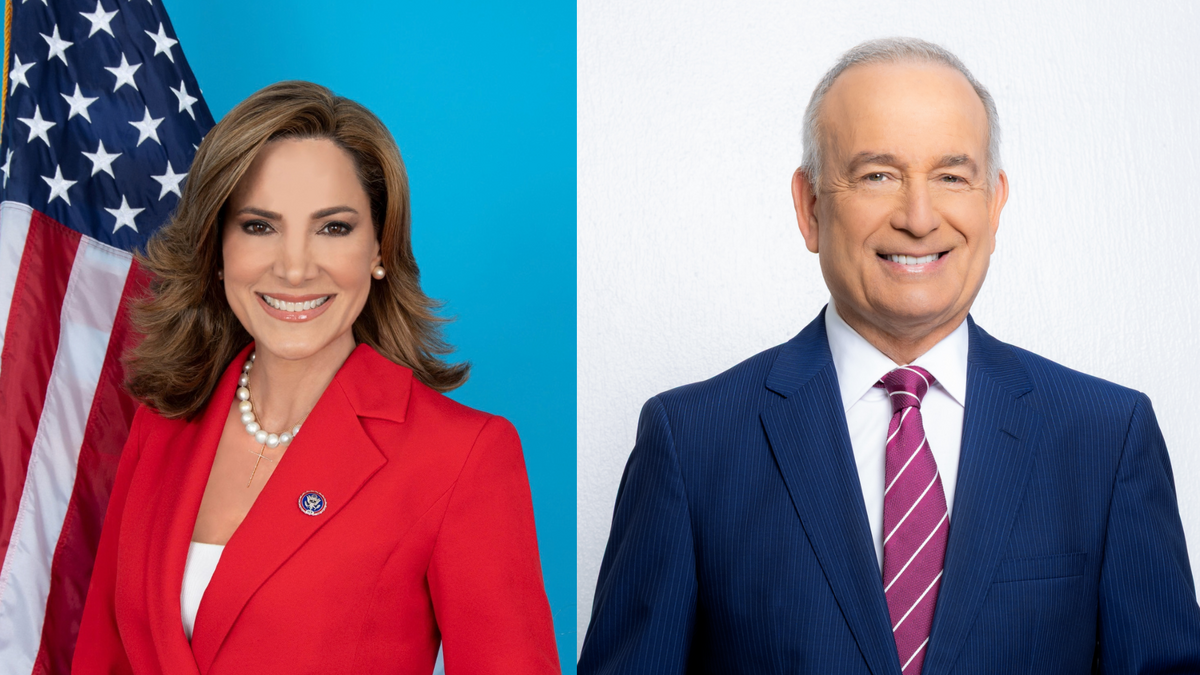
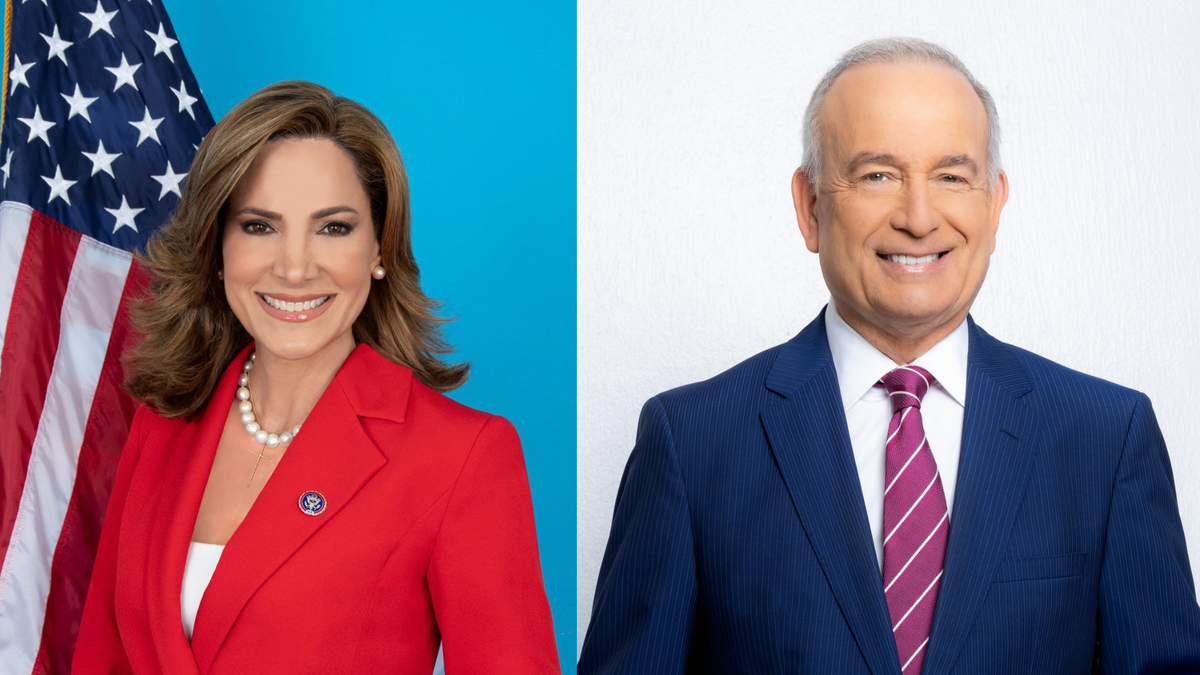
Republican U.S. Rep. Maria Elvira Salazar and Democratic challenger Eliott Rodriguez
Provided
In the November election for U.S. House District 27, Republican U.S. Rep. Maria Elvira Salazar is seeking a fourth term against retired Miami TV anchor Eliott Rodriguez.
Although the district leans red, this race is expected to be competitive, and it is about more than just this seat — it’s about holding President Donald Trump accountable on issues like tariffs, the Iran war, the weaponization of the federal government and mass deportations. Rodriguez, a Democrat, is better suited to do that than Salazar, who’s endorsed by Trump, though she broke with him recently on deportations.
A Cuban-American running in a district that covers areas like Little Havana, Westchester and the city of Miami, Rodriguez, 70, understands the issues after covering South Florida for CBS News Miami for 25 years. He first became publicly involved in politics last year, when he joined a South Florida campaign called Keep Them Honest that called out Miami’s GOP representatives, including Salazar, for not doing enough to oppose Trump’s immigration policies.
He said he decided to run because of the high cost of living, saying his own children cannot to afford living in South Florida. If elected, he would like to establish a low-interest mortgage program for qualified home buyers, especially young families, and would vote to restore healthcare subsidies under the Affordable Care Act.
He said ICE (U.S. Immigration and Customs Enforcement) has “become a paramilitary group for Donald Trump” and it “needs to be reformed drastically.” He supports extending Temporary Protected Status, revoked by the administration, for Venezuelans and Haitians.
“I am not for open borders, and I believe in a strong border security, and I believe that we should abide by the rules of the game, but not by picking up people in courtrooms when they’re trying to do everything by the rules, grabbing them and taking them… to third countries,” Rodriguez told the Herald Editorial Board in July.
He’s against the war in Iran and said it’s another reason he’s running — “because we need to stand up to this president.” He wants the U.S. House to “force a vote in Congress on this war.”
Salazar, by contrast, voted against ending the war in September. In March, she told Bloomberg TV that the war would not be “a long-term conflict” and that congressional approval was not needed “because we are not entering into a war.” Her predictions were wrong: The conflict has stretched for almost seven months, raising gas prices.
On immigration, Salazar clearly understands that Trump’s immigration policies are hurting her standing with Hispanics who make up 73% of District 27. She recently ran an ad denouncing the president on mass deportations. She’s also pushing her immigration reform bill, the Dignity Act, which has little chance of becoming law, and voted to extend Haitian TPS (the measure hasn’t cleared the U.S. Senate).
Salazar has been more outspoken on immigration than her Miami Republican counterparts, U.S. Rep. Carlos Giménez and Mario Diaz-Balart. But she “proudly voted YES” to pass Trump’s signature Big Beautiful Bill, as she wrote on social media last year. She wrote the bill “cuts taxes, protects your tips and overtime.” Here’s what else it did: it cut food stamps and Medicaid and turned ICE into the highest-funded federal law enforcement agency, with the largest increases in funding to detain and deport migrants, according to the Brennan Center for Justice.
Salazar declined to meet with the Herald Editorial Board unless we explained to her why we endorsed her Republican primary opponent in August (she did not meet with us then either). In a letter to the Editorial Board, which she posted on X, she wrote that the Board, despite saying the Dignity Act was a “good start” on immigration reform last year, endorsed her opponent, V. Michael Arias, who criticized the bill as “amnesty.” She said that endorsement “raises serious concerns about the standards, consistency, and rigor of the process.”
She also cited some of her achievements: passing bills to require digital platforms to remove nonconsensual intimate images and AI-generated deepfakes, and to strengthen the federal government’s ability to recover money stolen through fraudulent COVID-relief schemes. She said she brought more than $89 million back to her district.
Salazar is good about listing her accomplishments, but she’s shown she’s averse to defending her record under questioning.
The Herald endorses ELIOTT RODRIGUEZ for U.S. House District 27.
BEHIND THE STORY MORE Who decides the political endorsements?
In advance of local and state elections, Miami Herald Editorial Board members interview political candidates, as well as advocates and opponents of ballot measures. The Editorial Board is composed of experienced opinion journalists and is independent of the Herald’s newsroom. Members of the Miami Herald Editorial Board are: Amy Driscoll, editorial page editor; and editorial writers Isadora Rangel and Mary Anna Mancuso. Read more by clicking the arrow in the upper right.
What does the endorsement process look like?
The Miami Herald Editorial Board interviews political candidates to better understand their views on public policy and how their policies will affect their constituents. Board members do additional reporting and research to learn as much as possible about the candidates before making an endorsement. The Editorial Board then convenes to discuss the candidates in each race. Board members seek to reach a consensus on the endorsements, but not every decision is unanimous. Candidates who decline to be interviewed will not receive an endorsement.
Is the Editorial Board partisan?
No. In making endorsements, members of the Editorial Board consider which candidates are better prepared to represent their constituents — not whether they agree with our editorial stances or belong to a particular political party. We evaluate candidates’ relevant experience, readiness for office, depth of knowledge of key issues and understanding of public policy. We’re seeking candidates who are thoughtful and who offer more than just party-line talking points.