
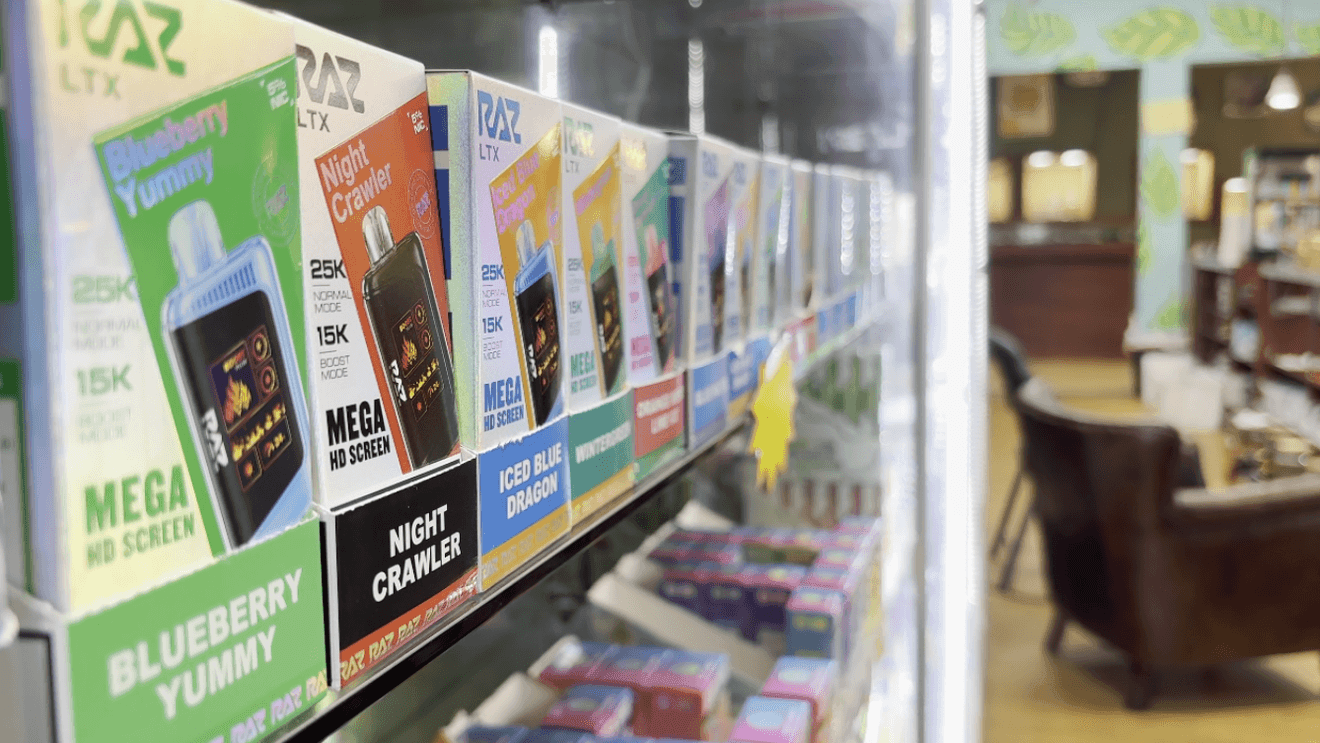
TALLAHASSEE, Fla. — U.S. Sen. Ashley Moody is pressing President Donald Trump’s nominee to lead the Food and Drug Administration to crack down on illicit vaping products, including devices she says are coming from China and designed to attract children.
But for Florida retailers, deciding what can legally reach store shelves means navigating both federal and state systems.
During a Senate confirmation hearing Thursday, Moody questioned FDA commissioner nominee Dr. Heidi Overton about enforcement against unauthorized vaping products.
“We don’t know what is in them,” Moody said. “We know that they’re specifically designed to be attractive to kids.”
Moody pointed specifically to devices incorporating features such as games. Her office says she wants stronger federal action against illicit nicotine products entering the United States from China.
FDA records illustrate the divide between the number of vaping products available to consumers and those that have received federal authorization.
The agency says just 48 e-cigarette products are currently authorized to be lawfully sold in the United States. FDA cautions that authorization does not mean those products are safe or “FDA approved.” All tobacco products carry risks and can be addictive.
Florida has created another layer of regulation aimed specifically at disposable nicotine devices considered attractive to minors.
FOX49 analyzed the Florida Attorney General’s current Nicotine Dispensing Device Directory and counted 640 products on the list.
State law allows regulators to consider characteristics including bright colors, cartoon characters, food or candy branding, concealability and other features that may uniquely appeal to minors when determining whether a device belongs on the directory.
Florida has also stepped up enforcement.
In February, Attorney General James Uthmeier announced that state and local agencies seized 2,183 contraband vapes during four Vape Task Force operations in Clermont, Ocoee, Okaloosa County and Milton.
Gary Eliasov-Hodes, who works across the retail, distribution and manufacturing sides of the vaping industry with Cloud Brands Zone 7, said keeping nicotine products away from children is a concern shared by responsible retailers.
“At the end of the day, as someone who’s in the retail and stuff, I don’t want a kid or someone who is not of age getting their hands on a product,” Eliasov-Hodes said. “It is not something that we should have in the hands of young adults.”
He said retailers use Florida’s prohibited-product information when deciding what to stock. He also pointed to devices that previously incorporated cartoon characters, saying he welcomed Florida taking action against those products.
But Eliasov-Hodes argues the broader industry is already subject to significant safeguards.
“We’re checked on the products that we bring in,” Eliasov-Hodes said. “Our products go through testing and they go through labs before they’re put on the shelves. They’re not just sold to the consumer with no thought behind the process.”
FDA determines which new e-cigarette products may legally be marketed nationwide. Florida’s directory creates an additional state mechanism targeting certain disposable nicotine devices considered attractive to minors.
Moody argues federal regulators still need to move more aggressively against illicit products, particularly those entering from China.
For retailers in Tallahassee and across Florida, that leaves the challenge of navigating both systems while regulators at the state and federal levels decide how much further enforcement should go.