
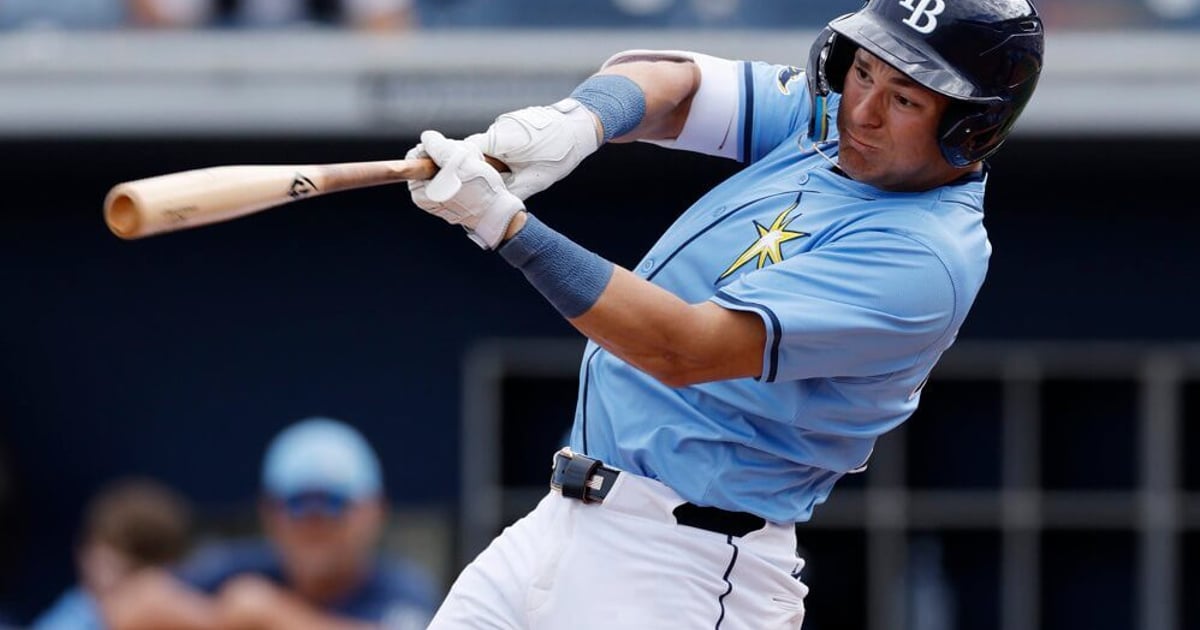
Few organizations have built their identity around player evaluation and development as completely as the Tampa Bay Rays.
Under President of Baseball Operations Erik Neander, Tampa Bay has continued to operate with a philosophy that places enormous value on identifying players whose skills can be developed beyond what their acquisition cost might suggest. Whether those players arrive through the draft, international market, trades, or less-heralded transactions, the Rays have consistently built depth by finding talent and then giving their development staff an opportunity to maximize it.
Dynasty Baseball: 2026 Tampa Bay Rays Top 20 Fantasy Baseball Prospects
That depth is not accidental.
The Rays have constructed an interconnected baseball operation in which scouting, research and development, performance science, technology, and traditional player development all contribute to the same objective. For dynasty fantasy managers, that makes Tampa Bay an especially important organization to monitor. A prospect entering the Rays system may not always carry the loudest scouting profile, but organizational context matters here. Tampa Bay has repeatedly demonstrated a willingness to experiment, make adjustments, and find specific developmental paths capable of turning intriguing tools into major-league production, as you’ll see in the Rays’ Top 20 fantasy baseball prospects ahead.
The organization also remains remarkably active in the trade market. Neander and his front office have shown a willingness to move established major-league players, acquire prospects before their value peaks, and continually reshape the roster and farm system. That creates an environment where the organization’s prospect hierarchy can change quickly—and where players acquired from other systems deserve immediate reevaluation.
The 2026 season offered another illustration of that philosophy. Tampa Bay entered the year with Baseball America ranking its farm system fifth in baseball, marking a ninth consecutive preseason in the top 10. Even after using significant prospect capital at the trade deadline to strengthen a contending major-league roster, the organization retained meaningful depth throughout the system.
For dynasty managers, that’s the important takeaway.
The Rays don’t simply collect prospects. They create opportunities for players to improve, increase their value, and eventually become useful major-league pieces. Not every Tampa Bay prospect will become a fantasy asset, and the organization’s roster flexibility can occasionally make projecting future roles difficult. But when the Rays identify a player they believe they can develop—particularly one with underlying athleticism, bat speed, power, plate-discipline traits, or unusual pitching characteristics—it is worth paying attention.
Neander and his staff have earned that attention.
In dynasty leagues, where identifying tomorrow’s breakout before everyone else can be the difference between acquiring a player cheaply and paying full market price six months later, Tampa Bay remains one of the organizations where development itself should be considered part of a prospect’s value.
So, let’s begin with our countdown of the Rays’ top 20 prospects.
Jadher Areinamo | SS/2B (ETA 2027)
Areinamo began his career in Milwaukee’s organization after signing out of Venezuela and eventually landed with Tampa Bay through the 2025 Danny Jansen trade. His offensive game is driven by an aggressive mentality, quick hands, and enough pop to punish mistakes rather than merely slap the ball around the field.
There is sneaky fantasy usefulness here because Areinamo can provide some power from the middle infield. The complication is his approach: he doesn’t draw many walks, leaving less margin for error when the hits aren’t falling.
At this stage, he’s more intriguing in deep dynasty formats than shallow ones. If Areinamo learns to force pitchers into the zone more frequently, his combination of contact and developing pop could turn him into a useful fantasy middle infielder.
Andreimi Antunez | SS (ETA 2029)
Tampa Bay brought Antunez into the organization by signing him out of Venezuela during the 2024 international period. He’s still years away, but the young infielder has begun turning his athletic ingredients into actual production rather than surviving purely on projection.
Antunez has already shown an encouraging mix of contact, patience, emerging power, and stolen-base ability. That’s an appealing collection of skills for fantasy purposes because it gives him several different paths toward value instead of requiring one carrying tool to become elite.
The developmental runway remains long, so patience is required. Still, a future middle infielder capable of contributing homers and steals without becoming a batting-average liability makes Antunez a worthwhile name for managers in deeper prospect leagues.
Xavier Isaac | 1B (ETA 2027)
The Rays surprised some observers when they selected Isaac 29th overall in the 2022 MLB Draft, but the reason for their conviction became obvious once his power surfaced in professional baseball. He’s a massive left-handed hitter capable of producing the type of exit velocity that can change a fantasy matchup with one swing.
Isaac’s dynasty evaluation revolves around a simple question: how much contact will accompany the thunder? Strikeouts remain part of the package, but when he connects, there aren’t many hitters in Tampa Bay’s system capable of matching his home-run potential.
Because first base provides little positional cushion, Isaac has to hit his way into an everyday role. If the contact rate proves adequate, however, he’s one of the few players in this organization with a realistic path toward 30-homer seasons.
Ben Blair | RHP (ETA 2028)
Tampa Bay selected Blair 49th overall in the second round of the 2026 Draft out of Liberty University. His background is particularly interesting because he spent significant time as an infielder before concentrating on pitching, leaving the Rays with an athletic arm who may still have considerable development ahead.
Blair attacks from an unusual lower slot, giving hitters a different visual challenge than they see from conventional right-handers. His ability to throw strikes is already encouraging, and there’s enough variety in the arsenal to envision him turning a lineup over multiple times.
He’s a good dynasty target for managers willing to buy pitching prospects before their profiles are completely polished. Blair has starter traits now, and further physical or pitch development could raise the strikeout ceiling considerably.
Santiago Suarez | RHP (ETA 2027)
Suarez originally signed with Miami out of Venezuela before the Rays acquired him from the Marlins in the November 2022 deal involving Xavier Edwards and JT Chargois. Since changing organizations, he has developed into one of Tampa Bay’s steadier young starting-pitching prospects.
Rather than overpowering hitters with one outrageous weapon, Suarez succeeds by commanding his repertoire and making hitters work on his terms. His ability to limit free passes gives him a better chance of remaining in a rotation than many young pitchers with louder but less predictable stuff.
That makes him more floor than fireworks from a dynasty perspective. Suarez may never become an enormous strikeout producer, but starters who can supply innings without wrecking WHIP have plenty of fantasy value.
Anderson Brito | RHP (ETA 2028)
Brito entered professional baseball with Houston after signing out of Venezuela, then came to Tampa Bay in the December 2025 three-team trade involving Brandon Lowe. The Rays acquired a relatively compact right-hander whose pitches arrive with considerably more force than his frame might suggest.
His fastball can overwhelm hitters, while the breaking stuff supplies another route to strikeouts. The challenge is harnessing everything consistently enough to handle a starter’s workload, especially after physical issues interrupted his 2026 season.
Brito is the type of pitching prospect who can produce a huge return on a relatively inexpensive dynasty investment. Starting remains the jackpot outcome, but his raw stuff is good enough that a late-inning bullpen destination could still produce fantasy value.
Slater de Brun | OF (ETA 2029)
Baltimore selected de Brun 37th overall in the 2025 Draft, only to send him to Tampa Bay several months later in the Shane Baz trade. Wrist surgery delayed the beginning of his Rays career, but it didn’t erase the qualities that made him such an appealing young center-field prospect.
De Brun isn’t built around towering home-run projections. His fantasy game starts with controlling at-bats, putting the baseball in play, and creating havoc once he reaches base, with his speed capable of becoming a legitimate category booster.
How much power develops will determine his eventual ceiling. Even modest pop could be enough if the on-base ability and wheels survive the climb, making de Brun particularly appealing in OBP leagues and formats that reward stolen bases heavily.
Daniel Pierce | SS (ETA 2029)
The Rays selected Pierce 37th overall in the 2025 Draft out of Mill Creek High School in Georgia. Tampa Bay bet on an athletic shortstop with considerable room to mature physically, giving dynasty managers a prospect whose eventual offensive identity hasn’t been fully established.
His early professional performance has contained both encouraging flashes and the expected growing pains. Pierce can drive the baseball harder than a stereotypical glove-first teenage shortstop, but he’ll need to tighten his swing decisions and make more consistent contact as the pitching improves.
This is a prospect to evaluate over years rather than months. If the hit tool catches up with his physical gifts, Pierce has enough athleticism and offensive projection to eventually contribute across several fantasy categories.
Taj Marchand | SS (ETA 2030)
Tampa Bay used the 33rd overall selection in the 2026 Draft on Marchand, taking the South Carolina high-school shortstop as another long-term investment in athletic position players. His amateur résumé was highlighted by remarkable contact numbers and an ability to control at-bats against prep competition.
The attraction goes beyond simply avoiding strikeouts. Marchand generates impressive bat speed and has room to add strength, creating the possibility that a contact-oriented foundation eventually grows into legitimate home-run production.
He’s nowhere near a finished product, which makes this a patience play for dynasty managers. But hitters who combine contact aptitude with physical projection can become extremely valuable before they reach the upper minors, and Marchand has the ingredients for that type of ascent.
Jose Urbina | RHP (ETA 2028)
Urbina originally signed with Minnesota before Tampa Bay acquired him in the February 2024 trade that sent Manuel Margot to the Twins. Since joining the Rays, his fastball has remained the centerpiece of a profile that offers considerably more upside than his name recognition might suggest.
Velocity gives Urbina a weapon capable of generating strikeouts, but the secondary pitches and command will determine whether he’s eventually trusted every fifth day. His 2026 work at High-A demonstrated both sides of that equation: plenty of missed bats accompanied by stretches where efficiency escaped him.
Dynasty managers should view him as an upside arm rather than a safe rotation projection. If Tampa Bay can sharpen the supporting arsenal, Urbina has the raw material to become much more interesting than a back-end starter.
Ty Johnson | RHP (ETA 2027)
Johnson was originally a 15th-round selection by the Cubs in 2023, then joined Tampa Bay in the July 2024 Isaac Paredes trade. His development since the deal has made him another example of the Rays extracting substantial pitching upside from an arm acquired elsewhere.
At 6-foot-6, Johnson creates uncomfortable at-bats with extension and a fastball-slider combination that can pile up swings and misses. The slider is especially important because it gives him a legitimate finishing pitch rather than forcing him to survive exclusively with velocity.
His proximity to Tampa Bay separates him from many pitchers farther down this ranking. Johnson has a reasonable path toward starting, with a power-relief role providing an alternative if his complete repertoire doesn’t quite hold up through six innings.
Austin Overn | OF (ETA 2027)
The Orioles drafted Overn in the third round in 2024 out of USC, and Tampa Bay acquired him in the December 2025 Shane Baz blockbuster. Speed and center-field defense were already prominent pieces of his profile, but his offensive growth has turned him into something much more interesting for fantasy managers.
Overn can flat-out run. That creates legitimate stolen-base upside, but what changed his dynasty outlook in 2026 was the emergence of enough extra-base damage to prevent pitchers from simply attacking him without consequence.
There is still swing-and-miss to monitor, and reaching base frequently enough will determine whether his speed becomes a fantasy weapon or merely an impressive scouting tool. If the bat holds, Overn possesses the ingredients for double-digit homers with 30-plus steals, a combination that can be enormously valuable.
Jacob Melton | OF (ETA 2027)
Houston selected Melton 64th overall in the 2022 Draft out of Oregon State, and the Rays obtained him in the December 2025 three-team Brandon Lowe deal. He arrived in Tampa Bay’s organization much closer to the majors than most players in this countdown.
Melton’s fantasy attraction comes from having legitimate power and legitimate speed rather than relying entirely on one category. He can drive balls out of the park and create value on the bases, while his ability to handle center field should help generate opportunities for playing time.
Strikeouts have always added some volatility, and at his age there isn’t as much projection remaining as with Tampa Bay’s teenage hitters. Still, managers looking for near-term production should pay attention: 20 homers and 20 steals are conceivable during a productive MLB season.
Brody Hopkins | RHP (Just made his MLB Debut)
Hopkins entered pro ball as a sixth-round Seattle selection in 2023 before Tampa Bay acquired him in the July 2024 Randy Arozarena trade. The former two-way player has since climbed rapidly, reaching Triple-A and eventually receiving his first Major League opportunity in September 2026.
Few pitchers in the organization can match the nastiness of Hopkins’ best sequences. His fastball has premium velocity, and his cutter and breaking ball can make hitters look helpless when he’s landing everything. Unfortunately, locating those pitches consistently remains the central battle.
That creates an unusually wide range of fantasy outcomes. Better command could unlock a strikeout-heavy fantasy starter; persistent wildness could push him toward relief. Either way, the arsenal is too explosive to dismiss.
Taitn Gray | 1B (ETA 2029)
The Rays drafted Gray in the third round of the 2025 Draft out of Dallas Center-Grimes High School in Iowa. He entered professional baseball with considerable offensive projection, and his 2026 performance accelerated the timetable for dynasty managers to start paying attention.
Gray already shows the ability to produce hard contact while handling professional pitching at a young age. There is physical strength in the swing, but he isn’t simply selling out for home runs, giving him a chance to develop into a more complete hitter than the typical young first-base prospect.
The defensive position means the offensive standard will be high. That’s the risk. The reward is a young hitter whose combination of contact and growing power could eventually support a middle-of-the-order fantasy profile.
Cooper Flemming | SS/3B (ETA 2029)
Tampa Bay selected Flemming in the second round of the 2025 Draft out of JSerra Catholic High School in California. His professional ascent has been rapid enough that he has gone from an interesting prep selection to one of the premier young infielders in a loaded organization.
Flemming’s swing gives him a chance to hit for average without sacrificing all of his impact. He’s already capable of driving balls into the gaps, and his 6-foot-3 frame leaves open the possibility that some of today’s doubles become tomorrow’s home runs.
That’s an exciting dynasty foundation. Whether he ultimately plays shortstop, second base, or third matters less for fantasy than the development of his power. If that final ingredient arrives, Flemming could become a high-average infielder with 20-homer potential and enough speed to help rather than hurt.
Nathan Flewelling | C (ETA 2028)
Tampa Bay selected Flewelling in the third round of the 2024 Draft out of St. Joseph High School in Alberta, Canada. He wasn’t one of the biggest names in that draft class, but his offensive development has rapidly changed the way the baseball world views him.
The left-handed swing contains legitimate damage. Flewelling can drive the baseball over the fence rather than merely providing acceptable offense for a catcher, and his willingness to take walks gives him another route toward fantasy production. Swing-and-miss remains the obvious pressure point.
Catching prospects require patience, but the payoff can be enormous when one develops into a middle-of-the-order hitter. Flewelling has a plausible path toward becoming a 20-plus homer catcher with useful on-base production, giving him considerable value in two-catcher dynasty leagues.
Caden Bodine | C (ETA 2027)
Bodine was Baltimore’s 30th overall pick in the 2025 Draft out of Coastal Carolina, but the Orioles quickly made him part of the package Tampa Bay received in the December 2025 Shane Baz trade. He has done little since changing organizations except make that acquisition look increasingly significant.
What separates Bodine is how difficult he is to strike out. He’s a switch-hitter who consistently gets the barrel into the hitting zone, and that contact foundation allows his developing power to play without requiring an all-or-nothing approach.
That skill set is extremely attractive at catcher. Instead of hoping for enough home runs to compensate for a damaging batting average, dynasty managers can dream on a backstop capable of helping average or OBP while supplying useful pop. His proximity to the majors only increases the appeal.
Theo Gillen | OF (ETA 2028)
The Rays selected Gillen 18th overall in the 2024 Draft out of Westlake High School in Texas. Tampa Bay initially drafted him as a shortstop before moving him to center field, where his athleticism has allowed the offensive side of his game to become the main attraction.
Gillen has developed into the rare prospect who can potentially affect almost every offensive fantasy category. He controls the barrel, reaches base, runs extremely well, and has begun driving the baseball with considerably more authority as his body matures.
That’s the blueprint for a fantasy star if everything translates. Gillen doesn’t need to become the league’s premier home-run hitter; a future combining strong averages, 20-plus homers and 25-30 steals would make him an impact dynasty asset at a remarkably young age.
Make sure to check out all of our 2026 MLB organizational Prospect Rankings!
Grady Emerson | SS (ETA 2029)
Tampa Bay used the second overall pick in the 2026 MLB Draft to select Emerson out of Fort Worth Christian High School in Texas. He entered the organization with an unusually advanced offensive reputation for a prep hitter and immediately became one of the centerpiece talents in the Rays’ farm system.
Emerson’s greatest strength may be that his fantasy ceiling doesn’t depend on one extreme tool. The left-handed swing gives him a chance to hit for average, his frame provides room for additional power, and he’s athletic enough to contribute on the bases while developing at shortstop.
The distance from the majors creates unavoidable risk, but few prospects in this organization offer such a complete offensive blueprint. If Emerson develops anywhere near the optimistic end of his range, the eventual package could feature plus batting averages, strong on-base numbers, 20-plus home runs, and useful stolen bases from a premium infield position. That’s the kind of ceiling worth building around in dynasty leagues.
Final Thoughts
The Rays remain one of dynasty baseball’s most compelling organizations because development can change a prospect’s trajectory quickly. This system offers an appealing mix of high-upside teenage hitters, athletic middle infielders, category-impacting speed and intriguing arms, with Grady Emerson and Theo Gillen providing legitimate star-level ceilings at the top.
Tampa Bay’s willingness to trade aggressively also means the hierarchy is rarely static, making this a farm system dynasty managers should monitor closely rather than simply revisit once a year.
Fantrax is one of the fastest-growing fantasy sites in the fantasy sports industry, and we’re not stopping anytime soon. We are the most customizable, easy-to-use, and feature-rich platform in the industry, offering the greatest fantasy experience for your dynasty, keeper, redraft, and best ball leagues. Fantasy sports doesn’t sleep, and neither does Fantrax, with seasons running 365 days a year. Take your fantasy leagues to the next level now at Fantrax.com!