
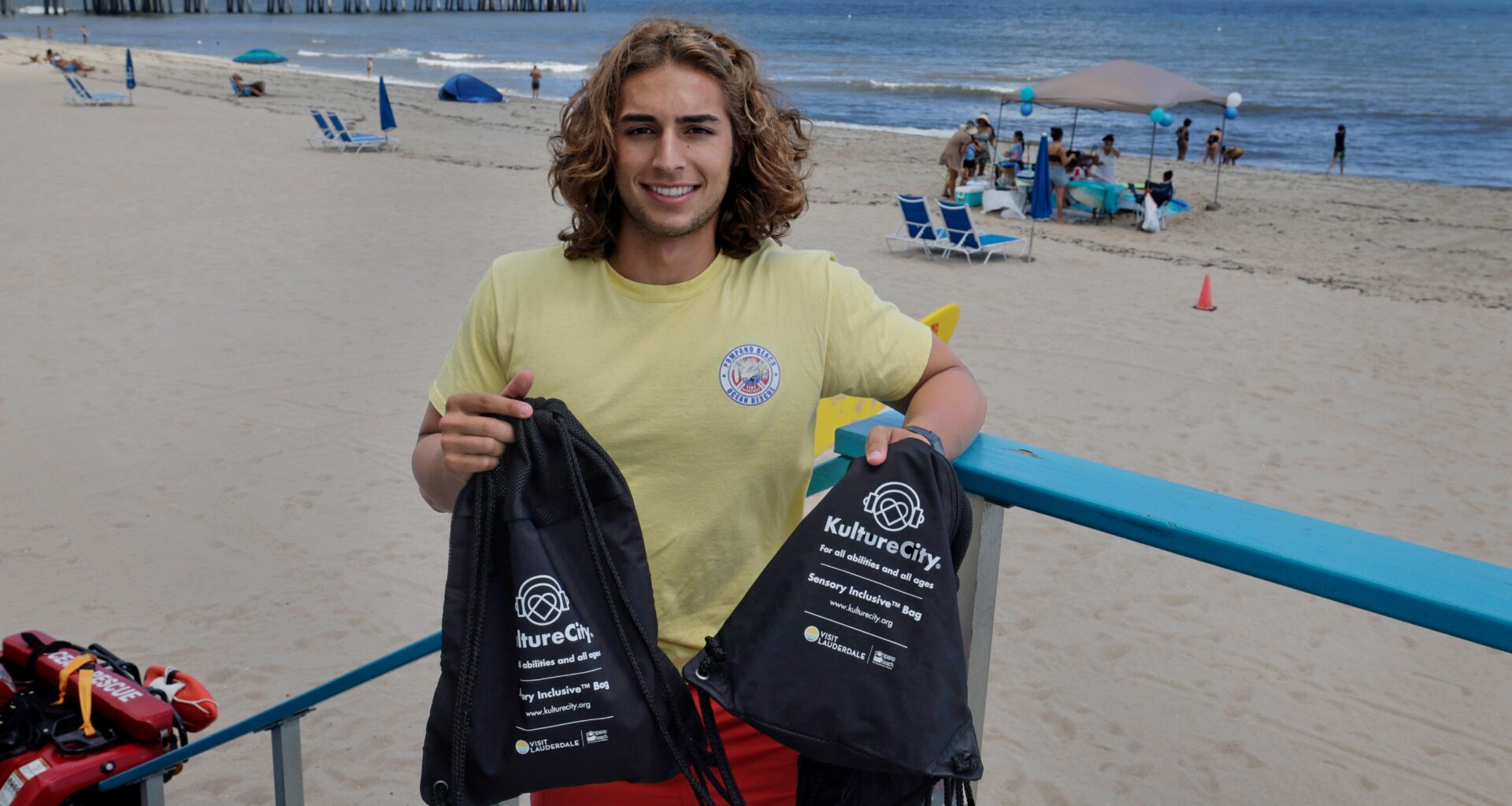
Beaches should be for everyone.
That’s the idea behind the new Beaches for All campaign in Broward County.
Lifeguard stations along six sandy shores are now equipped with kits for people with sensory sensitivities linked to factors such as post-traumatic stress disorder, autism, dementia or stroke. Fort Lauderdale, Hollywood Beach, Pompano Beach, Lauderdale-by-the-Sea, Dania Beach and Hallandale Beach are all participating.
The free sensory bags include noise-canceling headphones, fidget tools, verbal cue cards, feeling thermometer cards and strobe-reduction sunglasses. There are also designated calm spaces, sensory-friendly signs, weighted lap pads, identifiable lanyards and accessible beach equipment, including beach wheelchairs.
“Greater Fort Lauderdale has always been a destination where everyone belongs, and this initiative is another meaningful step in ensuring our beaches reflect that commitment,” said Stacy Ritter, president and CEO of Visit Lauderdale, the marketing organization and tourism department for Broward County.
Visit Lauderdale has been developing the program with KultureCity, a nonprofit based in Vestavia Hills, Alabama, that offers equipment kits, training and certification of venues and spaces to make visitation easier for people with sensory issues.
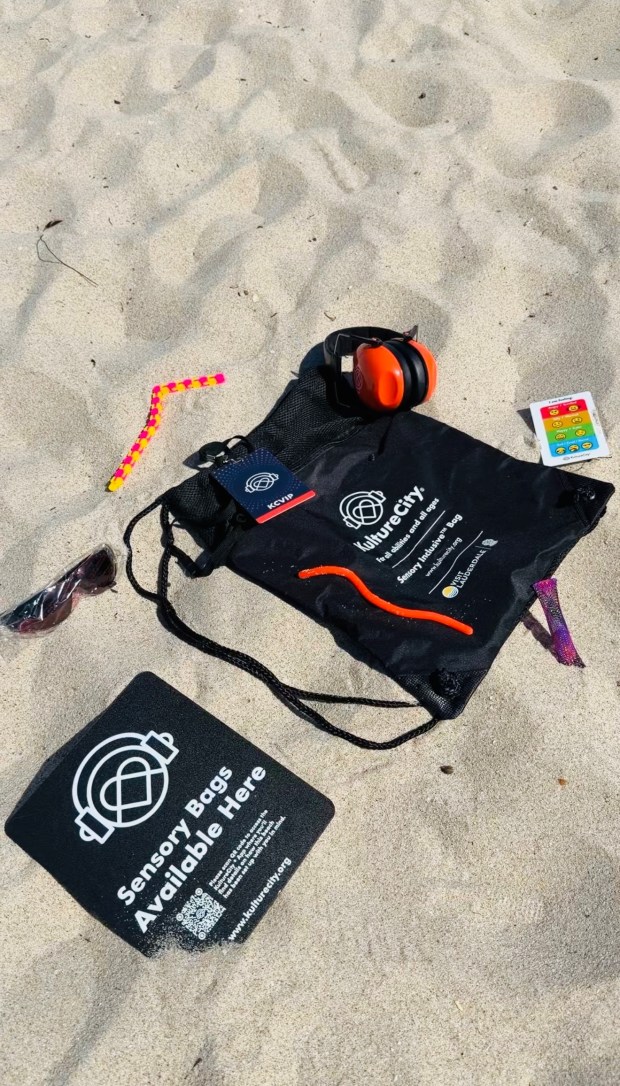 The free KultureCity bags include items such as noise-canceling headphones, fidget tools, verbal cue cards, feeling thermometer cards and strobe-reduction sunglasses. (Visit Lauderdale/Courtesy)
“The beach is often sold to us as the one place where everyone belongs,” said Meg Raby Klinghoffer, an autistic-sensory trainer and developer with KultureCity. “Think bare feet, open sky, room to breathe. For millions though, it is one of the most overwhelming environments. The glare, the crowds, the roar of the waves. Heat, textures, and not being able to easily identify a spot with true quiet. We looked at the gap between the promise of the beach and the reality of it and decided to close it.”
Broward is the world’s first KultureCity-certified sensory accessible and inclusive beach destination.
“Firsts matter because they show that nothing is out of reach — that anything is possible for those with invisible disabilities and sensory challenges and needs,” Klinghoffer told the Sun Sentinel via email. “Before anyone does a thing, everyone assumes it can’t be done, and people with sensory needs get told, ‘Not here, not this,’ their whole lives.
“Greater Fort Lauderdale being the world’s first KultureCity-certified sensory accessible beach destination champions the message that access to joy is not optional — it’s not a nice-to-have. When an entire destination trains its people, stocks research-based sensory bags and builds the quiet into the loud, in essence, it stops being a place that tolerates us and becomes a place that expects us. It shifts the message from ‘we’ll make an exception’ to ‘you were always invited.’ ”
Interested visitors can simply go to a designated lifeguard station at one of the participating beaches to get a sensory bag as well as the other equipment.
KultureCity also offers information and a dedicated social story for each beach through its website and free KultureCity App. Go to kulturecity.org/sensory-inclusive and scroll down to the map to get an idea of what to expect as a seaside visitor, where to access sensory resources, and important locations to help plan a more comfortable experience.
In an interview with the South Florida Sun Sentinel, Ritter said signs are in place guiding visitors to designated calm spaces at some of the beaches, “to the areas that are quieter, so [visitors] can decompress and reset.”
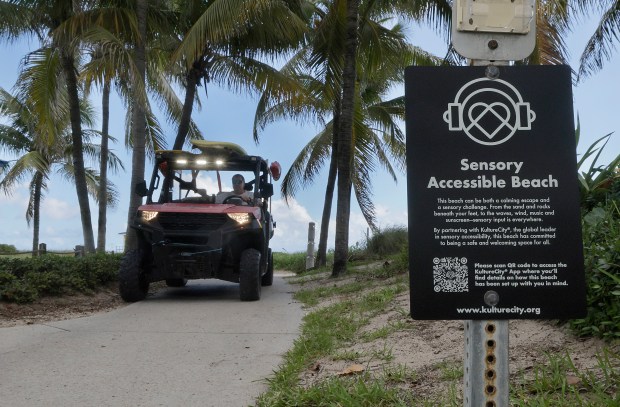 Signs along the shores of Pompano Beach designate it as a sensory-accessible area. (Mike Stocker/South Florida Sun Sentinel)
The program also saw KultureCity instruct more than 170 lifeguards with awareness training on understanding sensory processing and how to communicate with people experiencing sensory overload on the beaches, she said. Hallandale Beach conducted similar training for staff at its sensory-friendly swimming pools.
“We really do mean it when we say we want you to come here and have a really good time,” Ritter said. “No matter what you look like, no matter who you love, no matter what you worship, no matter what color you are, what language you speak, or what your special needs may be.”
Ritter added that sensory-friendly tourism is a big wave of the future.
According to KultureCity, Americans with disabilities spend nearly $50 billion annually on travel. “And because we rarely travel alone, the total economic contribution tops over $100 billion each year,” Klinghoffer said. “And guess what? By 2030, all baby boomers will be older than 65, and one in every five residents will be retirement age. Aging doesn’t just change physicality … but it changes sensory profiles. Conditions like Parkinson’s and dementia reshape how a person processes balance, sound, taste, light and touch. The wave of travelers who will need sensory accommodations is basically here.
“Something especially important to note is that sensory-friendly tourism isn’t charity, but it’s the future of hospitality — and the destinations that see it first will be the ones people come back to.”
The initiative marks a first for South Florida’s coastline. Palm Beach County plans to extend the sensory programming in effect at many of its parks onto its beaches in the next two or three years, said Christine DeMichael, director of integrated marketing for tourism marketing agency Discover the Palm Beaches.
For more information, visit visitlauderdale.com/accessibility.
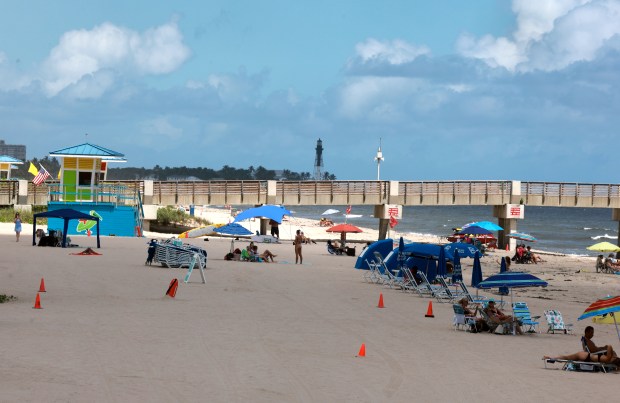 Pompano Beach is among six Broward County beaches participating in a new initiative to promote accessibility for visitors with sensory sensitivities. (Mike Stocker/South Florida Sun Sentinel)