
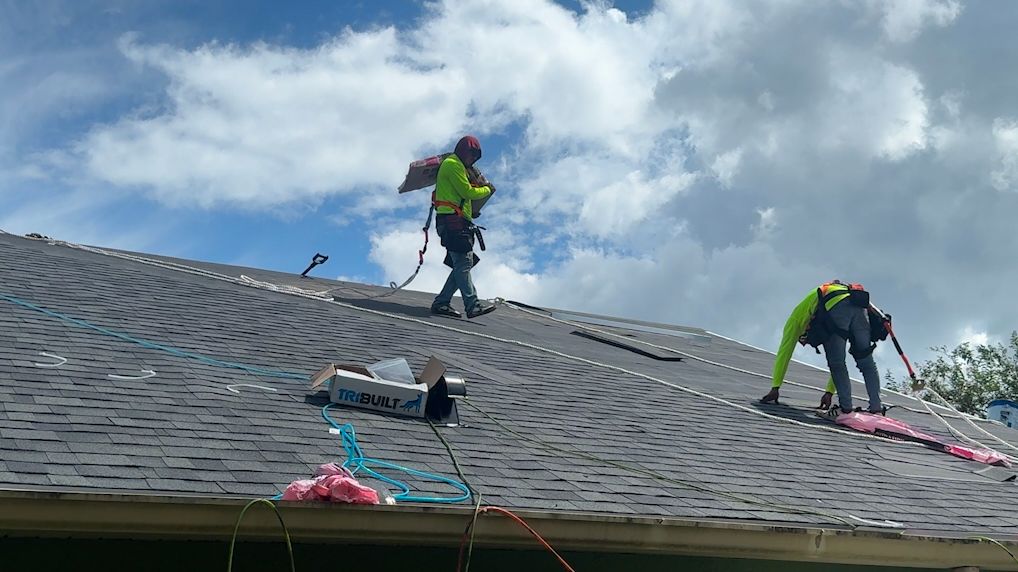
TAMPA, Fla. — Roofing costs are rising as many of the products used in roofing are petroleum-based, along with some being manufactured outside the U.S.
The higher costs are putting pressure on local roofing companies as they work to keep budgets under control.
“Right now we are holding firm, but every day is a challenge,” said Ryan Westfall, president of Westfall Roofing.
The company has been operating in the Tampa area for 35 years. Westfall says rising energy costs and tariffs are causing prices to spike.
“Obviously we work with raw goods every day; shingles are a petroleum-based product,” Westfall said. “We use a lot of metal on a roof, and tariffs and all those things do affect those prices.”
A recent report by Verisk Analytics shows the average roof replacement in the U.S. was 33% higher in 2025 than the prior four-year average.
This year, that average is projected to rise an additional 4 to 6%.
Westfall says supply chain issues and rising fuel prices are also hurting contractors.
“Our supplies are actually the ones that ship the products over to our job sites, but a lot of stuff comes from Canada, overseas, and the shipping costs coming from overseas,” he said.
Westfall says larger companies have some ability to negotiate with suppliers and look for opportunities to lower costs for homeowners.
“For a lot of contractors it is. But we are grateful enough to be one of the larger roof companies in this area, so we do a lot of things to scale. That does give us the ability to negotiate pricing with our suppliers, and we do look for opportunities to push those prices down to our homeowners,” Westfall said.
University of Tampa economics professor Michael Coon says the roofing industry is experiencing several factors that are driving costs higher.
“So they’re experiencing quite a perfect storm of things coming into their industry,” Coon said.
Coon says costs could rise even more.
“With oil prices rising, that affects not only the building materials itself and anything that relies on tar petroleum, but also shipping costs. And then on the other end of that, tariffs going into effect on Canada, we import a lot of our building materials from Canada, mostly lumber and things like that,” Coon said.
Westfall says his company is absorbing some of the increased costs while looking for ways to operate more efficiently.
“We’re always looking for ways to save on our products, get a little bit more efficient with the roofs that we’re installing, get more efficient with routing our vehicles around. So, every day, like I said, is a challenge. And we’re looking for ways to just run a more efficient outfit,” he said.
Only time will tell how long fuel prices will continue to climb and how the latest trade battle with Canada will play out.
Either way, the changes affect the supply chain from top to bottom.