
MARTIN COUNTY, Fla. (CBS12) — A Florida mail carrier pleaded no contest after authorities found more than 100 animals at her Martin County home. Just weeks earlier, another Martin County woman was charged after 36 Border Collies were rescued from a Palm City home.
Would either woman show up in Florida’s animal abuse database? The answer depends on what happens in court — and a new law taking effect Oct. 1 is meant to make the database more useful when someone does appear.
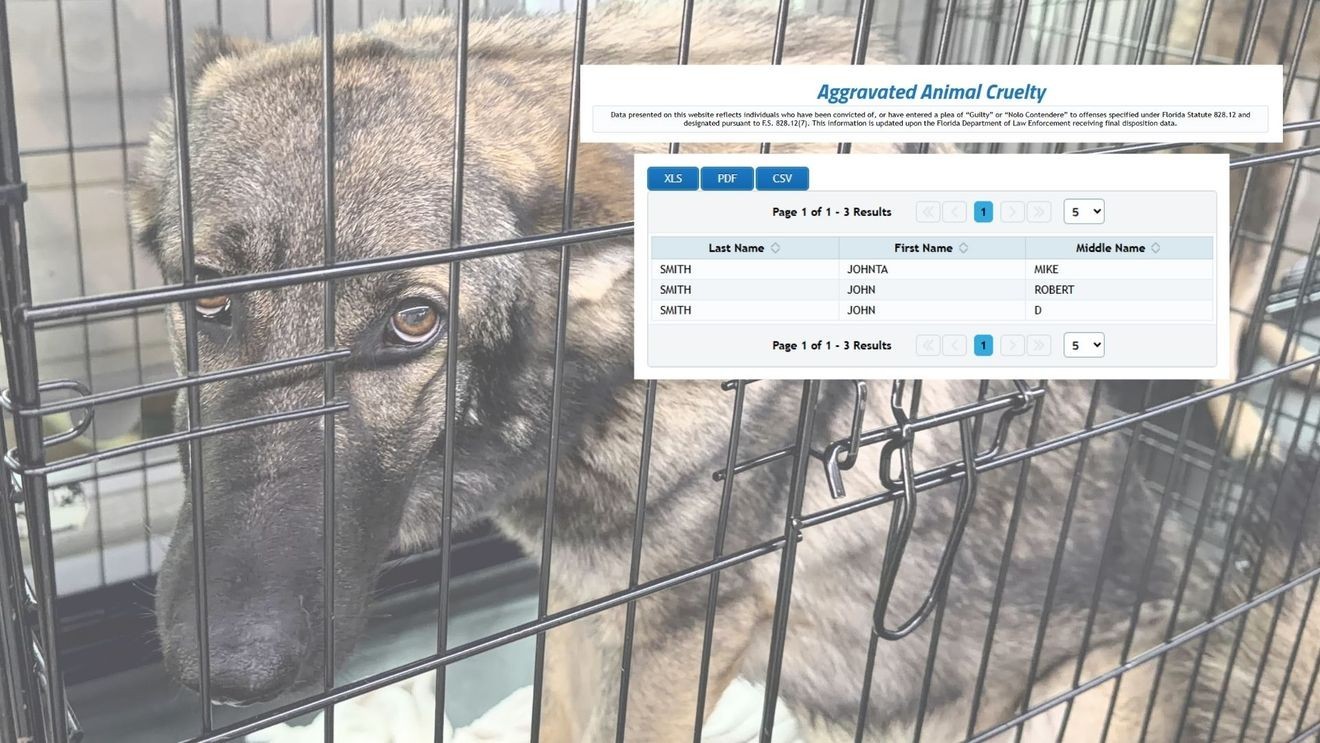
The state launched the public database in January under Dexter’s Law. CBS12 News found that it initially showed only first and last names, leaving shelters and pet owners with little way to tell whether a person they were checking was the person on the list. FDLE later added middle names. Its current search page still does not display birth dates, booking photos, charges or counties of conviction.
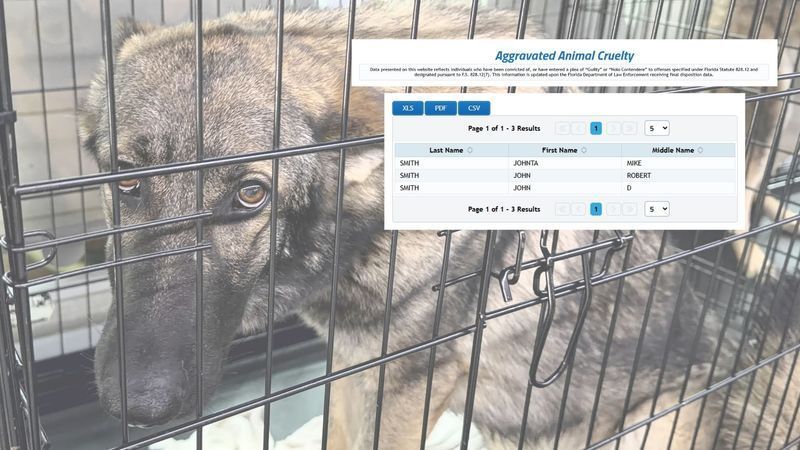
Florida’s new statewide animal abuse database has been updated to include middle names, after animal advocates raised concerns that the original rollout was too bare-bones to reliably identify offenders. (WPEC)
“If there’s a match, we don’t automatically deny the adoption,” Jan Steele, director of Palm Beach County Animal Care and Control, told CBS12 News when the database launched. Her staff asks questions and checks other records to confirm whether an applicant is the person listed.
House Bill 559, which Gov. Ron DeSantis signed at Big Dog Ranch Rescue in May, takes effect Oct. 1. It gives FDLE until Jan. 1, 2027, to post additional information, including dates of birth, charges, case outcomes, identifying marks and booking photos. County clerks and jails must provide the information and images. . The expanded information is not required to appear when the law takes effect next week.
The recent Martin County cases show who the database is intended to cover — and who it does not cover yet.
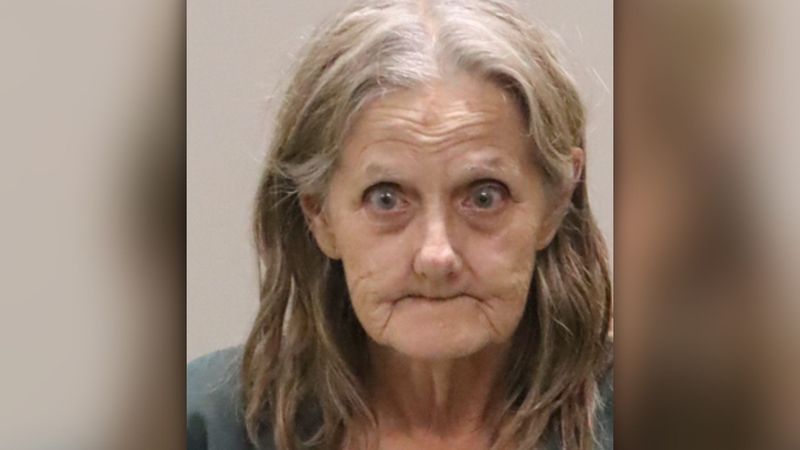
Gail Giustino, the Stuart woman accused of hoarding more than 100 animals inside her home, pleaded no contest Tuesday to two misdemeanor animal-cruelty-related charges and was sentenced to two years of probation. (WPEC)
Gail Giustino, a Stuart mail carrier investigators said collected cats along her route, pleaded no contest in August to two misdemeanor animal-cruelty-related charges. She received two years of probation, was ordered to undergo a mental health evaluation and cannot have contact with animals.
The Humane Society of the Treasure Coast ultimately received 97 cats and 21 dogs from Giustino’s home. Some had microchips and were reunited with owners who had been searching for them.
e063e0f2-7261-4cf9-a82c-c5d07a5d1d6c-PDF1PDF previewPreview PDF
A search of FDLE’s animal abuse database Friday did not show Giustino’s name. Florida law includes no-contest pleas for qualifying animal cruelty offenses, but FDLE says it adds records after receiving final court disposition data. CBS12 News previously reported that the database is updated monthly. It is unclear whether FDLE has received her case information or when a qualifying record would appear.
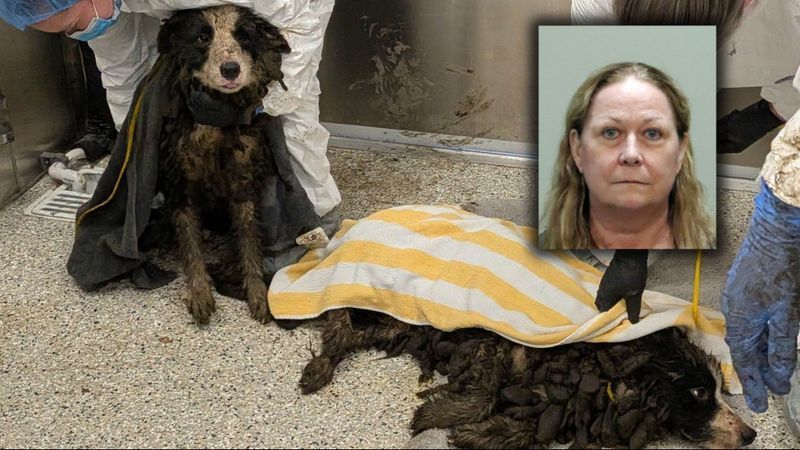
Paige O’Donnell, the woman charged in the Border Collie case, faces 36 felony animal cruelty counts and 36 misdemeanor counts alleging the dogs were kept without sufficient exercise and air. Those are allegations. An arrest or pending charge alone does not qualify someone for the database; a qualifying conviction or guilty or no-contest plea would be required. (Humane Society of the Treasure Coast)
Paige O’Donnell, the woman charged in the Border Collie case, faces 36 felony animal cruelty counts and 36 misdemeanor counts alleging the dogs were kept without sufficient exercise and air. Those are allegations. An arrest or pending charge alone does not qualify someone for the database; a qualifying conviction or guilty or no-contest plea would be required.
See also: Former Palm Beach County Fire Rescue captain sentenced to 10 years in child porn case
The October law goes beyond the database. It creates new third-degree felony offenses for adults who cause or entice a minor to commit aggravated animal cruelty, animal fighting or sexual abuse involving animals — or commit those acts in a minor’s presence. It also raises the offense ranking for animal fighting under Florida’s criminal sentencing system. For minors who commit animal cruelty, juvenile courts must order a psychological evaluation and, if recommended, counseling or treatment. The law also raises the maximum civil penalties local governments can impose for certain animal control and cruelty ordinance violations.
Under the expanded database rules, a first misdemeanor conviction generally remains posted for three years, a first felony conviction for five years and a subsequent conviction for 10 years. People whose convictions are overturned or whose related criminal records are sealed can petition to have their information removed.
CBS12 News has followed the push to create the database and the questions about it since launch. October brings new rules for animal cruelty cases. For shelters and families trying to check someone’s history, the next test comes by January: whether the added details make it possible to identify the right person.