
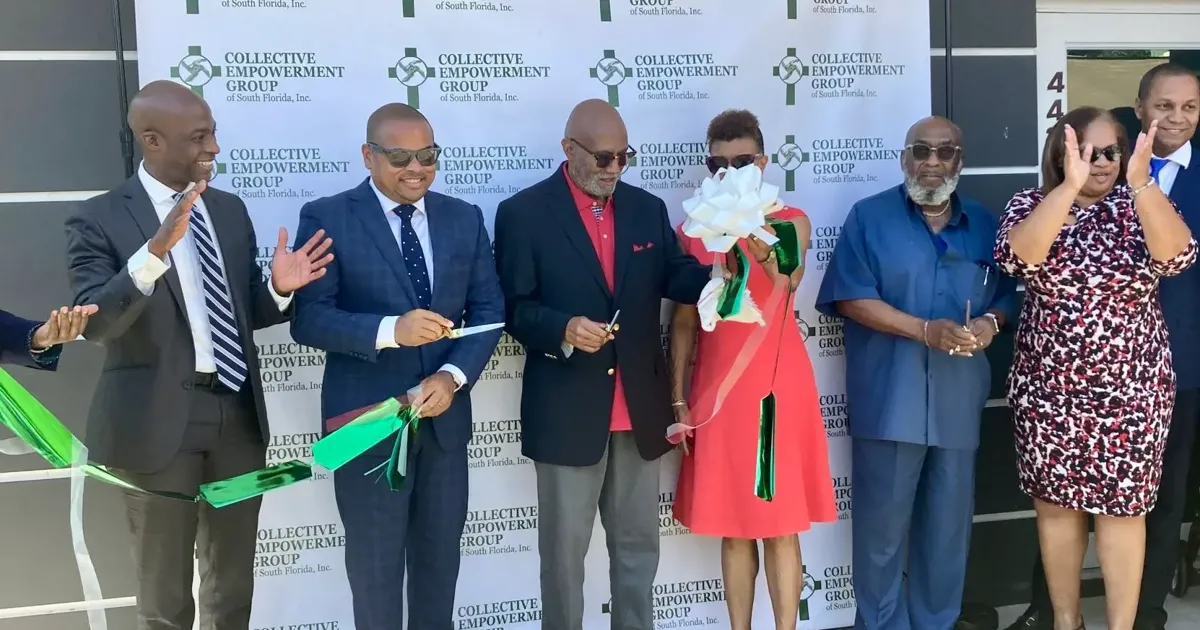
A church parking lot could become affordable housing. A nonprofit may envision a childcare center or neighborhood clinic. But for Miami organizations that own property, deciding what to build is only the beginning. They must also weigh costs, find trustworthy partners and protect the mission that brought them there.
That is the focus of “Develop to Serve,” a free, two-day summit taking place Oct. 5-6, hosted by the City of Miami in partnership with Collective Empowerment Group of South Florida (CEG). Led by Mayor Eileen Higgins, the initiative will help faith-based and nonprofit leaders explore whether developing property they own or control could serve their communities.
Higgins said the idea grew from conversations with pastors and nonprofit leaders who wanted to help address Miami’s housing crisis but lacked development experience. More than 500 faith-based and nonprofit organizations own property in the city, she said, and more than 20% of that property is vacant or substantially underused.

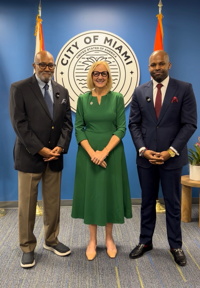
(L-R) CEG President Emeritus Rev. Dr. R. Joaquin Willis, City of Miami Mayor Eileen Higgins and CEG President and CEO Bernard Phanord.
(Courtesy of Mayor Eileen Higgins’ Office)
“That is an opportunity, but it also comes with some risk for these organizations. They’re all mission-driven organizations. Whether it’s a church serving a community or a not-for-profit helping seniors or kids, that’s not their core competency,” Higgins said.
Bernard Phanord, CEG’s president and CEO, said the partnership unites various organizations that people already turn to for different kinds of help, bridging resources together.
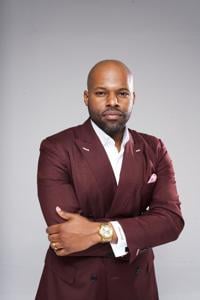
CEG President and CEO Bernard Phanord.
(Bernard Phanord)
“Some people that may simply go to their houses of worship, their pastor, their clergy leader for support, and then you have those that may not be as familiar with the houses of worship, and they only just go to their elected official for support,” he said. “You’re really merging two worlds together to be able to provide the most good to the most amount of people.”
Learning before building
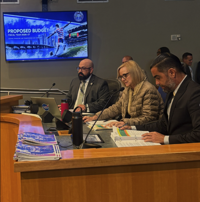
Mayor Eileen Higgins during a city budget hearings.
(Mayor Eileen Higgins via Instagram)
The summit will explain how projects move from ideation to construction, how financing works and how organizations can separate existing operations from development. City and county staff are expected to answer zoning and permitting questions. Attendees can book 20-minute sessions with professionals in land use, architecture, law and finance, Higgins said.
An opening conversation will feature Pastor Robert Jackson III of St. Paul AME Church and a representative of Trinity Church in New York, which runs a faith-based housing initiative. Other participants include local nonprofits, lenders, developers and University of Miami design faculty.
A session entitled “Money vs. Ministry” will address concerns pastors have already expressed to Higgins, including whether development could jeopardize a church’s mission or tax status. Experts will discuss ways to structure a project.
“I have spoken to pastors and leaders of nonprofits that are very interested in doing this, but they’re not experts. These organizations are also organizations residents trust, but the complexity and cost of early-stage work — stuff like site analysis, feasibility, financing strategies — can be intimidating,” Higgins said.
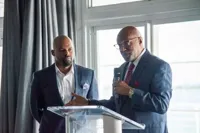
CEG President and CEO Bernard Phanord and CEG President Emeritus Rev. Dr. R. Joaquin Willis at a previous summit held in 2025.
(Amelia Orjuela Da Silva for The Miami Times)
Phanord said participants should leave better equipped to decide whether to pursue development.
“Above all, it’s just to provide information and knowledge for people to make a wise and educated decision regarding their real estate asset,” he said.
That information could help a pastor bring an idea to the people who would need to approve it.
“The pastor might have a vision, may have to go through a board, also present it to the congregation, and then from there they can then move forward with the next steps,” Phanord said.
He added that many houses of worship already have plans to expand services for their neighborhoods but need support to carry them out.
Affordable housing will likely be a major focus, Higgins said, but participants may also consider childcare centers, schools, business incubators and other land uses.
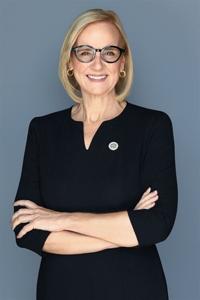
“The state changed the law to allow faith-based communities to build housing by right, but that makes them very vulnerable to developers. If they don’t have their city watching out for them and trusted partners watching out for them, they could get ripped off.” -City of Miami Mayor Eileen Higgins
(City of Miami)
An opportunity with risks
A change in Florida law has made the discussion more timely. House Bill 1389, effective July 1, extends provisions of the Live Local Act to certain religious properties. The provisions can apply to property larger than three acres that a religious institution owns and that has contained a house of public worship for 10 years. Developments must still meet other requirements; church ownership alone does not guarantee approval.
Higgins said the change increases the need for congregations to understand their options before negotiating with developers.
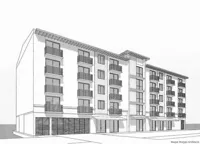
Grand Bahamas Place is a project spearheaded by a partnership between Prospera Real Estate Collective, the Collective Empowerment Group (CEG) and Believers of Authority Ministries.
(Borges Architects)
“The state changed the law to allow faith-based communities to build housing by right,” she said. “But that makes them very vulnerable to developers… If they don’t have their city watching out for them and trusted partners watching out for them, they could get ripped off.”
She described a pastor whose church signed a contract with a developer who still has not developed the land after five years. The church did not seek competing proposals, Higgins said.
“Working with the first person that says ‘I can do this’ is not always the way to do it,” she said.
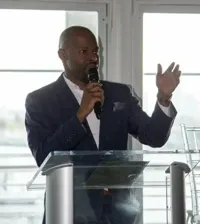
CEG President and CEO Bernard Phanord speaks at a summit held in 2025.
(Amelia Orjuela Da Silva for The Miami Times)
For a small church, an agreement involving its land can carry especially high stakes. Phanord said leaders may worry about spending money on a stalled project, entering a poor deal or losing their property.
“The biggest risk I would think most pastors and clergy are thinking of is, am I going to lose this asset?” he said.
The city has also considered a broader local route for housing on institutional land. In January, commissioners voted4-1 against a zoning change that would have allowed qualifying affordable housing on land owned by or affiliated with religious, educational and nonprofit institutions without a public hearing.
From summit to cohorts
After the summit, interested organizations can apply for a technical assistance cohort led by the CEG, Phanord said. A small group will receive focused training and, after completing the cohort, technical assistance funding toward proposed projects.
Higgins expects the cohort to work on up to five projects, including feasibility studies, partnerships and connections to financing and development teams. The city can help with planning, zoning and permitting once organizations decide to proceed.
“For me, what success would look like is that by the end of 2027, we have three to five projects that are really moving along,” she said. “And ready to enter permitting and be breaking ground very, very quickly.”

Faith Place Village has 37 townhomes available for prospective homeowners. Groundbreaking is expected before the end of fall 2026.
(Faith Place Village )
CEG has experience with houses of worship considering development and is even pursuing some of its own housing projects. Phanord said aWest Coconut Grove project is undergoing entitlement and site-plan review, with a hoped-for 2027 groundbreaking, while 37 townhomes at Faith Place Villageare expected to break ground before the end of this fall. He expects five homes on infill lots to be finished between late September and December, with more targeted for completion by the end of 2027.
For Phanord, progress could mean a congregation considers a clinic, school, business incubator or gathering space. It could also decide against developing after reviewing the facts.
“The goal would be, did you guys have an honest conversation amongst your leadership?” Phanord said. “Are you taking that next step to say, ‘Hey, we’re ready, willing and able to go along with this process’? Because even in the event you choose to decide not to do anything with that site, it would at least be based on the information that you would have obtained.”
The free summit runs Oct. 5-6 from 9 a.m. to 4 p.m. both days at the Idea Center on Miami Dade College’s Wolfson Campus, 315 NE Second Ave. Registration and parking details are available through the event listing.