
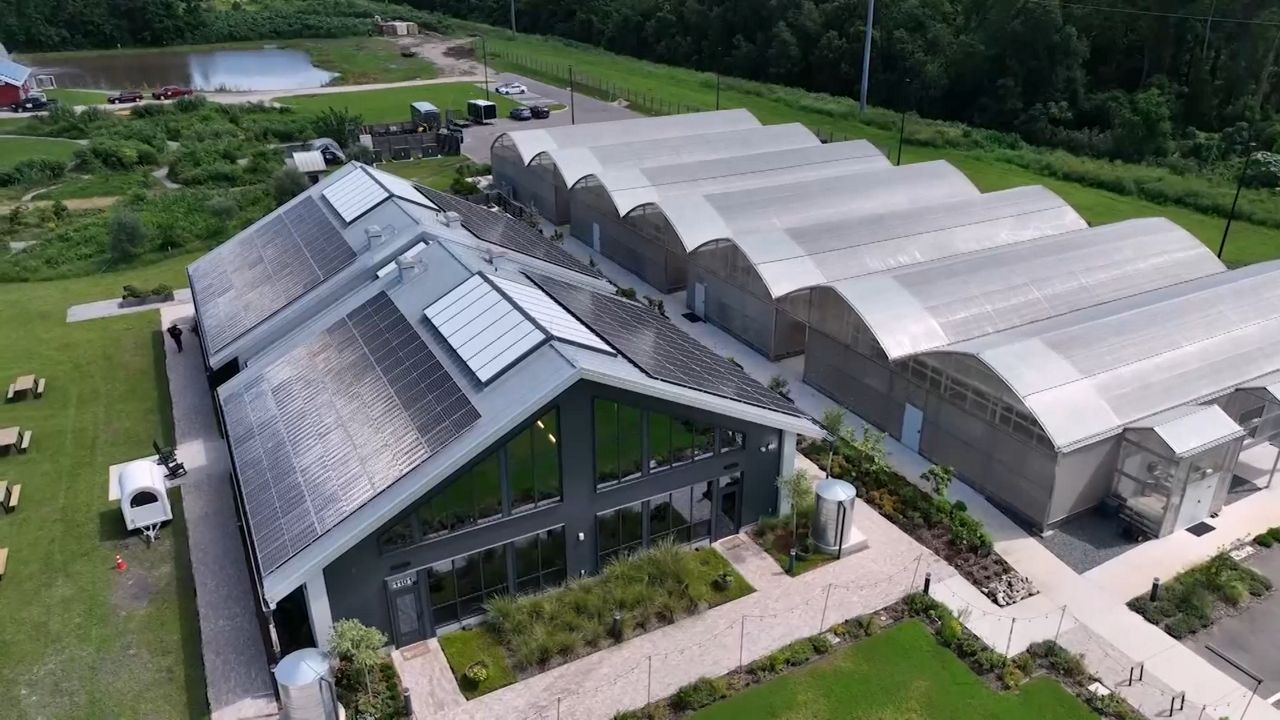
ORLANDO, Fla. — An urban farm near downtown Orlando is highlighting how local food production could help Central Florida communities adapt to changing climate conditions, from heavier rain events to extreme heat.
At 4Roots Farm, located two miles from downtown Orlando, leaders say the goal is to grow food locally while testing practices that can help urban agriculture respond to shifts in weather, rainfall and temperature.
“We know that the weather is changing. We know that patterns are changing, the temperatures are changing,” said 4Roots Farm Executive Director Tommy Ward. “The amount of rainfall we’re getting in each pattern or each time is changing, and so we have to be resilient and we have to change the way we’re doing things.”
The farm is using its location on a wetland as part of its water management strategy. Ward said the site is designed to take on water during heavy rain events and allow it to move through healthy soils.
“During heavy rain events, we’re gonna take a lot of water on,” Ward said. “And then we know because of our healthy soils, that water’s gonna percolate down into the aquifer.”
Water management is also part of the farm’s greenhouse operation. Greenhouse Manager Jessi Nida said 4Roots operates an 18,000-square-foot aquaponic greenhouse.
“Our whole greenhouse is aquaponics, so that’s kind of the combination of fish and hydroponics,” Nida said.
Instead of growing plants in soil, the system uses water. Nida said fish provide nutrient-rich water for the plants, while the plants absorb those nutrients and help leave clean water for the fish.
Extreme temperatures also shape how the greenhouse operates.
“One thing that we’re combating right now is definitely the heat,” Nida said.
During hotter periods, Nida said the greenhouse staff shift their focus away from production and prioritize preparing for the next growing season.
“So, we shift our mindset from production to kind of rehabilitation and remediation for our greenhouse, really getting ready for a strong fall grow season,” she said.
At the University of Florida’s Mid-Florida Research and Education Center, Hannah Eason, with the University of Florida Institute of Food and Agricultural Sciences Extension, said urban farms can be more resilient because of the range of crops and growing methods they use.
“Urban farms’ resilience is really rooted in the diversity,” Eason said. “It’s the diversity of their production practices and the diversity of the crops that they grow.”
Ward said that growing food closer to where people live can also reduce the distance food travels.
“You’re growing it close to the home, which means the carbon footprint associated with moving food across the country is much lower,” he said.
Climate impacts can affect the food system by damaging crops, disrupting shipping and influencing supply, demand and prices. Ward said reducing the distance food travels can shorten one part of that chain.
Researchers and farmers are also looking at crops that could grow well in a hotter Florida or prove to be more heat resilient in the state. Eason said plants can provide cooling benefits through natural processes.
“Plants are performing photosynthesis,” Eason said. “They’re using these processes of evapotranspiration, which result in a total cooling effect that is felt by us people.”
She said that in cities with pavement and concrete, more plants and shade can help create cooler spaces as urban heat becomes a growing concern.
Eason said farms can also serve as gathering places after extreme weather, including storms or freezes that damage farm operations.
“Sometimes, if the farm is really in a direct path of an extreme storm or gets hit hard by an extreme weather event like our freezes, they can really suffer from that,” Eason said. “And sometimes that’s a really important place for the community to come together.”
Growing food locally will not eliminate the challenges of a changing climate, but urban farms such as 4Roots are showing how changes in food production could help build more resilient communities.
Education is also part of the 4Roots mission, with the farm working to help people understand the connection between healthy food, healthy soil and resilient communities.