
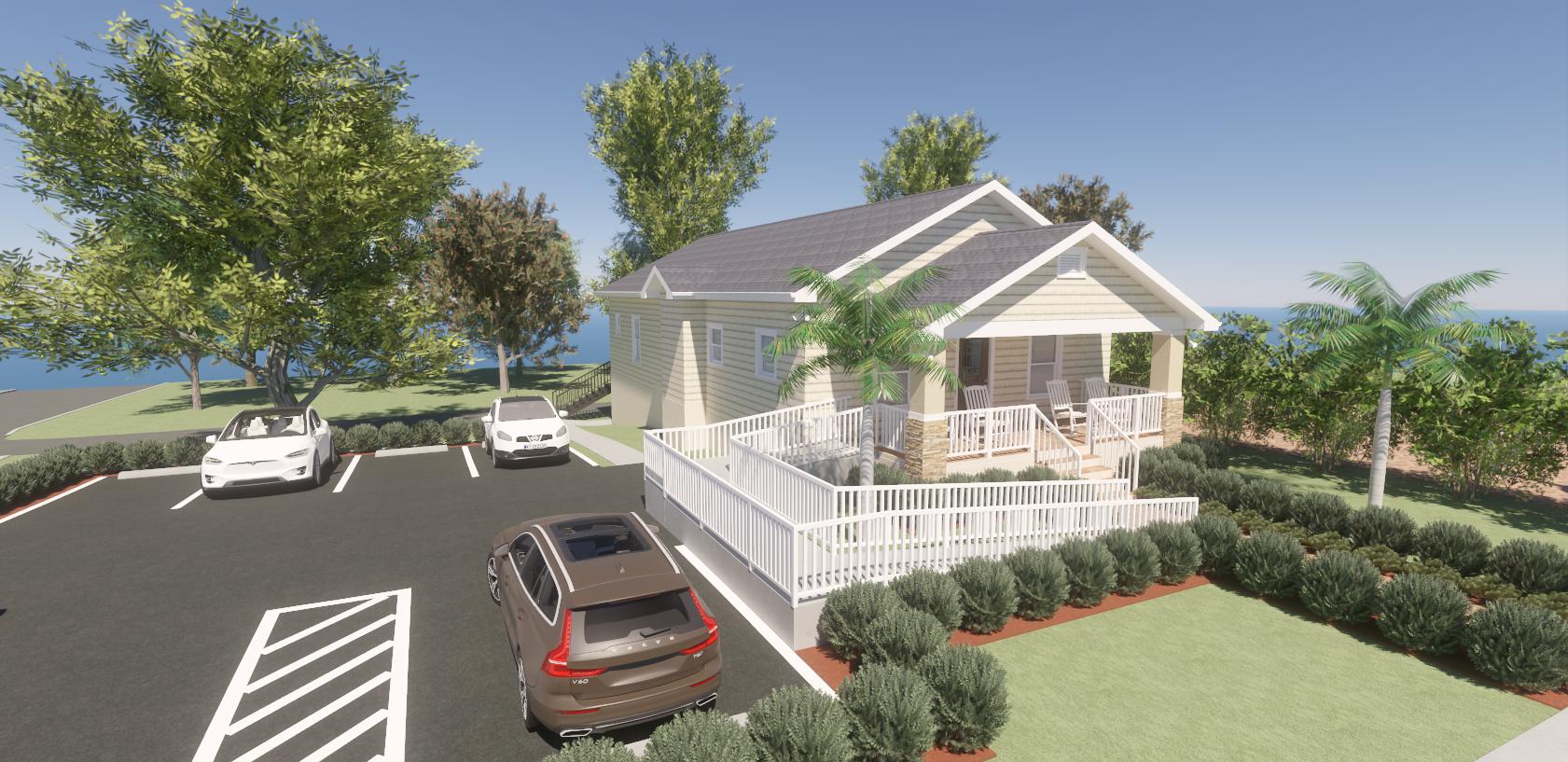
Frank Persechino bought a worn-down rental property along North Fort Harrison Avenue before the 2008 real estate crash.
Built in 1920, the Clearwater home had already been divided into weekly rentals, with nearly every available space put to use and the front porch enclosed to make room for tenants.
Persechino has owned rental properties for years, but this one eventually reached the point where patching things together was no longer enough.
“I’ve been told many times, just tear it down, it’s easier,” he said.
Instead, Persechino plans to put between $250,000 and $500,000 into the property, rebuilding the gutted interior, bringing the house up to current code and reopening the porch. An empty lot next door would become parking.
The plan would leave the century-old structure in place while preparing it for another use as four-bedroom, short-term lodging. Persechino estimates the work could take about a year, although he does not yet have a firm construction schedule.
While large apartment developments continue adding new housing across Pinellas County, maintaining the region’s older, smaller housing stock presents a different challenge. As those properties age, keeping them in use can require increasingly substantial investment.
St. Petersburg has identified the condition of its older housing as one such concern. More than 96,000 homes in the city, roughly 68% of the city’s housing stock, were built before 1980, according to a city housing grant application citing 2022 Census data. More than 52,000 were built before 1960.
City officials noted that older properties often require greater maintenance and can bring added rehabilitation costs. St. Petersburg’s planning policies also encourage the rehabilitation and reuse of historic buildings when possible.
Persechino’s home has already been standing for more than a century, during which North Fort Harrison Avenue itself evolved as a housing corridor.
A write-up prepared by the Clearwater Historical Society describes duplexes, triplexes, quadplexes and small apartment buildings emerging along the corridor as Clearwater expanded during the early and mid-20th century. They provided housing for hotel workers, citrus laborers, railroad employees and others working around downtown.
Before U.S. 19, Fort Harrison was Clearwater’s main north-south route. Its proximity to downtown and the waterfront made the corridor useful for workers, seasonal residents and others who did not necessarily own cars. After World War II, more small apartments and multi-unit properties appeared, and many remained rental housing in later decades.
By the time Persechino bought his property, the home had seen better days.
“I bought it in terrible condition,” he said. “I had no idea what I was getting into, to be honest with you.”
Rather than replace the 1920 structure, he is trying to update what remains while restoring some of what disappeared over the years.
Persechino said he has spoken with Clearwater Historical Society President Allison Dolan about maintaining the appearance of the house as work moves forward. Much of the interior can be rebuilt, he said, while the exterior can retain the feel of an older Clearwater home.
That includes bringing back the front porch, which had been enclosed when the property was used for efficiencies. Persechino wants to open it again as part of returning the building to something closer to its original residential appearance.
The finished property would operate with a property manager. Persechino, a registered nurse, said traveling nurses are one possible market, although he has not settled on who will ultimately rent the rooms.
After more than 100 years, he wants the building’s next use to remain recognizable from the sidewalk.
“I hope it’s just going to be short-term lodging of a historic place,” Persechino said. “Maybe when you’re walking up to it, it reminds you of your grandma’s house or some house that you had up in the Midwest before you moved down here.”
He has even been thinking about what belongs on the reopened porch.
“If I get with the architect,” Persechino said, “I’ll ask them to put a couple of rocking chairs out front.”