
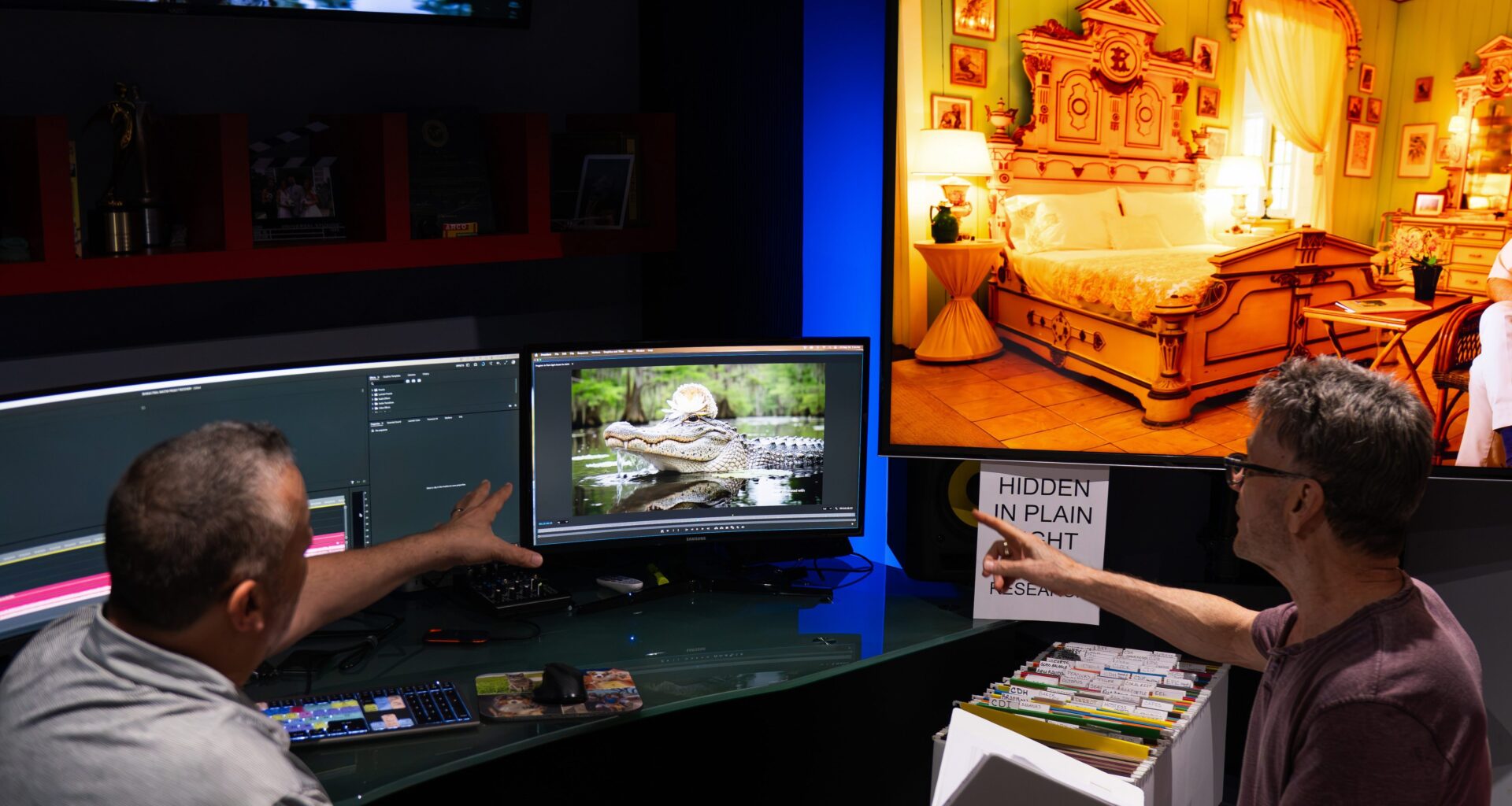
No one is 100% sure, but Fort Lauderdale’s Bonnet House may have gotten its “bonnet” because alligators used to “wear” lily pads.
Millinery myth or reptile realness? We may never know. But that’s just one of the stories told in “Bonnet House Museum & Gardens: Hidden in Plain Sight,” a documentary short by filmmakers Neil Goldberg and Frank Linero.
Goldberg recounts how they first learned of the gator/Bonnet House connection while interviewing Patrick Shavloske, the museum’s CEO.
“Patrick told us how the Bonnet House may have gotten its name. The alligators used to pop their heads up from the abundance of lily pads, and the lily pads would sit on their heads like a bonnet. And Frank [Linero] actually recreated that for the film, and it’s a fascinating tidbit.
“What I love about that story is that Bonnet House is a museum. I think, in general, people tend to think of it as a place for adults, but it’s not. It’s a place for kids. It’s a place for everyone.”
And that’s why the 35-acre subtropical estate and historic house museum, at 900 N, Birch Road, commissioned the documentary — to get the word out about this “hidden” treasure nestled between Fort Lauderdale beach and the Intracoastal Waterway.
Frederic Clay Bartlett, an artist and self-taught architect, created Bonnet House in 1920 on land given to him and his wife, Helen Louise Birch, by her father, Hugh Taylor Birch. It is one of the last remaining examples of South Florida’s early 20th-century waterfront estates and, over the decades, has become a mansion-mix of art, nature and architecture — thanks in large part to Bartlett’s next wife, Evelyn Fortune Lilly. (Pop culture note: The estate served as the finish line for Season 7 of CBS-TV’s “The Amazing Race” in 2005 and the site of a cocktail party on Season 22 of “The Bachelor” in 2018.)
Back in June, the historical documentary short aired on South Florida PBS stations. Then in late September, there was a private-party premiere at the AutoNation IMAX 3D Theater in Fort Lauderdale’s Museum of Discovery and Science.
Now, after a special showing on Oct. 31 during Bonnet House’s Halloween Fest, the 27-minute film will — for a limited time — become part of the regular visitor experience, serving as the final stop on both self-guided and guided tours.
Filming for “Hidden in Plain Sight” started in April 2024.
“We started discovering more and more little links in the whole chain of historical events,” Linero said. “And it really started telling itself. This is one of these magical stories; it’s there to be told. You just have to have the right circumstances and the right cooperation and collaboration. It’s a story of human drama, of several generations of people that had marriages and widowed and had children, but were artistic. And there were ups and downs, but through it all, the Bonnet House survived, and it’s an incredible story.”
The South Florida Sun Sentinel had the opportunity to learn more about “In Plain Sight” and Bonnet House’s plans during a Q&A session with:
• Frank Linero (director, editor and producer)
• Neil Goldberg (producer, Bonnet House board member and former Cirque Dreams owner/producer)
• Patrick Shavloske (Bonnet House CEO)
• Jim LaBate (Bonnet House board co-chair and one of the film producers)
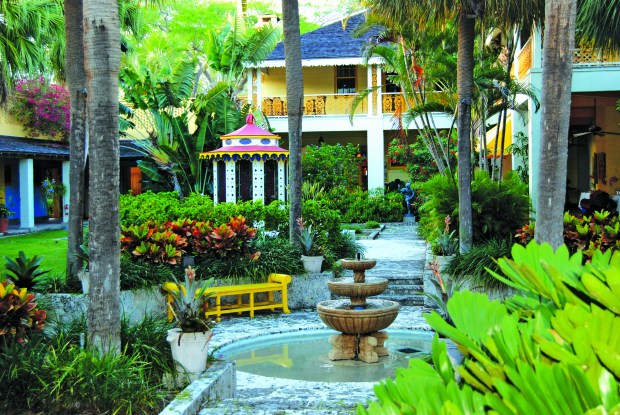
Sandy Dolan
The courtyard of Bonnet House Museum & Gardens, which is nestled between Fort Lauderdale beach and the Intracoastal Waterway. (Sandy Dolan/Courtesy)
Q: What’s the significance of that title?
Linero: As we went deeper and deeper into the production process and pre-production, and then as we started filming and capturing the content and discovering all this wealth of historical assets that existed, the story just kept coming up on its own. It was this incredible jewel that is hidden here and most of our community doesn’t even know about it, let alone people from outside the community. … It’s hidden in plain sight. You know, once anyone goes there for the first time, they all say, “How could this have been here and I never knew about it?” That’s where that came from.
Shavloske: It’s kind of a paradox too because … when the Bartletts lived here and it was a private home, being hidden like that was a wonderful thing. They had this little Shangri-la that they could enjoy every winter. But as a public museum, that’s a sticking point for us. More people need to know we’re here, more people need to know what a resource we have and what’s behind the walls.
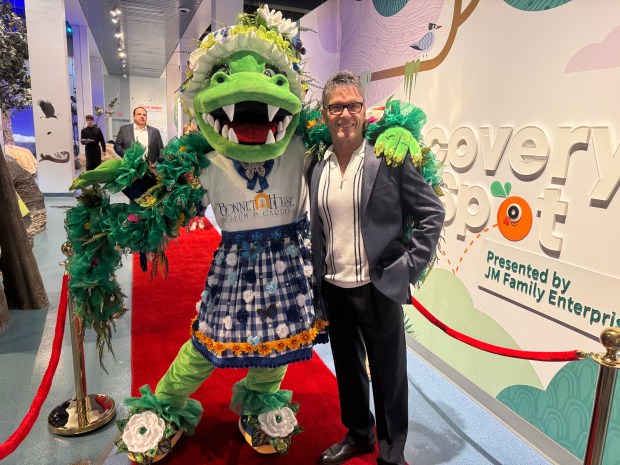
Bonnet House Museum & Gardens
Bonnet House mascot ambassador Bonnie Gator and Neil Goldberg, one of the filmmakers, at the premiere at the AutoNation IMAX 3D Theater in Fort Lauderdale’s Museum of Discovery and Science. (Bonnet House Museum & Gardens/Courtesy)
Q: How did the idea of a documentary come about?
Goldberg: It was almost two years ago, and we’re talking about the beginnings of a capital campaign because we want to expand, grow in popularity and attendance. And there was an architectural firm that was making a presentation. Part of their presentation was a really rich, in-depth history of the house and the family, and even one of the architects spoke of when he was in college, he did a thesis and some work about the architecture and the evolution. [There] was so much that I had not known that I went to Jim right afterwards and I said, “There’s a bigger story here. It needs to be told, and I’d like to tell it.”
Q: Was there a through line that you felt should be in the film?
Goldberg: We wanted the house to be the star of this film. We wanted to give it a voice. We wanted it to tell a story in the beginning of what people were going to see, and we wanted the house to leave its lasting thoughts as to what Bonnet House is to South Florida and can become in the future as people support it.
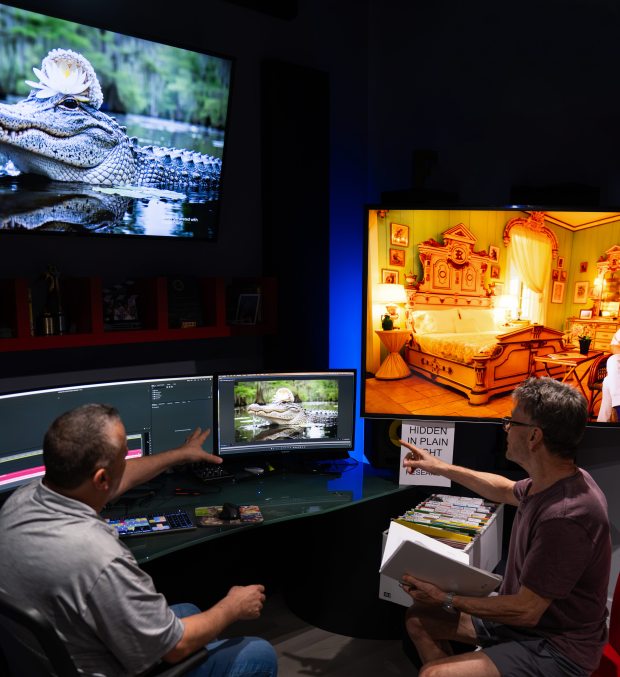 Filmmakers Frank Linero and Neil Goldberg with images from the documentary short, “Bonnet House Museum & Gardens: Hidden in Plain Sight.” (Kayla Linero/Courtesy)
Q: What makes Bonnet House so unique?
Linero: To me, the logistics of building that structure in a time where there were no bridges to the beach, to the barrier island. I can only imagine in the early 1900s how much more difficult everything was. Imagine building a mansion like that on the beach now, let alone back then. It was just a huge undertaking, yet it ended up being a very understated, subtle, beautiful place. It wasn’t anything gaudy. That fascinated me. They couldn’t get all this cement and bricks over. So most of the bricks that the structure’s made out of are from the sand and the brackish water from the swamp there. So it’s really cool stuff like that.
Shavloske: You can really say the Bonnet House grew directly out of the barrier island. It’s built with the materials that were available on-site. Something else that I think I would add is the people’s story behind Bonnet House and the Bartletts. You know Frederic Bartlett was a collector of art as well as an artist in his own right, and there are pieces of artwork that are in the United States today that even someone who isn’t particularly an aficionado of art, they would recognize the paintings. They’re that iconic. So like “A Sunday Afternoon on the Island of La Grande Jatte’ by [Georges] Seurat, that’s in the United States because of Frederic Bartlett. So he was pivotal in bringing some incredible works of art to the United States and spent time here in Fort Lauderdale. I would venture to guess that 99% of the people who live in Broward County have no idea that this person — who had such an impact on art in the United States and the growth of art museums in the United States — lived right here in Fort Lauderdale for at least part of the year.
Q: We’ve talked about Bonnet House’s past, what about its future?
Shavloske: As a historic house museum, sometimes you can fall into the trap of being static. Even Mrs. Bartlett said in her oral histories, “I don’t want it to change.” And there’s a lot of that we always will have to honor and be true to. We need to, and there’s value in preserving historic structures. But we have to be more to the community than just a static structure. We believe there are opportunities out there that can bring locals to Bonnet House on a more regular basis for education purposes, for entertainment purposes, recreation purposes. The idea was that Bonnet House would be a cultural center — and culture is more than just history and a static art display. It’s really embracing a variety of entertainment, art forms, and integrating into the community so that we’re no longer hidden in plain sight. We’re, in fact, front of mind for people.
LaBate: More than 50% of our annual attendance comes from visitors to Broward County. We’re right at the top of the visitor experiences in Broward County. So when we look at where we need to go in the future, as Patrick mentioned — cultural, education, all of these things — we’re going to be looking at this with an eye to bring the locals back to the Bonnet House again and again and again.
Bonnet House Museum & Gardens
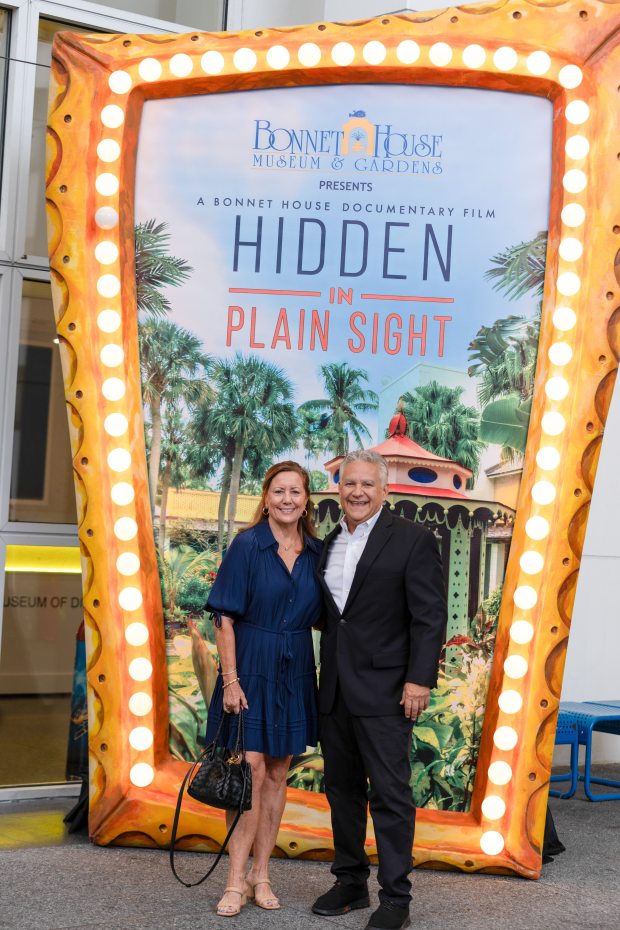
Lynn and Jim LaBate, one of the film producers, during the documentary short’s premiere at the AutoNation IMAX 3D Theater in Fort Lauderdale’s Museum of Discovery and Science. (Bonnet House Museum & Gardens/Courtesy)
David Warren
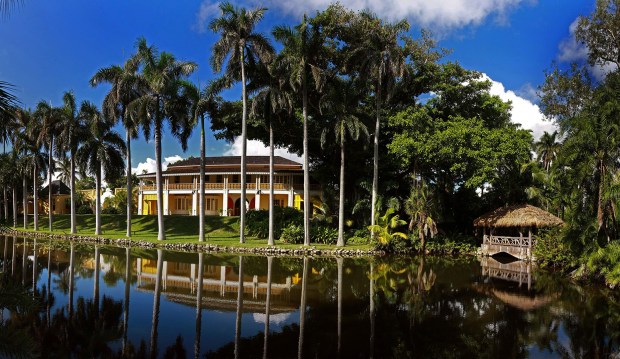
The eastern facade of Fort Lauderdale’s Bonnet House Museum & Gardens. (David Warren/Courtesy)

Bonnet House Museum & Gardens
The audience at the IMAX premiere of “Bonnet House Museum & Gardens: Hidden in Plain Sight” in Fort Lauderdale on Tuesday, Sept. 29. (Bonnet House Museum & Gardens/Courtesy)