
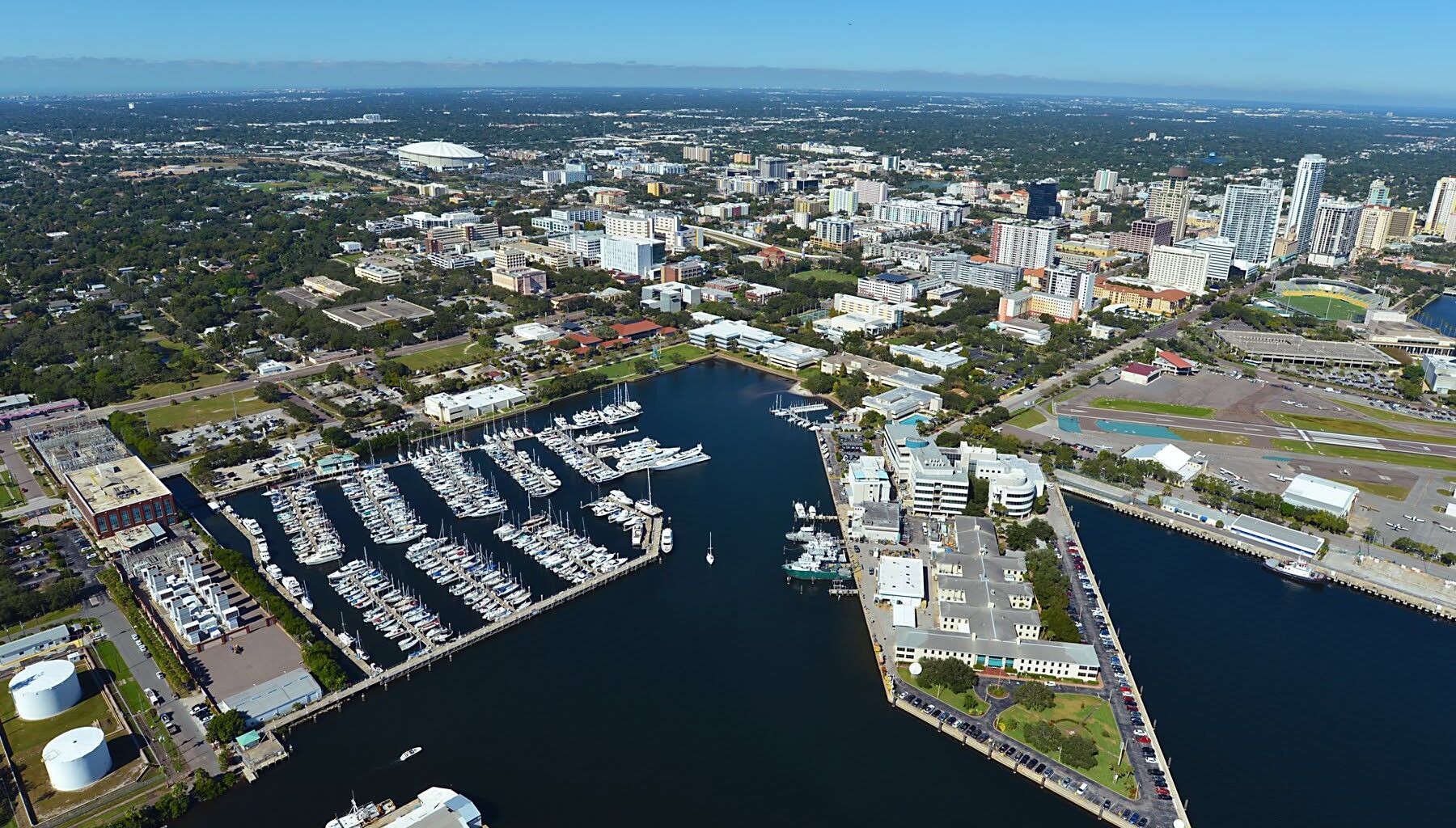
St. Petersburg voters will decide whether to give city officials more flexibility in negotiating long-term leases at the Port of St. Petersburg.
“It would change the allowable lease maximum to be 25 years instead of 10 years,” said Alison Barlow of the St. Petersburg Innovation District. “It’s not specific to any lease agreement.”
Port property is currently subject to a 10-year lease limitation under the City Charter. Agreements beyond that require approval through a citywide referendum. The proposed amendment would allow leases of up to 25 years to move through the city’s regular approval process.
Individual agreements would still require review and approval by the city administration and City Council. The amendment would not change permitted uses at the port.
Maintaining a shorter lease agreement length inhibits investment, according to Barlow, who said organizations providing money for projects often want assurances that their investments will remain in place long enough to produce results.
“When we are talking about the HUB, we are talking about private and public funders that are worried we are only operational for 10 years,” she said. “It shows a commitment by the community for these endeavors [if we expand the lease agreement].”
The Innovation District’s Maritime and Defense Technology Hub, or HUB, is one operation that could be affected. Barlow said the organization is in the middle of a federal grant proposal that requires a 25-year commitment.
“Many investors from grants want lasting change, and they take years to accomplish,” she said. “If we don’t have the ability to satisfy these grants, we may lose them.”
City materials promoting the amendment say longer terms could help attract investment, support maritime research and improve waterfront resilience. The proposed 25-year limit also matches the lease limitation at neighboring Albert Whitted Airport, which voters increased from five to 25 years through a 2004 charter amendment.
Changing the port limit would also reduce the circumstances in which voters are asked to approve an individual long-term lease. Barlow pointed to the type of work taking place at the port when asked about maintaining public oversight of the waterfront property.
“The small scale of our port is an attribute we are happy about,” she said. “It has the flexibility to allow for research off the water and entrepreneurs can test right here and work with the Coast Guard.”
That smaller footprint, Barlow said, gives researchers and companies a place to conduct work that can be difficult at ports handling heavier commercial traffic.
“This ecosystem is very unique,” she said. “When someone needs to test something in the water, we are a great option for them.”
The amendment would not grant a 25-year lease to the Innovation District or any other organization. It would change the maximum term the city could approve without putting that individual lease before voters.