
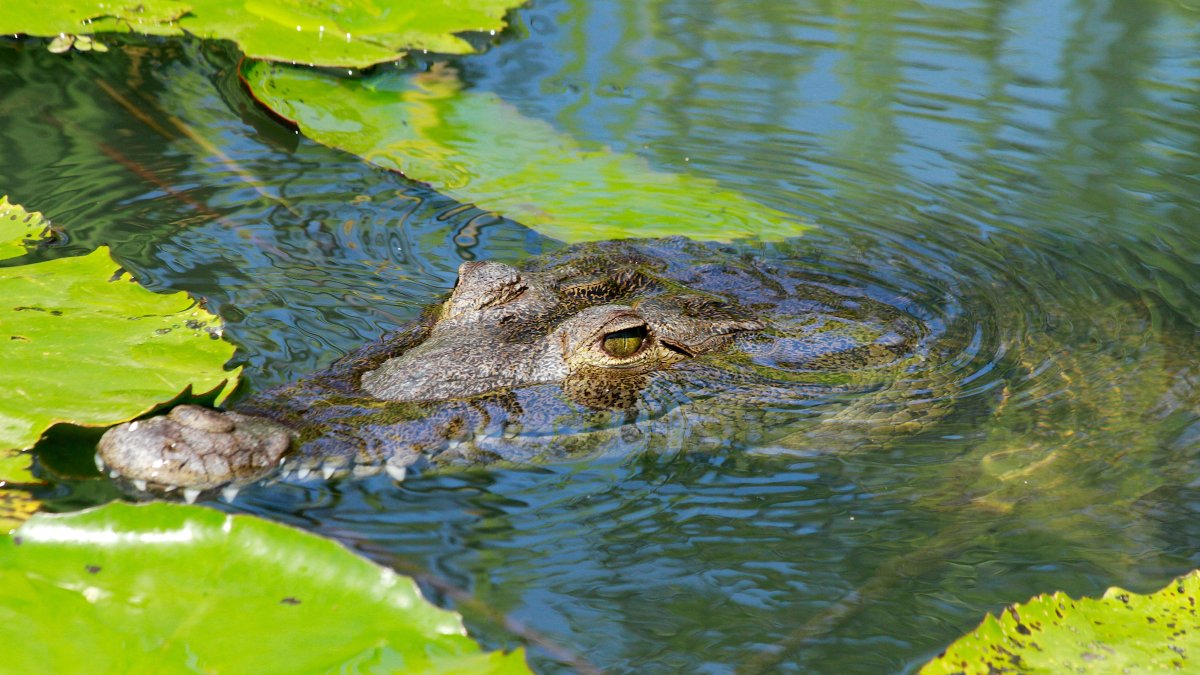
A crocodile that died in South Florida is believed to be the first in the state to die from apparent lead poisoning, wildlife officials said.
Over 22 grams of lead were found in the American crocodile’s stomach after it unexpectedly died, the Florida Fish and Wildlife Conservation Commission’s Research Institute said Tuesday.
A recent study found lead poisoning contributed to the croc’s death, the FWC said.
According to the study, the crocodile had been captured in November 2023 after a Miami-Dade resident reported that it climbed into their swimming pool.
The crocodile died during the routine capture and satellite transmitter attachment and researchers performed a field necropsy.
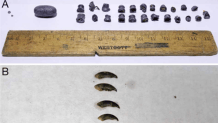
During the necropsy, researchers found 22.42 grams of lead in the croc’s stomach, about the same weight as an AA battery.
The lead included 23 air-rifle pellets, a fishing weight, and small lead fragments, officials said.
Researchers also found the remains of at least one green iguana.
Florida Fish and Wildlife Conservation CommissionFlorida Fish and Wildlife Conservation Commission
A: Lead contents recovered from the stomach of the
deceased crocodile. B: Four green iguana (Iguana iguana)
claws recovered from the stomach of the
deceased crocodile
It’s believed the croc was exposed to lead from multiple sources, with the air-rifle pellets likely swallowed as the crocodile scavenged iguana carcasses that had been shot.
The fishing weight suggests additional sources of exposure, the study said.
In addition, the croc had significant tooth loss, often associated with long-term lead exposure, and a high concentration of lead in its liver.
“Researchers concluded that lead exposure likely weakened the crocodile’s overall health and reduced its ability to withstand the stress of capture, contributing to its death,” the FWC said in a news release. “They also suggest it is likely additional crocodiles are being impacted, but the scale and scope of this problem are not yet fully known.”
The discovery has prompted additional sampling for lead and other contaminants in American crocodiles throughout their Florida range, officials said.