
The Miami-Dade County Homeless Trust has been awarded up to $12 million in federal funding to expand street-based behavioral health services for people experiencing unsheltered homelessness in Miami’s urban core.
The grant from the Substance Abuse and Mental Health Services Administration, through its Safety Through Recovery, Engagement, and Evidence-based Treatment and Support (STREETS) program, makes the Homeless Trust one of eight communities selected nationwide, according to a press release from the organization.
The Trust will receive $3 million annually for up to four years as part of a $96 million federal investment.
The funding will support the Miami Safe Streets Collaborative, a program designed to provide coordinated outreach, treatment and recovery services to people experiencing homelessness who have serious mental illness, substance use disorders or both.
The Homeless Trust, which leads Miami-Dade County’s Homeless Continuum of Care, will lead and monitor the program. The collaborative will bring together local government, health and housing providers, law enforcement and the courts.
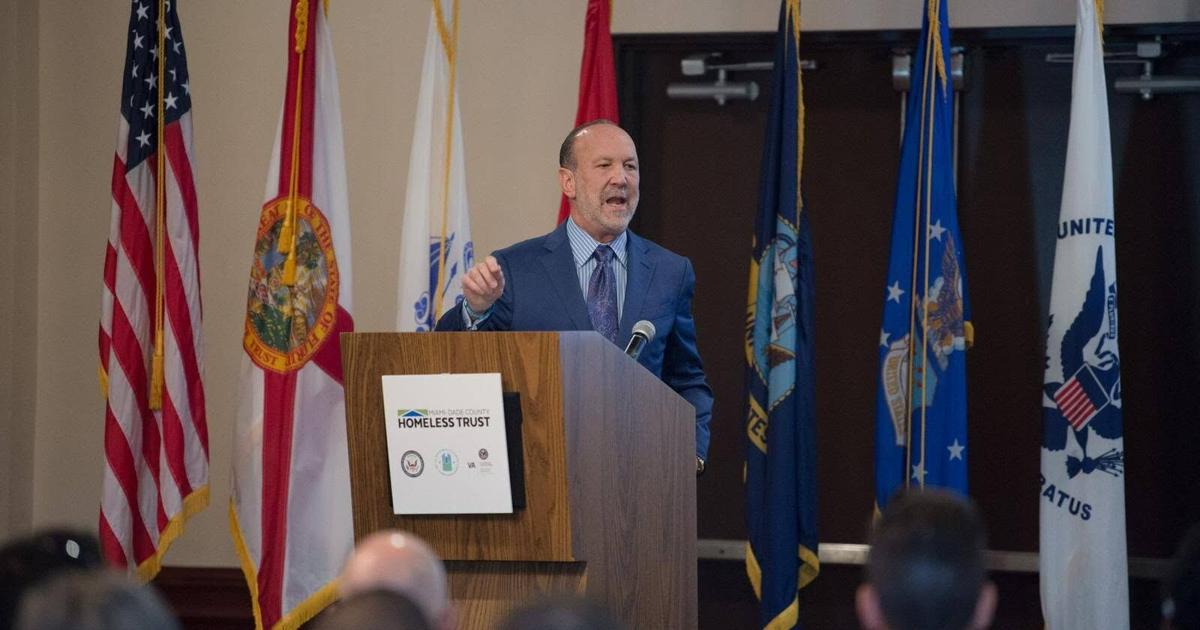
“My deepest gratitude to SAMHSA, U.S. Department of Health and Human Services, and the Administration for recognizing the work of the Trust and its partners. This grant is part of a missing link to help the Homeless Trust further drive down homelessness in Miami’s urban core,” Ron Book, chairman of the Miami-Dade County Homeless Trust, said in the release.
“The Miami Safe Streets Collaborative will be intertwined with the new Miami Center for Mental Health and Recovery, and I want to thank Miami-Dade County Mayor Daniella Levine-Cava and the Board of County Commissioners for their efforts to expand access to mental health care and improve public safety,” Book said.
The program will serve unsheltered individuals in Downtown Miami, Overtown, Little Havana, Allapattah and Wynwood/Edgewater. It will focus on people with serious mental illness, serious emotional disturbance, substance use disorders or co-occurring mental health and substance use disorders.
According to data from the City of Miami Police Department cited in the release, that population accounted for 1,642 crisis calls, 1,268 narcotics calls and 4,568 homeless contacts in 2026.
The Miami Safe Streets Collaborative includes New Hope C.O.R.P.S., The Advocate Program, Camillus Health Concern and Behavioral Science Research, which will evaluate the program’s processes and outcomes.
The initiative will use multidisciplinary mobile outreach teams to identify and engage people experiencing homelessness. Teams will use hotspot mapping, conduct clinical assessments, provide overdose prevention and connect people with treatment through what the release describes as “warm handoffs.”
Participants will also be connected to evidence-based treatment, including medications and psychosocial services. Individualized plans may include assistance with legal and benefits navigation.
The program also will connect eligible participants to housing aligned with treatment engagement, along with ongoing tenancy support and connections to employment, education and community resources.
A formal agreement among law enforcement, health, housing and criminal justice partners will establish a leadership council and workgroups to coordinate the effort.
“STREETS takes treatment directly to Americans living on our streets and connects them to the care and support they need to recover,” U.S. Department of Health and Human Services Secretary Robert F. Kennedy said in the release. “We are helping people reclaim their health, rebuild their lives, and achieve the dignity, purpose, and independence that come with recovery.”
The STREETS program supports SAMHSA’s stated priorities of advancing evidence-based treatment approaches focused on recovery, self-sufficiency and public safety while addressing the effects of substance use.