
TAMPA, Fla. — A bill stalled in Congress would expand access to in vitro fertilization and other fertility-related care for active-duty military members and their dependents, including families in Florida with limited options under TRICARE.
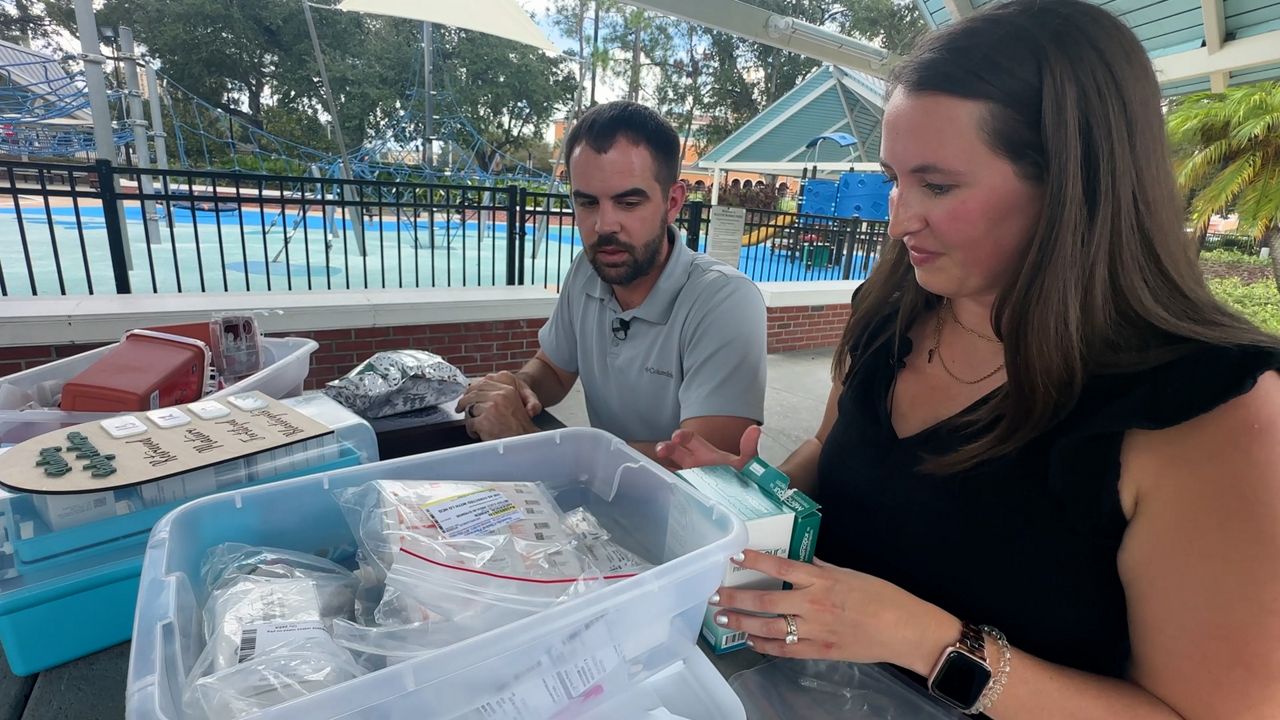
Arwen and Chad Anderson said they always wanted to start a family after getting married in 2019. For the past five years, they have tried to conceive through IVF.
“We’ve had three full cycles. So it kind of gets repetitive, kind of blends together,” Chad Anderson said.
The couple said they are preparing to start another cycle despite previous disappointment.
“When people hear IVF, and I was one of them, you automatically think you’re going to have a baby,” Arwen Anderson said. “But sometimes, it just, for some of us, it doesn’t work out like that.”
Chad Anderson served in the Navy for 10 years before ending his service in 2021. He said their IVF journey began after his military service, but he tried to learn more about his fertility while still serving.
“I did try to get testing while I wasn’t married, just to see if I was fertile or not, and they would not do anything like that,” Chad Anderson said.
The IVF for Military Families Act would require the “Secretary of Defense to ensure fertility-related care for active-duty uniformed service members and their dependents is covered under TRICARE Prime and TRICARE Select.” The legislation was originally introduced in 2025.
TRICARE’s website says assisted reproductive technology services, including IVF, are not covered. There are exceptions, including some military hospitals that offer assisted reproductive technology services through reproductive endocrinology and infertility clinics, but none are in Florida.
Dr. Angeline Beltsos, a reproductive endocrinologist with Brown Fertility in Tampa, said IVF coverage should be available more broadly.
“Infertility can affect anyone, and for those that are serving in the military, that may have to delay getting tested or their treatment is a shame when we could be helping them,” Beltsos said.
Beltsos said her husband also served in the Navy and that IVF coverage options were not available at that time. She said active military patients today often have to explore other coverage options.
“Their biological clock is ticking, but they may not have the opportunity to try when they are active military,” Beltsos said.
Chad Anderson said he has explored returning to the Navy reserves for TRICARE coverage, but he and Arwen Anderson said the time apart would not be worth it.
“We were going to come up with the money because this is one of the most important things in our life,” Chad Anderson said. “So we would take a loan if we needed to or find a way.”