
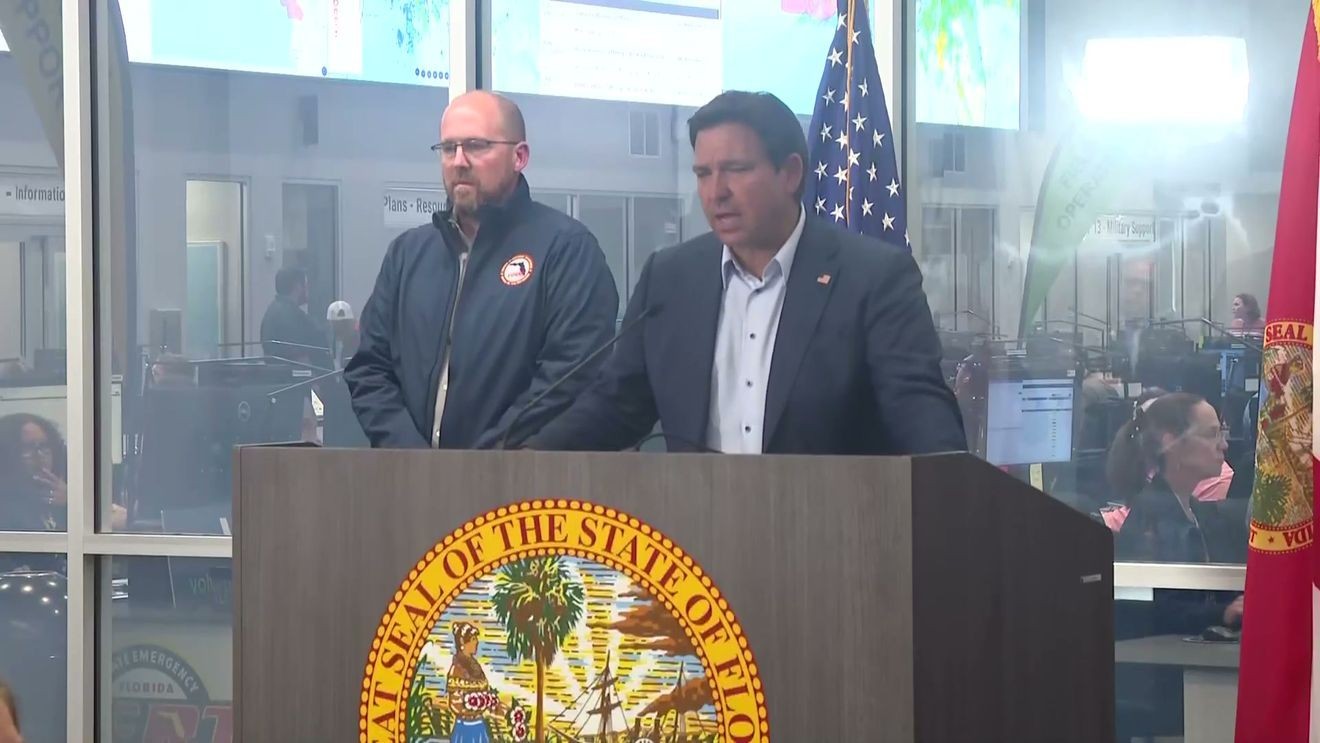
TALLAHASSEE, Fla. (CBS12) — Gov. Ron DeSantis said Florida is preparing for Hurricane Isaias to make landfall late Friday night or early Saturday, warning residents across the Panhandle to expect dangerous wind, flooding, storm surge and possible tornadoes.
Speaking Thursday from the State Emergency Operations Center in Tallahassee, DeSantis said the storm was expected to bring tropical-storm-force winds by Friday afternoon. Forecasts at the time placed the center of the storm somewhere between Mobile Bay and Navarre.
“We are assuming that this could reach Category 3 status,” DeSantis said. “We’re going to prepare as if the shear isn’t going to do that.”
The governor said Isaias was expected to be especially dangerous on its eastern side, meaning impacts could stretch across much of the Florida Panhandle even if the eye makes landfall near the Alabama-Florida line. He said the storm could produce 5 to 7 feet of storm surge, damaging winds, tornadoes and heavy rain over already saturated ground.
Latest forecast: Hurricane Isaias continues to gain strength with top winds at 85 mph
“You can hide from the wind, but when that water starts rising, that can be very, very dangerous,” DeSantis said, warning that flooding could also affect inland Panhandle communities.
Florida’s Division of Emergency Management has been coordinating with counties and staging equipment and supplies ahead of the storm, according to DeSantis. The state said it had positioned or planned to position more than 1,000 generators; 500,000 gallons of gasoline; 1 million gallons of diesel; more than 3 million meals ready to eat; and 1.1 million bottles of water.`
The Florida Department of Transportation had nearly 900 workers, about 260 pieces of heavy equipment and 100 pumps ready for deployment, DeSantis said. FDOT also waived tolls on the Garcon Point Bridge in Santa Rosa County, the Spence Parkway and the Mid-Bay Bridge in Okaloosa County to help with evacuations and storm response.
More than 6,000 utility workers and restoration personnel were on standby, while the Florida Highway Patrol had more than 300 quick-response troopers ready to assist with emergency operations, the governor said.
The Florida National Guard was activating personnel and expected to have about 5,000 guardsmen mobilized by Friday. The Florida State Guard deployed 175 soldiers and staged aircraft, maritime vessels and amphibious rescue teams in the Panhandle, according to the state.
The Florida Department of Health was mobilizing more than 100 ambulances for potential patient transportation and evacuations. The Florida Fish and Wildlife Conservation Commission also had airboats, shallow-draft boats, larger vessels, swamp buggies, ATVs and four-wheel-drive vehicles available for search-and-rescue operations.
See also: Florida, Panhandle counties prepare for Isaias with evacuations, shelters
Several Panhandle and North Florida counties issued evacuation orders for portions of Zones A and B, barrier islands and other low-lying areas. DeSantis urged residents under an evacuation order to leave before conditions worsen, but said they do not necessarily need to travel hundreds of miles.
“You only have to go tens of miles,” Florida Division of Emergency Management Executive Director Jared Perdue said. “Get to a safe shelter.”
DeSantis said every county has at least one pet-friendly shelter and urged people not to leave animals behind. Residents can find shelter information at floridadisaster.org/shelters and evacuation-zone information at floridadisaster.org/know.
Officials also urged residents to fill their gas tanks, stock enough water and nonperishable food for at least several days, and prepare for power outages. DeSantis cautioned residents to operate generators outdoors and away from enclosed areas to avoid deadly carbon monoxide poisoning.
“Execute your plan now,” DeSantis said. “You still have time to do it, but the time is running out.”
Florida’s emergency information hotline is active at 1-800-342-3557. Residents can sign up for local alerts at floridadisaster.org/alertflorida.