
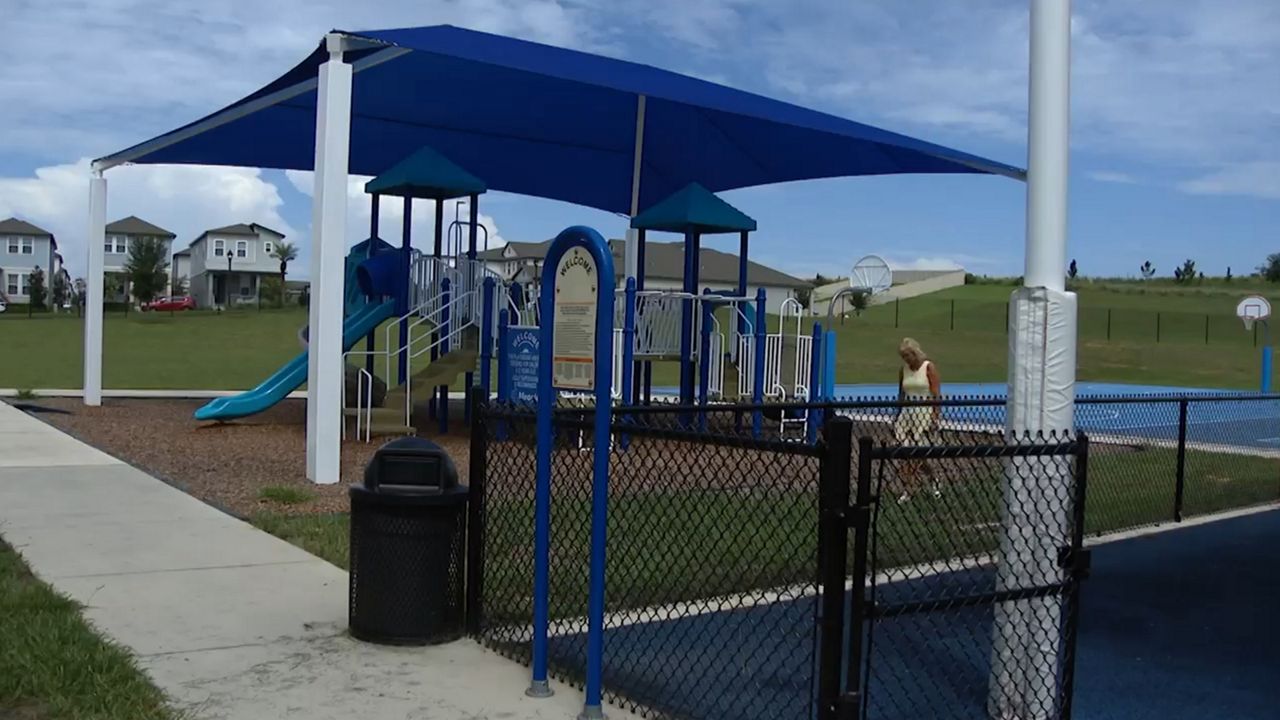
ORANGE COUNTY, Fla. — Hamlin Elementary School uses shade, fans, hydration stations and other campus features to help students stay safer outdoors as Florida schools face hotter conditions and the urban heat island effect.
The action comes as the National Oceanic and Atmospheric Administration reported that the summer months of June through August 2026 were the warmest on record in the 132 years the agency has tracked them.
Hamlin Elementary principal Angela Osborne said the quality of a school’s environment can influence the quality of learning.
“Our kids thrive because, for one of the reasons, is because they walk in to such a great place that looks so happy,” Osborne said.
That environment extends outdoors, where recess and physical education remain key parts of the school day. Osborne said the school wants students to be comfortable and active.
“We like to make sure that they’re comfortable and that they want to do daily play and activity,” Osborne said.
The campus includes playground shades, fans in the physical education area, hydration stations and engineered windows.

Osborne said the shade helps keep students cooler and reduces exposure to ultraviolet rays.
“They’re (windows) double-paned, and they have the tint and the cooling on the outside,” Osborne said. “The classrooms stay much, much cooler.”
Cooling features can be especially important in Florida cities because of the urban heat island effect. Cities tend to be warmer than surrounding areas because buildings and paved surfaces absorb and retain heat, while fewer trees and less vegetation limit shade and cooling.
A recent Climate Central study examined where urban heat and public schools intersect in 65 of the largest U.S. cities. The study found about 76% of students attend school in extreme urban heat islands, where densely built environments add at least 8 degrees of heat. In Florida, Orlando and Tampa ranked among the top 10 cities with particularly high exposure.
Dr. Marco Schiavron said surfaces matter when students are outside.
“The urban heat island effect is the phenomenon that happens where urban areas are usually way warmer than surrounding suburban and rural areas,” Schiavron said.
Dr. Harleen Marwah, a pediatrician, said children face specific risks during extreme heat.
“Children in particular have unique vulnerabilities to the heat due to both their physiology, their growth and development, and their dependence on others,” Marwah said.
Osborne said outdoor shade can help extend safe outdoor activity for students.
“They love coming out here,” Osborne said. “It also keeps us to the fact where we can expose the kids longer to outdoor activity, which in the longer run also helps with the benefit of their health.”
As temperatures rise, Osborne said schools might also need to adjust schedules.
“Our temperatures through the years have gotten hotter, so we may have to adapt to maybe having earlier times for kids to go out to recess,” Osborne said.
According to Orange County Public Schools, the district is working to provide sunshade coverage for all youth lots, helping create a cooler and safer environment for students.
Sunshades have already been installed at more than 100 elementary schools across the district, with approximately a dozen schools remaining.