
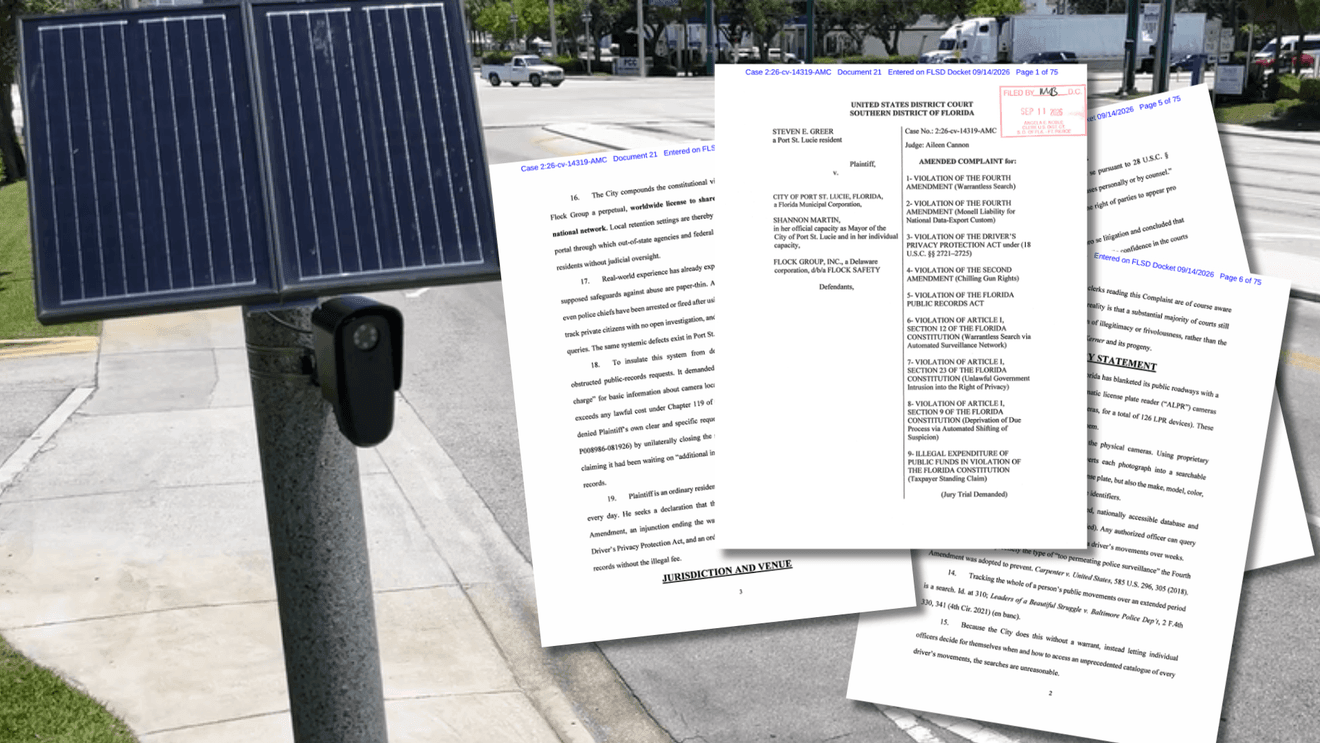
PORT ST. LUCIE, Fla. (CBS12) — A former surgeon turned Wall Street analyst is taking on his city, its mayor and surveillance technology company Flock Safety in federal court. He has no lawyer and wants the city’s license plate cameras gone for good.
Dr. Steven Greer filed the lawsuit in August against Port St. Lucie, Mayor Shannon Martin and Flock Safety, arguing the technology police use to track criminals also threatens Americans’ constitutional rights — from privacy to gun ownership.
“I was appalled at what I learned,” Greer told the CBS12 News I-Team.
Greer said he spent much of August researching Flock’s technology and preparing the federal lawsuit himself. While he has no formal legal training, he says his years working as a surgeon and later on Wall Street prepared him for the technical research and writing involved in representing himself.
Dr. Steven Greer filed the lawsuit in August against Port St. Lucie, Mayor Shannon Martin and Flock Safety, arguing the technology police use to track criminals also threatens Americans’ constitutional rights — from privacy to gun ownership. (WPEC)
Flock’s automated license plate readers photograph passing vehicles, recording identifying information along with the time and location. Police can search those records to help identify vehicles connected to crimes, but Greer argues the technology also allows officers to reconstruct someone’s movements without obtaining a warrant.
His amended complaint alleges Port St. Lucie operated 53 Flock cameras and another 73 Axon license plate readers, for a combined network of 126 devices.
See also: Brevard County sheriff’s agent killed in wrong-way crash while responding to shooting
Greer argues the collection and sharing of that information violates the Fourth Amendment, which protects against unreasonable searches and seizures.
The CBS12 News I-Team has been reporting on Flock cameras since last year, examining how the technology is used by law enforcement — and more recently, allegations of misuse.
In Fort Pierce, Officer Josepher Crutchfield was arrested after investigators accused him of searching his ex-girlfriend’s vehicle 382 times. In another case, a woman was arrested and jailed after investigators mistakenly linked her vehicle to a deadly hit-and-run crash. The charges against her were later dropped.
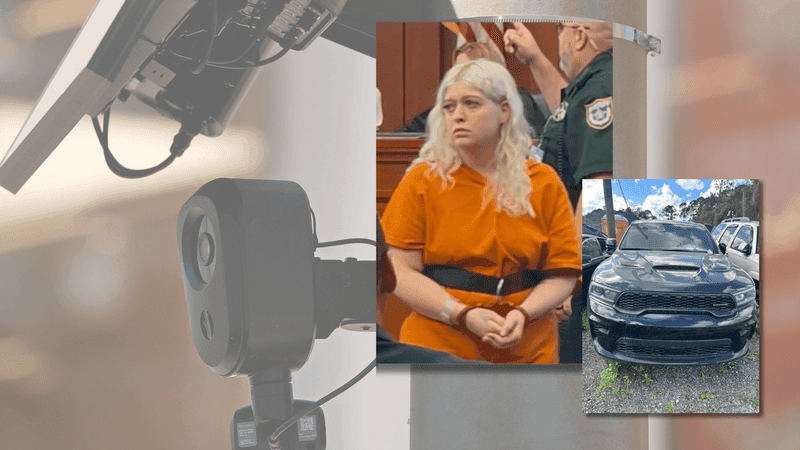
Lindsey Isaacs was 23 when Florida Highway Patrol investigators accused her of causing an Interstate 4 crash that killed three people. (CREDIT: The Law Offices of Patrick J. McGeehan, P.A.)
Greer cites both cases in his complaint, but argues the larger problem is the surveillance system itself.
During their interview, CBS12 I-Team reporter Katie Bente asked Greer about people who aren’t concerned about surveillance because they have nothing to hide.
“A lot of people say, you know, ‘I’m not doing anything wrong. So what does it really matter?'” Bente asked.
“Those are the people who don’t deserve freedoms. It’s just sheer ignorance. They don’t even understand why we have a Fourth Amendment,” Greer responded.
Law enforcement agencies, however, defend license plate readers as valuable investigative tools, crediting the technology with helping identify suspects, recover stolen vehicles and solve crimes.
“I know that police have always argued these Flock cameras really help solve crimes. What would be your response to that?” Bente asked.
“That’s their number one defense. It’s not true factually. It’s not true,” Greer said.
His assertion is disputed by law enforcement agencies that have documented cases in which license plate reader information helped investigators. Whether the technology is useful in solving crimes is a separate question from whether particular searches are constitutional.
Greer’s lawsuit also raises an argument not typically associated with traffic cameras: the right to bear arms.
He points to Flock cameras reportedly installed at the entrance to the Ocala Shooting Range, a public gun range in Marion County. Greer argues that recording who visits a shooting range could discourage people from exercising their Second Amendment rights.
“When I saw that case where they have Flock cameras in gun ranges, I said, ‘Whoa, that’s a Second Amendment violation,'” Greer told the I-Team. “They’re chilling you. The key buzzword is chilling. You know, if they scare you away from using your gun rights — that’s a violation.”
The complaint also challenges the city’s handling of public records requests, alleging officials withheld information about camera locations and system audit logs. It includes claims under Florida’s constitutional privacy protections and questions the legality of public spending on the network.
Dr. Steven Greer filed the lawsuit in August against Port St. Lucie, Mayor Shannon Martin and Flock Safety, arguing the technology police use to track criminals also threatens Americans’ constitutional rights — from privacy to gun ownership. (WPEC)
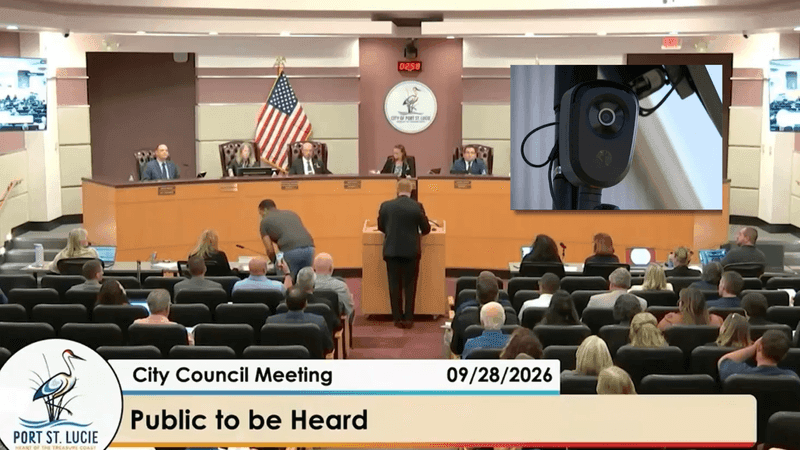
Greer has also raised First Amendment concerns following a Sept. 28 Port St. Lucie City Council meeting. He told the I-Team that the number of police officers present made him feel intimidated and could discourage residents from speaking out.
“I felt scared. I’m looking around, I see police officers all over the place,” Greer said.
Meanwhile, the legal debate over Flock is playing out across the country.
In Oklahoma, a federal judge ruled Oct. 1 that a warrantless search of approximately a month of license plate location records violated the Fourth Amendment, suppressing evidence obtained following the search. The ruling concerned the specific circumstances of that case and did not establish that all Flock searches are unconstitutional.
Law enforcement agencies have continued to defend the technology, while privacy advocates argue that large networks of searchable cameras allow police to monitor ordinary drivers on a scale that wasn’t previously possible.
Florida is already seeing changes. The Florida Department of Transportation revoked permits for automated license plate readers on state highway rights-of-way, requiring their removal from those locations. Port St. Lucie also voted to remove 18 of its 53 Flock cameras.
But for Greer, taking down some cameras isn’t enough.
When Bente pointed out that Port St. Lucie was already removing cameras, Greer argued that voluntary decisions can be reversed by future administrations.
“The end result is to get a consent decree, where the city and Flock agrees to pull the cameras forever,” he said.
His amended lawsuit seeks a declaration that the city’s surveillance program violates constitutional protections and an injunction restricting operation of the network or national data sharing without a warrant supported by probable cause. It also seeks disputed public records, statutory damages under federal privacy law and litigation costs.
GREER V PSL FLOCK COMPLAINTPDF previewPreview PDF
Greer told the I-Team that his primary goal is a binding court order, not a financial payout.
“I’m not running for office. I’m not seeking attention,” he said. “It’s my way of doing something.”
The lawsuit still faces significant legal hurdles, including potential motions to dismiss. A federal judge has not ruled that Port St. Lucie’s camera program violates the Constitution.
Greer says he’s willing to accept help from an attorney, but for now, he’s prepared to continue the fight himself.
“You cannot have this technology and not violate the Fourth Amendment. There’s no way around it,” he said. “You’ve got to get rid of it. Period.”