
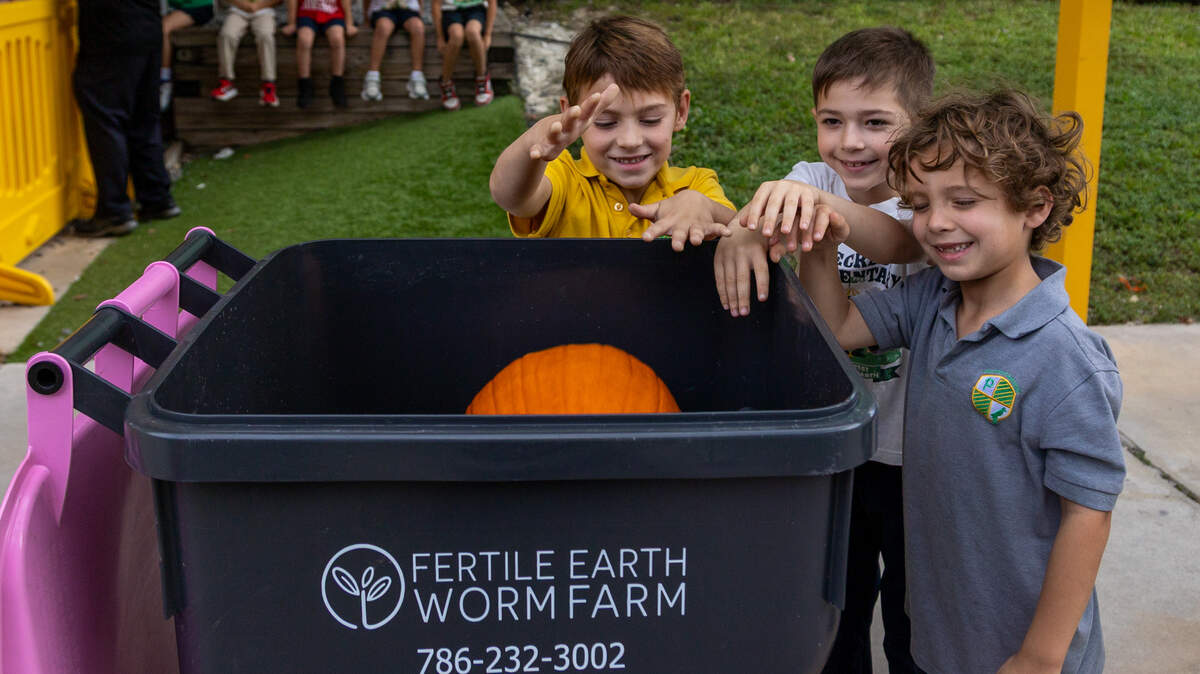
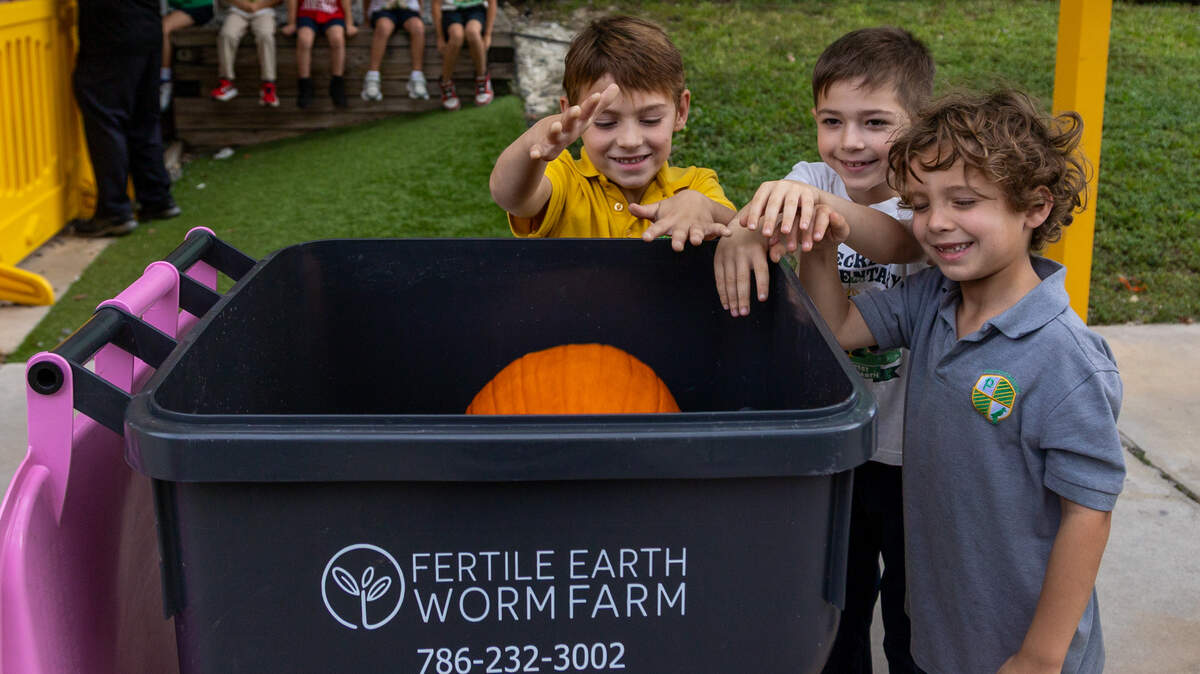
First grade students put a pumpkin into a compost bin.
Ashley Miznazi
amiznazi@miamiherald.com
Every morning, countless households brew a pot of coffee and discard the grounds without giving them another thought. Add yesterday’s vegetable trimmings, eggshells and fruit peels, and these small amounts of food waste quickly accumulate.
When food scraps are buried in landfills, they decompose without sufficient oxygen and release methane, a greenhouse gas far more potent than carbon dioxide. Composting offers a practical alternative. It diverts organic material from the waste stream and transforms it into a valuable resource that can enrich soil, retain moisture and support healthier landscapes.
In Coral Gables, our community composting program is demonstrating what can happen when residents turn environmental awareness into action. The program recently surpassed 9,000 pounds of food scraps collected, with 180 members participating. That is more than 4.50 tons of material kept out of the waste stream — an impressive start and a meaningful accomplishment for our community.
But it is only a start.
The success of any composting program depends on participation. While 180 members have already embraced the program, thousands more residents have an opportunity to join them. If participation grows, so will the benefits: less waste sent for disposal, fewer greenhouse gas emissions and more nutrient-rich compost returned to productive use.
A scoop of coffee grounds will not solve climate change. Neither will a handful of vegetable scraps or a few eggshells. Collectively, however, these everyday items add up. So do our choices.
Composting is one of the most direct ways residents can contribute to a more sustainable community. It does not require a major lifestyle change. It begins with separating food scraps from household trash and making a conscious decision to place them where they can do good instead of harm.
Local governments also have an important role. We must make sustainable choices convenient, provide residents with clear information and create programs that allow individual actions to produce communitywide results. Coral Gables established its program to do exactly that, and the response has been encouraging. Participants have shown that residents are ready and willing to be part of the solution when given the opportunity.
Now, we need more of our neighbors to take part. The next time you brew coffee or prepare a meal, consider the scraps left behind. They are not simply garbage. They are a small opportunity that, combined with the efforts of others, can make a measurable difference.
Our first 9,000 pounds prove that community composting works. Reaching the next 9,000 and many more after that depends on all of us.
Rhonda Anderson is the vice mayor of Coral Gables.