
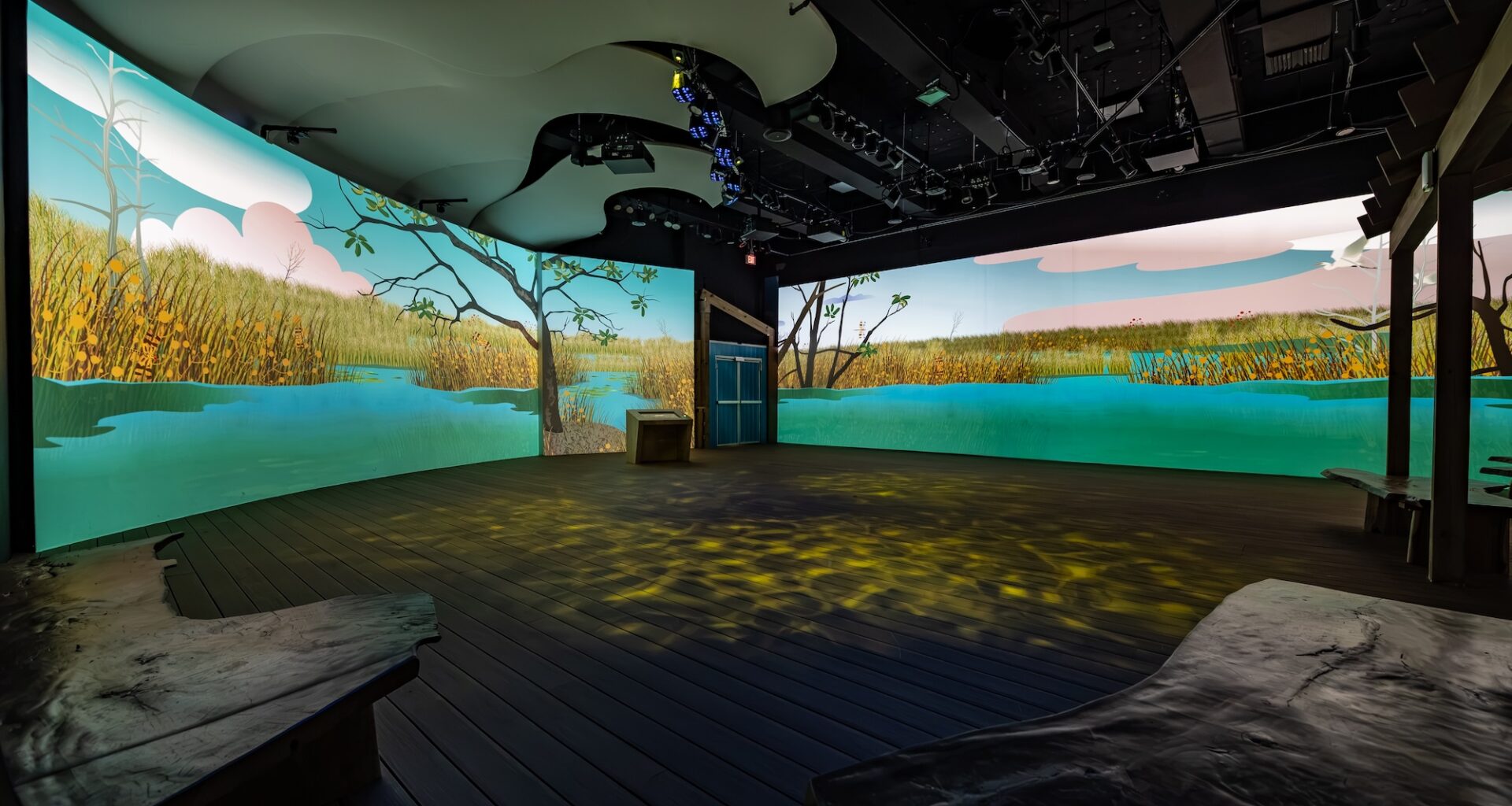
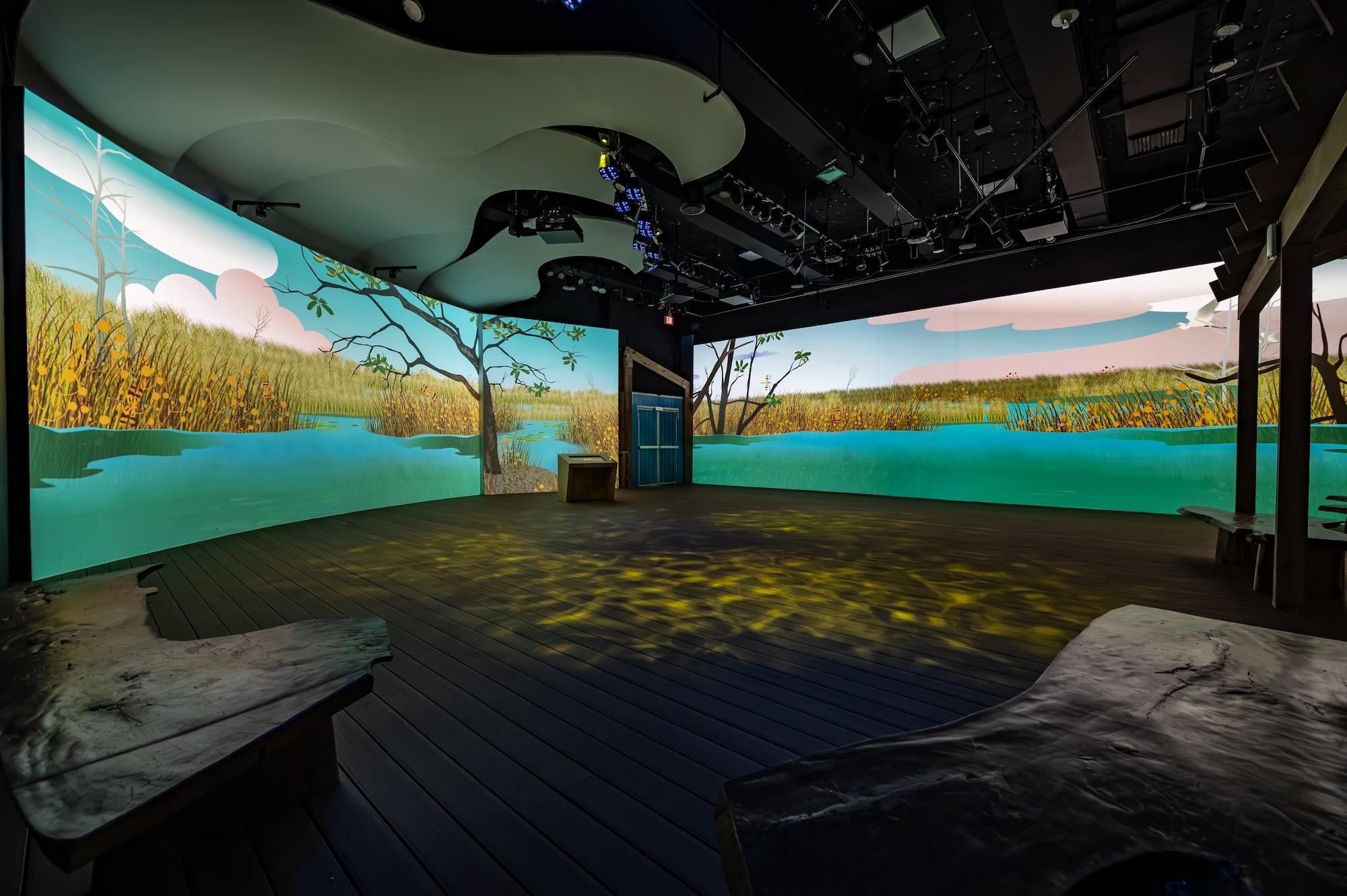
The Museum of Discovery and Science’s Everglades Theater
Provided by the Museum of Discovery and Science
Technology, science and Florida’s environment have changed dramatically over the last five decades, and the Museum of Discovery and Science (MODS) has evolved right alongside them.
The Fort Lauderdale-based science institution, one of the largest of its kind in Florida and one of the state’s most visited museums, is marking its 50th anniversary with a year-long celebration featuring festivals, tastings and other community events. Billed “Golden Moments. Infinite Discovery,” the festivities begin this month and run well into 2027.
“This is really an opportunity to look back at amazing accomplishments, but also to think about where we’re going next,” Joseph P. Cox, president and CEO of MODS, tells New Times.
MODS was founded in 1976 as the Discovery Center, a nonprofit science and educational institution. It officially opened to the public in 1977 at the historic New River Inn in Fort Lauderdale and became so popular that, after a decade, it called for more space.
It opened as the Museum of Discovery and Science in Fort Lauderdale’s Riverwalk Arts and Entertainment District in 1992, where it still stands today, welcoming more than half a million visitors each year, including more than 90,000 students on field trips.
Renovations and expansions have continued throughout its five decades, doubling exhibition space, expanding the Science Park outside, and adding new features like the STEM Center for Education and Career Development in 2014 and the aviation-themed makerspace, the Hangar, in 2019. Today, guests enjoy a cafe, park, gift shop, and the AutoNation IMAX Theater.
“The museum has never been frozen in time. We have always been evolving, changing, and constantly growing,” Cox says. “[In] one of the exhibits, 50 years ago, when MODS first opened, you could go into a room and look at a computer.” Fast forward to today, and the museum has launched curricula focusing on artificial intelligence. The aim is to teach young people how to use the technology as a tool, Cox says, without sacrificing critical thinking skills and creativity.
Another recent evolution?
MODS is opening its first satellite location, the Deerfield Beach Nature Center, expected in January 2027. The museum is partnering with the Deerfield Beach Community Redevelopment Agency to build the marine science center at Sullivan Park.
Two anniversary events precede the opening.
The 30th Annual Wine, Spirits & Culinary Celebration, on Oct. 23, honors Steve Halmos and Keith Koenig, who founded the fundraiser 30 years ago. Expect a cocktail hour, beer garden, food trucks, and an after-party under the signature Great Gravity Clock, which is powered by kinetic energy and is one of only three of its kind in the world. Proceeds benefit the museum’s mobile museum and makerspace, STEMobile.
For the Visit Lauderdale Science Festival on Jan. 16, 2027, the museum’s indoor and outdoor spaces expect to welcome more than 15,000 guests if 2026 numbers hold. The festival features science shows, workshops, professional speakers, food trucks, and local industries and universities showcasing breakthrough science.
Community and family celebrations will follow throughout the summer, and festivities wrap with the Golden Finale Dinner next fall, when MODS’ 50th Anniversary Committee co-chairs Katy and Jon Ferrando open their home to major donors, legacy partners, and board members.
As a 501(c)(3) private nonprofit, MODS relies on partnerships, philanthropic contributions, and community support. Cox reiterates that becoming a member is a great way to support the museum. Membership gives guests free admission year-round, plus reciprocal admission to hundreds of science centers across the country.
At a time when every outing adds up quickly, it’s a deal worth making the trek across county lines.