
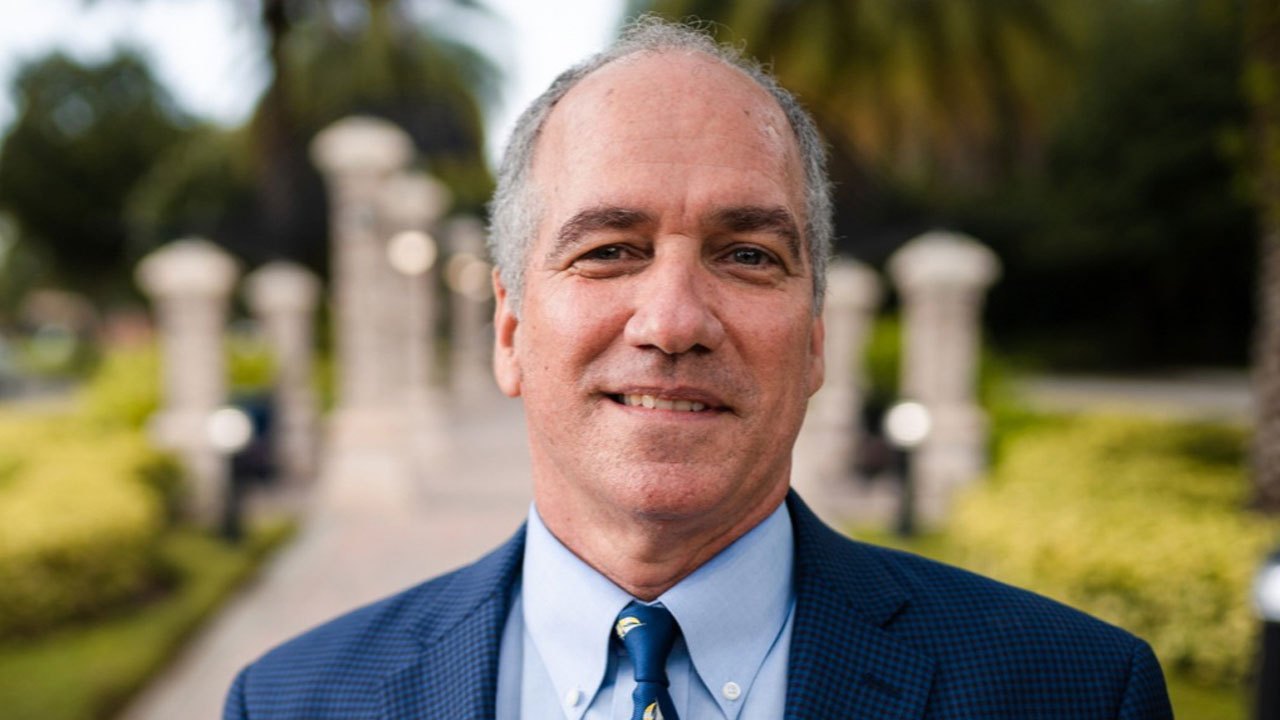
Campaign website: kevinmccannformayor.com
If elected, what are the most pressing problems you want to address, and what do you suggest to solve them? Please list each issue and how you will address them:
Top problem and your suggested solution:
Winter Springs’ most pressing challenge is maintaining and replacing aging infrastructure while improving our ability to withstand flooding and severe storms. We must complete the replacement of our wastewater treatment plants, continue upgrading lift stations and water systems, and prioritize stormwater, road and park improvements based on engineering, risk and community need. Those investments must serve the entire city fairly. Residents in the historic western side of Winter Springs and residents in eastern Winter Springs, including Tuscawilla, deserve the same level of financial investment, municipal services and community support. My solution is a disciplined, citywide capital plan supported by updated engineering, sustained maintenance, grants, low-interest financing and regional cooperation. Every neighborhood deserves to know that its needs are seen and that its residents have an equal voice in City Hall.
Problem 2 and your suggested solution:
The second challenge is pursuing smart development while protecting the natural and community character entrusted to us. Smart development means directing growth and redevelopment to appropriate locations with adequate roads, drainage, utilities and public services. It means listening to nearby residents, requiring credible professional studies and holding developers responsible for the effects of their projects. We cannot stop every development, particularly when state law limits local authority or a project lies outside our boundaries. However, we can still fight for attractive design, landscaping, buffers, tree preservation, wetland protection, effective stormwater management and the beautification that protects Winter Springs’ unique charm. We must also defend land preserved for conservation, including the former Winter Springs Golf Course, and continue protecting Seminole County’s Rural Boundary. Once conservation land, wetlands or mature tree canopy are lost, they may never be recovered.
Problem 3 and your suggested solution:
The third challenge is maintaining essential services while keeping Winter Springs affordable, financially stable and united as one community. Residents expect safe neighborhoods, dependable utilities, maintained roads and parks, but they also expect government to respect their money. Winter Springs operates with one of the region’s lowest municipal property-tax rates and a lowest number of employees per capita. Fiscal responsibility also requires fair investment throughout the city. The historic western neighborhoods and the eastern side, including Tuscawilla, may have different histories and needs, but neither should be overlooked. My approach is to prioritize essential services, maintain strong reserves, pursue outside funding and plan major projects before they become emergencies. Budget decisions should be based on documented community needs rather than geography, political influence or which neighborhood speaks the loudest.
Why do you deserve to be elected in this race?
I stepped forward in 2021 after the previous mayor abruptly resigned following catastrophic infrastructure failures and was then elected by Winter Springs voters in 2022. I came to the office through community service, not because I was pursuing a political career. During my tenure, we have moved forward with replacing failing wastewater infrastructure, secured approximately $19.2 million in grant and zero-interest funding for the East Wastewater Treatment Plant, strengthened the City pension plan to more than 105 percent funded and invested millions in stormwater resilience. I believe leadership must serve the entire city. The historic western side of Winter Springs and eastern neighborhoods, including Tuscawilla, deserve equal attention, investment and respect. I have consistently supported smart development, neighborhood protection, our tree canopy, wetlands, conservation land and the Seminole County Rural Boundary. I am asking for reelection because important work remains, and Winter Springs needs steady, experienced leadership committed to bringing every part of our community together.
According to a University of North Florida poll, Floridians say housing affordability is their top issue. What are your solutions for dealing with Florida’s affordability issue on a local level?
Local government cannot control mortgage rates, insurance premiums or every factor affecting housing costs, but it can avoid making the problem worse. I support smart development that provides appropriate housing opportunities through the redevelopment of underused properties in locations that can support them. Smart development should complement existing neighborhoods, use infrastructure efficiently and include realistic plans for roads, drainage, utilities and public safety. Affordability also means controlling the total cost of living. Residents do not benefit from less expensive housing if they face increased flooding, traffic, taxes, utility bills or insurance costs because development was poorly planned. We should encourage appropriate redevelopment while protecting established neighborhoods, conservation land, wetlands and tree canopy. Good planning can create housing opportunities without sacrificing the qualities that make Winter Springs a desirable place to live.
Will you vote YES or NO on the constitutional amendment to slash property taxes, and explain your position. How would you replace lost revenue – fees and/or service reductions?
My family and I will vote NO on Amendment 3. However, if Florida voters approve it, I will honor their legally binding decision and work faithfully to implement it. Following the law and respecting the will of the voters are fundamental responsibilities of elected office. I understand why property-tax relief is appealing. Families are struggling with housing, insurance, utilities and everyday expenses. Their frustration should not be dismissed. Based on the 2026 tax roll, Winter Springs estimates that Amendment 3 would reduce City property-tax revenue by approximately $2.38 million in its first year and $4.14 million annually once the exemption reaches $250,000. The City cannot absorb that recurring loss through efficiencies alone. It would likely require some combination of service reductions, increased fees and possible millage adjustments affecting the remaining tax base. Amendment 3 may provide meaningful relief to some homeowners, but it could also shift costs to renters, businesses and other taxpayers. Every family will be affected differently, and voters deserve to understand those long-term consequences.
Utility costs are rising for customers in Florida, and the proliferation of data centers is expected to exacerbate that issue. How should Florida’s utility regulators respond?
Florida’s utility regulators should ensure that the extraordinary power demands created by data centers are not subsidized by families and small businesses. Large users should be placed in appropriate rate classifications and required to pay the full costs of the generation, transmission and infrastructure needed to serve them. Regulators should consider long-term service commitments, minimum-demand charges and financial protections so existing customers are not left paying for unused infrastructure if a proposed data center is delayed or closes. The Florida Public Service Commission should also require transparent forecasting, reliability planning and public reporting. Innovation and economic development can benefit Florida, but those benefits should not come from shifting private infrastructure costs onto residential customers.
What do you think is the biggest environmental issue the government should address in Seminole County?
Flooding, water quality and the continued loss of natural drainage and conservation land are Seminole County’s most urgent interconnected environmental challenges. Water does not recognize municipal boundaries. Development or wetland loss in one jurisdiction can increase flooding and pollution downstream in another. Protecting wetlands, floodplains and mature tree canopy is not simply about appearance. These natural systems absorb water, reduce heat, protect wildlife and help preserve water quality. Government must also protect land already entrusted to it for conservation. That includes the conservation protections covering much of the former Winter Springs Golf Course and the voter-supported Seminole County Rural Boundary. We cannot stop all development, but we can insist upon responsible stormwater planning, meaningful buffers, tree preservation, beautification and designs that respect the natural character of our community.
Do you agree with the current federal and state governments’ approaches to immigration enforcement? Why or why not?
The City of Winter Springs will follow all applicable federal and state laws. Immigration policy is primarily a federal and state responsibility, and a municipal mayor has limited authority over it. I support lawful enforcement, due process and the constitutional rights of every person. My responsibility as mayor is to address matters the City has the legal authority and obligation to enforce. I will not use the mayor’s office to pass symbolic ordinances on matters outside the City’s jurisdiction. The Winter Springs Police Department should remain focused on protecting our community, enforcing the law and maintaining the trust necessary for residents to report crimes and cooperate with investigations.
Readers shared concern about overdevelopment in the Greater Oviedo and Winter Springs community. We know that local municipalities must plan for density based on state population projections. How will you handle decisions about incoming development and redevelopment that balances the law, the needs of the city and the desires of your constituents?
I believe in smart development, not no development and not development at any cost. Smart development places projects where roads, drainage, utilities and public services can support them. It respects surrounding neighborhoods, protects wetlands and tree canopy, and includes attractive design, landscaping and buffers that preserve Winter Springs’ unique charm. Every proposal should be evaluated under applicable law, the Comprehensive Plan and credible professional analysis of traffic, drainage, environmental and public-safety effects. Residents deserve early notice, understandable information and a meaningful opportunity to participate. When state law limits our authority or a project outside the City may still affect our residents, I will advocate for the strongest protections available. Even when we cannot stop a project, we can fight for beautification, responsible stormwater management, tree preservation and compatibility with nearby neighborhoods.
Local governments continue to increase stormwater rates to pay for drainage projects. At the same time, the city and county commissioners continue to approve development, which eliminates natural drainage and filtration. If elected, what actual, concrete policy steps would you take to address flooding?
I would continue updating the City’s stormwater planning using current rainfall, flood and watershed information. Projects should be prioritized according to public safety, repetitive flooding, infrastructure condition and the number of residents protected. These investments must address needs throughout Winter Springs. Historic western neighborhoods and eastern neighborhoods, including Tuscawilla, should receive fair consideration based on engineering and documented risk. Development must demonstrate that it will not shift stormwater onto neighboring properties or worsen downstream conditions. I support protecting wetlands and natural drainage, requiring independent hydrological review for high-risk projects, maintaining canals, ponds and drainage structures on a published schedule, and coordinating with Seminole County and neighboring cities by watershed rather than political boundary. We must also continue pursuing state and federal funding so that local homeowners are not left carrying the entire cost.
Residents often complain of high water bills, and water bills that are going up. Can you propose any relief for residents?
Residents deserve accurate bills, dependable service and a clear explanation of what they are paying for. The City should continue testing meter accuracy, promptly investigating unusual usage, helping customers identify leaks and offering reasonable payment arrangements when appropriate. Residents should also have access to understandable usage information so they can identify a problem before receiving an unexpectedly large bill. Long-term relief depends on reducing the amount ratepayers must finance. That means pursuing grants and zero-interest loans, competitively bidding projects, phasing improvements responsibly and avoiding emergency repairs caused by deferred maintenance. I will not promise artificially low rates that leave the next generation with failing infrastructure. My commitment is to make every dollar transparent, pursue outside funding and ensure that necessary utility investments are completed as affordably as possible.
What steps would you take to ensure elected officials don’t personally profit from development?
Let me be clear: I WILL NEVER SEEK A HIGHER OFFICE. Elected officials should never use public office for private financial gain. Officials must fully disclose financial interests, gifts and conflicts, recuse themselves when legally required and avoid private arrangements that create even the appearance of preferential treatment. Development applications, meetings, supporting documents and relevant communications should be part of an accessible public record. I also support competitive procurement, independent professional review and consistent application of development standards. No applicant should receive special treatment because of political contributions, personal relationships or access to elected officials. When uncertainty exists, the City Attorney or the Florida Commission on Ethics should be consulted before an official participates. Public confidence requires more than technical compliance. It requires transparency and judgment.
Cities use the county’s full-day traffic counts to decide whether or not to widen roads instead of peak times, which can cause congestion as development comes in. What steps would you take to address traffic issues?
Full-day traffic counts are useful, but they should not be the only information used to evaluate development and roadway capacity. Traffic studies should also examine peak-hour turning movements, queue lengths, school arrival and dismissal periods, crash history, seasonal conditions and the combined effects of approved projects that have not yet been built. A road can appear acceptable over a full day while failing residents during the hours when they actually need it. I would ask City staff and reviewing agencies to require more realistic peak-period analysis where legally permitted and to verify important assumptions independently. Through MetroPlan Orlando, Seminole County and FDOT, I will continue advocating for regional planning that measures congestion as residents experience it. Lets remember: “If you build it, they will come”. Relief roads and added lanes of traffic may provide relief for other communities, but they change the fundamental fabric of our community.
Some traffic lights only let two to four cars through before changing to yellow and red. Some left turn lanes are so short that cars see their green left turn lights, but cannot access the left lane. Traffic jams are getting longer on Slavia and some other roads all the time. How would you address these issues?
Traffic signals and major roads in this area are controlled by different governments, so solving these problems requires cooperation rather than finger-pointing. I would request corridor-level studies that measure signal timing, turning movements, queue lengths and travel delays during actual peak periods. Signals that release only a few vehicles or turn lanes that cannot be reached because traffic blocks their entrances should be reviewed for retiming, lane extension or intersection redesign. Where appropriate, adaptive signal technology can respond to changing traffic conditions rather than relying entirely on fixed schedules. Winter Springs must document resident complaints and work directly with Seminole County, FDOT, Oviedo and MetroPlan Orlando to address Slavia Road and other regional bottlenecks. Development reviews should also consider cumulative traffic from projects across jurisdictional boundaries.
Do you support keeping the rural boundary as-is in Seminole County?
Yes. I strongly support keeping Seminole County’s Rural Boundary in place. The Rural Boundary protects environmentally sensitive land, water resources, wildlife habitat and the rural character residents overwhelmingly voted to preserve. It also helps prevent development patterns that could place additional traffic, drainage and infrastructure burdens on Winter Springs. Conservation is a public trust. When land is protected for future generations, government has a responsibility to defend that protection. The same principle applies to conservation protections covering much of the former Winter Springs Golf Course, our wetlands and our mature tree canopy. I will continue opposing efforts to weaken or circumvent the Rural Boundary and will advocate for meaningful local participation before utilities, annexation or urban development are extended into protected rural areas. I am proud of the collaborative advocacy work recently accomplished to preserve the “High Oaks Ranch” and other properties in Seminole County.
What steps would you propose to address student safety on e-bikes?
Student e-bike safety requires education, parental involvement, appropriate infrastructure and consistent enforcement. I would bring together the Police Department, Seminole County Public Schools, parents and students for a focused safety campaign covering helmets, visibility, speed, traffic laws, passenger limits, phones and headphones, and safe interaction with pedestrians and vehicles. Education should begin before a student is involved in a crash. The City should also identify dangerous crossings, missing bicycle connections and locations where sight distance or road design creates unnecessary risk. Enforcement should concentrate first on dangerous behavior and repeat violations rather than treating every young rider as a criminal. Any local ordinance should be based on crash data, coordinated with state law and developed with public input.
What are candidates willing to do to restore respect for the election process?
Candidates must begin by demonstrating the conduct they expect from others. I will accept certified election results and use lawful procedures if a legitimate question arises. I will not create anonymous identities to attack opponents, knowingly repeat false information or personally attack my opponent. My campaign will focus on issues not accusations or political rhetoric. Candidates should disclose who funds their campaigns, correct mistakes promptly, participate in substantive public forums and address disagreements without treating neighbors as enemies. I have invited my opponent to a one-on-one debate with an independent moderator, unknown questions and adequate time to discuss real issues. Confidence in elections is strengthened through transparency, professional election administration, lawful observation and respect for voters.
Winter Springs has the highest percentage of residential tax base. What solutions would you propose? And what ideas do you have to revitalize the Winter Springs Town Center?
Winter Springs is approximately 90 percent residential, leaving homeowners responsible for a large share of the tax base. We should diversify revenue through smart commercial redevelopment without sacrificing neighborhoods, conservation land or community character. Revitalizing the Town Center is also an important part of ensuring that the historic western side of Winter Springs receives the same level of attention, investment and community support as eastern neighborhoods, including Tuscawilla. I support working with residents, businesses and property owners to identify barriers involving vacancies, access, parking, visibility, permitted uses and connections to surrounding neighborhoods. The goal should be occupied storefronts, restaurants, professional services, neighborhood-scale businesses, attractive public spaces and community activity. Please understand, I moved to Winter Springs and successfully opened a restaurant. I understand the unique challenges and share the concerns of both residents and business owners. Redevelopment should preserve the Town Center’s intended character, tree canopy and visual appeal. The city can provide predictable rules, efficient permitting, infrastructure planning, beautification and active business recruitment without subsidizing private projects that lack a clear and measurable public benefit.
As a city commissioner or mayor, will you pledge to accept the recommendations from the Charter Review Commission as presented, with no changes?
No, I would not make an unconditional pledge in advance to accept every recommendation without changes. I respect the residents serving on the Charter Review Committee, and their recommendations deserve serious consideration. The degree of consensus matters. A unanimous 7-0 recommendation should carry greater weight than a closely divided 4-3 or 5-2 vote. The City Commission must also consider public input, legal requirements, fiscal and operational consequences, and whether the proposed ballot language accurately accomplishes the committee’s intent. I will approach every recommendation with an open mind and give substantial weight to the committee’s work. However, I will not surrender my responsibility to exercise independent judgment before seeing the final recommendations and supporting analysis.
This Voter Guide was produced by the News Collaborative of Central Florida, a collective of independent local news outlets and aligned partners working toward a more informed and engaged Central Florida. Questions for the candidates were created by members of the collaborative and shared with candidates to answer. Attempts were made to contact all candidates to answer our questions – many responded but some did not. If a candidate did not respond, we have done our best to provide answers to our questions based on candidates’ websites, social media posts or public comments. For more information about the News Collaborative of Central Florida, click here.