
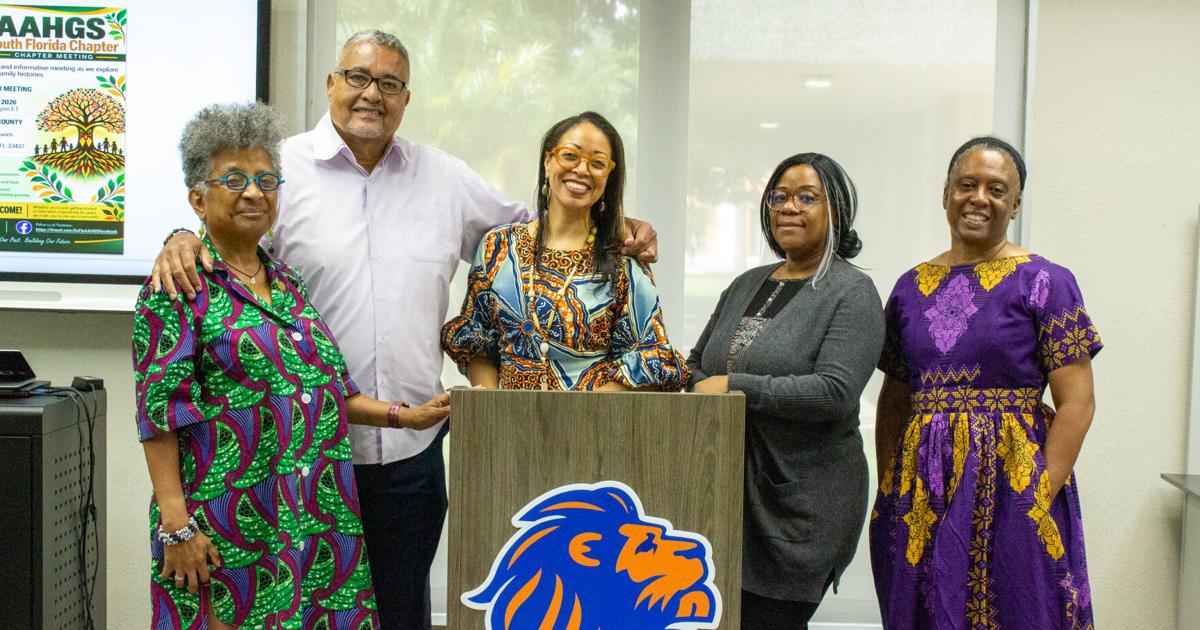
Last month, the Afro-American Historical and Genealogical Society, or AAHGS, introduced its South Florida chapter, encompassing Miami-Dade, Broward and Palm Beach Counties.
Founded in 1977, AAHGS was created to fulfill the need for a historical organization that would focus largely on the family histories of minority groups, with the belief that they had been long overlooked in U.S. history.
According to the AAHGS website, the organization’s mission is to preserve the history, genealogy and cultural diversity of those descended from African people, promoting scholarly research and networking while also providing resources and assisting members in documenting their histories.

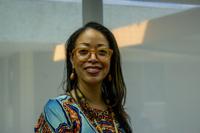
Tamara Bell is the president and founder of SoFlo AAHGS.
(Elisabeth Campbell for The Miami Times)
“What makes us different?” said South Florida chapter president and founder Tamara Bell. “We want to stress the importance of our history. As you know, this is not a time where we need to forget where we come from. A lot of people want us to forget, but I think it’s a [step] in the right direction to encourage people to participate to learn about their histories. You have to start somewhere. If you don’t know your history, you may not know where you’re going.”
The new South Florida chapter of AAGHS has held two initial chapter meetings so far in two of its three target cities: Fort Lauderdale and Miami. The initial meeting in Palm Beach County will take place at the West Boynton Branch Library on Nov. 14.
Attendees at the September meeting in Fort Lauderdale.
(Courtesy of SoFlo AAHGS)
During the Oct. 10 meeting in Miami at Florida Memorial University, two members gave presentations, drawing from their own journeys of discovering their ancestral histories. One member, Troyce Gill, spoke about his lifelong interest in his family history, beginning in childhood with family reunions but remaining largely “dormant” until his fifties when he “came into his Pan-African consciousness.”
“I wanted to use this knowledge to be able to inform my family,” said Gill during his presentation. “I want to try to find ways to get [my nieces and nephews] engaged at an earlier time than… I did. How can we have this knowledge ourselves and not just sit on it, but share it with the family? We’ve already started talking about integrating this genealogical discussion at our family reunions.”
For Gill, it goes beyond a simple education. He hopes to find the very first Africans in his lineage to have stepped foot in the Americas and physically trace back their journey.
“I had a goal that if I could be successful and find out who those first persons were and where they came from, I’d like that to drive my future travel plan, so that I can go back to the continent and visit the land where my ancestors came from,” said Gill. “And then ultimately, I want to use this knowledge to build more resilience.”
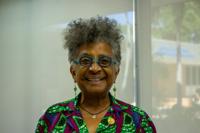
Dr. Ramona La Roche is the programs chair of SoFlo AAHGS.
(Elisabeth Campbell for The Miami Times)
Resilience and preservation were running themes throughout the October meeting. Kala Luzia, chapter secretary, presented a three-step process to approaching ancestral and genealogical research. Her interest in genealogy began in middle school, around the time that the Roots miniseries first aired.
“We don’t do these genealogies and create these pedigree charts just so that we can have dates and names and places,” said Luzia during her presentation. “We are preparing to write Black history.”
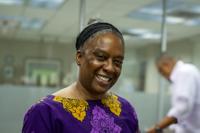
Kisha King is the treasurer of SoFlo AAGHS.
(Elisabeth Campbell for The Miami Times)
She warned against what she called “the genealogy trap”: getting stuck collecting census demographics, including birthdays, marriage dates, death dates and other nebulous historical markers.
“I hear over and over and over again from individuals, ‘Where do I go beyond that? I found the census from 1940. I found the census from 1880. Where else do I look?’” said Luzia. “You make the transition. You go from being a simple demographics detail collector to being a family tree builder and a family historian.”
Luzia’s three steps included gaining insight into the historical background of the geographical location of the ancestors, walking in the ancestor’s shoes and creating a biographical historical timeline that helps guide further research.
“My advice that I always give in all my workshops: when you’re just starting your genealogy journey, the very first pedigree chart, that very first person is you — because you need to understand how you are related to the various people that you’re going to go research,” said Luzia. “You are going to do what your ancestors did not do: You’re going to put down all the details about yourself: your full name, where you were born, what hospital, what city — [for] those descendants, two and three or four generations down from now.”
The South Florida chapter invites any and everyone to join — whether they have been tracking their family’s genealogy for years or are just now looking to find out more about their personal history.
“Everybody has a story, right?” said Bell. “And every story deserves to be told.”
Find out more about the South Florida Chapter of the Afro-American Historical and Genealogical Society by going to aahgs.org or following along via Facebook at SoFlo AAHGS.