
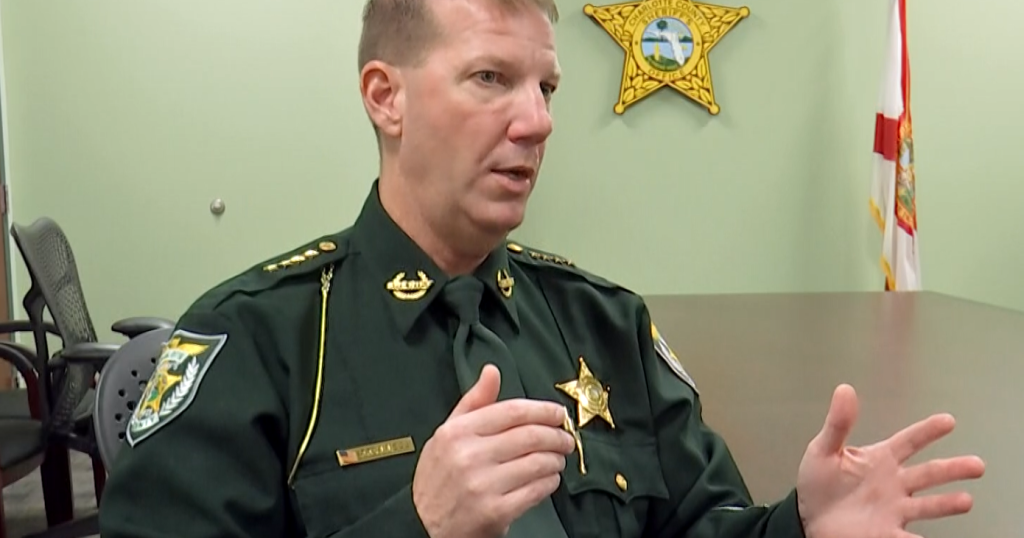
CHARLOTTE COUNTY, Fla. (WINK) — Charlotte County Sheriff Bill Prummell is doubling down on his opposition to Amendment 3, defending his spending decisions and warning of potential cuts to public safety funding as Florida voters consider a proposal aimed at providing property tax relief.
In a new statement addressing criticism of his position, Prummell said he supports lowering property taxes for Florida families but believes the proposed constitutional amendment could significantly reduce funding for essential services.
“I have always said that I will be honest with you and will stand for what is right, even if unpopular,” Prummell said. “That’s what being a leader necessitates.”
According to Prummell, more than 99% of the Charlotte County Sheriff’s Office budget comes from property taxes, with approximately 84% going toward personnel costs.
The sheriff said projections indicate the proposed changes could reduce funding by approximately $26 million in fiscal year 2028 and $47 million in fiscal year 2029.
“To put that into perspective, $47 million represents the approximate cost of 275 deputy positions,” Prummell said.
He emphasized that the projection does not mean 275 deputies would automatically lose their jobs, but said funding reductions of that magnitude could force difficult decisions about staffing, equipment and services.
What would Amendment 3 mean for Floridians?
Amendment 3 proposes expanding property tax exemptions for qualifying homeowners, potentially reducing their annual tax bills while decreasing revenue collected by local governments.
According to previous WINK News reporting, the proposal would exempt the first $250,000 of a homestead’s value from property taxes other than school district levies.
The measure would also limit future property tax assessments on businesses and require remaining property tax revenue to be used for core public needs, including public safety, schools, infrastructure and natural resources.
Supporters argue the changes would help fixed-income families and homeowners struggling with rising property tax assessments.
Opponents warn that reducing property tax revenue could force local governments to increase other fees or reduce funding for police, emergency medical services and other essential operations.
Previous poll showed support for tax relief
Despite concerns raised by local officials, some polling suggests substantial public support for the proposed changes.
A June poll covered by WINK News found 64% of respondents who indicated they would vote supported the proposed amendment, while 36% opposed it.
The Sachs Media survey found support differed by political affiliation, with 87% of Republicans, 62% of independents and 35% of Democrats backing the measure.
Support was nearly identical among homeowners and renters, at 65% and 64%, respectively.
Sachs Media surveyed 850 Florida voters June 22–24 using a random sample of the Florida Voter File. The survey had a margin of error of plus or minus 3.8 percentage points.
Respondents were shown the full ballot summary, and those who indicated they would abstain were instructed to skip the voting question.
The results reflect opinions measured in June, not necessarily current voter sentiment.
Charlotte County leaders previously raised concerns
Prummell’s latest statement follows previous warnings about the amendment’s potential consequences for local governments.
In an earlier WINK News report, Charlotte County leaders discussed the possibility that reduced property tax revenue could lead to cuts in staffing or services, higher millage rates or increases in other fees.
Prummell stressed during that discussion that he was not predicting those outcomes would occur, but questioned whether enough research had been completed to determine the amendment’s financial impact.
His concerns about emergency response services also predate his latest statement.
In previous WINK reporting examining the amendment’s potential impact on response times, Prummell said the Sheriff’s Office previously had a countywide response time of approximately three minutes and 45 seconds.
He said response times increased to five minutes and 18 seconds in 2024, when the agency had 60 vacancies.
The sheriff warned that significant staffing reductions could make it more difficult for deputies to respond quickly to emergencies.
In August, WINK News also reported that the Florida Sheriffs Association opposed Amendment 3, citing concerns about the impact of reduced local government revenue on emergency services.
Property tax concerns extend beyond Charlotte County
The debate comes as other Southwest Florida governments face their own budget pressures.
In September, WINK News reported that Fort Myers approved its first property tax rate increase in a decade.
The city increased its millage rate from 6.5 to 6.9 as part of its 2027 budget, with officials projecting an additional $5.5 million in revenue.
Fort Myers Financial Services Director Christine Tenney warned at the time that the city’s financial outlook could change depending on the outcome of Amendment 3.
Sheriff defends salary and helicopter spending
Prummell’s latest statement also addressed criticism surrounding his salary and the Sheriff’s Office helicopter.
He said his compensation is established through a formula prescribed by Florida law rather than being personally determined by him or independently set by county commissioners.
Regarding the agency’s Black Hawk helicopter, Prummell said the Sheriff’s Office acquired a refurbished 1986 military aircraft with upgraded avionics, along with a second flyable Black Hawk for parts, for approximately $7.5 million.
According to the sheriff, purchasing a new helicopter would have cost an estimated $14 million or more.
Prummell defended the purchase, citing the aircraft’s ability to support law enforcement patrols, aerial firefighting, search and rescue, offshore response and other emergency operations.
He said the aircraft can carry approximately 950 gallons of water for firefighting, compared with the previous helicopter’s 150-gallon capacity.
Prummell characterized the purchase as a responsible investment in equipment that can serve multiple public safety functions.
Prummell calls for further study
The sheriff also questioned the speed at which the proposed property tax changes were developed, saying the proposal emerged during a roughly three-day special session without a comprehensive study of its potential effects.
“I believe the Governor and our state legislators are trying to address a very real problem,” Prummell said. “However, I have serious concerns about the proposed solution and its potential consequences for the essential services our communities depend on.”
Prummell pointed to Florida’s Taxation and Budget Reform Commission, scheduled to convene in 2027, as an opportunity to examine property tax reforms and their implications for local governments.
“When you call 911, you expect someone to answer,” Prummell said. “When a crime occurs, you expect it to be investigated. When a loved one goes missing, you expect us to have the resources to search for them.”
Prummell maintained that meaningful property tax relief and continued public safety funding should both remain priorities, arguing that lawmakers should study the consequences before making permanent constitutional changes.