
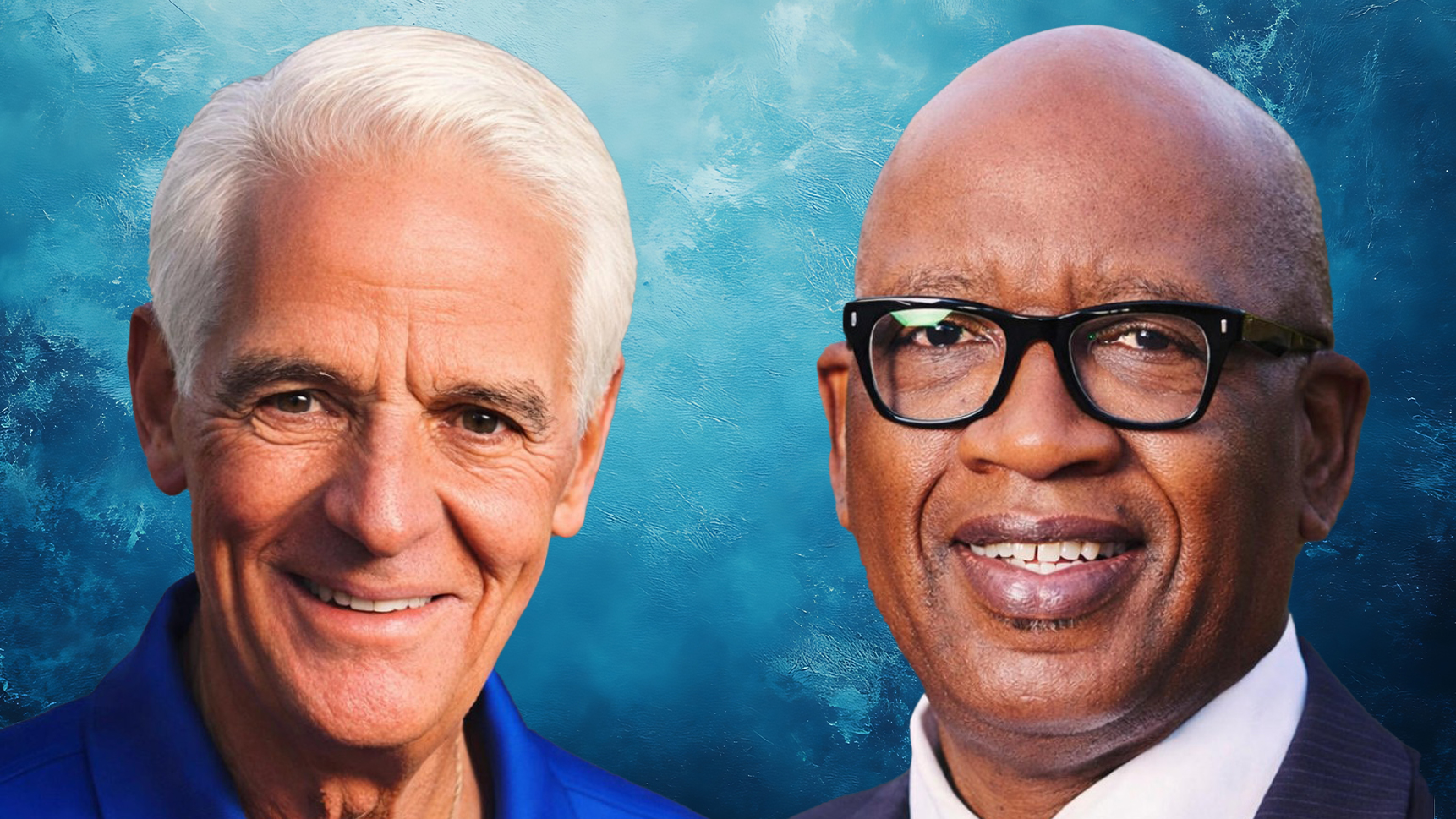
St. Petersburg Mayor Ken Welch and former Gov. Charlie Crist laid out competing approaches to affordability during Tuesday night’s televised debate, with Welch defending public investment in housing and Crist pushing property tax cuts.
The candidates also challenged each other over Amendment 3, the city’s use of Flock surveillance cameras, and whether St. Petersburg should take the state to court to defend free speech amid restrictions on diversity, equity and inclusion initiatives.
The Spectrum Bay News 9 debate came three weeks before the Nov. 3 General Election, with Crist seeking to unseat Welch after finishing nearly 15 percentage points ahead of him in the August Primary.
Delivering affordability, differently
Affordability dominated much of the debate, including scrutiny over city spending by Florida Chief Financial Officer Blaise Ingoglia, who has accused St. Petersburg of racking up $49 million of wasteful spending. A state DOGE report also identified $1.1 million in Mayor’s Office salary increases since fiscal year 2019-20.

Welch defended the city’s use of public subsidies to build affordable housing, saying the typical contribution runs between $60,000 and $78,000 per unit. He pointed to approximately 3,500 affordable housing units completed, under construction or planned during his administration, including Fairview Apartments and SkyTown, along with partnerships with Habitat for Humanity.
Crist proposed cutting the city’s property tax rate by 0.4 mills, which he estimates would return $15 million annually to property owners. He also questioned city-supported housing developments costing nearly $800,000 per unit, a reference to the city-backed Deuces Rising project that has faced criticism for its price tag.
“I don’t know about you, but that’s not affordable to me and probably not affordable to most people watching this evening,” Crist said.
Welch called that figure an “outlier,” citing unusual infrastructure costs and soil contamination. He said some new affordable units rent for as little as $350 monthly.
Both candidates opposed Amendment 3, which would expand Florida’s homestead property tax exemption. St. Petersburg estimates it would cost the city approximately $33 million in lost property tax revenue in fiscal year 2028 and $54 million the following year.
Crist called the proposal a “sledgehammer” for local governments, arguing that tax relief should be more measured.
Welch questioned how Crist could oppose those losses while proposing his own $15 million property tax reduction.
“What he is proposing is $15 million. It’s just as impactful. It’ll be just as harmful to the city, and still, we should know, what will you cut?” Welch said.
Crist argued the city could afford his cut without reducing police or fire services. He pointed to 262 positions added under Welch’s administration and questioned the number of highly paid City Hall employees.
“That sounds like a bloated government. That sounds like overspending,” Crist said.
Welch countered that many positions are funded through utility revenues rather than property taxes. Crist proposed appointing a panel to identify potential savings.
The Flock debate
The candidates also differed over automated license plate readers operated by Flock Safety, which have faced scrutiny over privacy and database misuse. The city’s Flock network began with 25 cameras in 2022 and expanded to roughly 50 under a five-year contract approved without public discussion in January 2024.
Crist cited a Pinellas County Sheriff’s deputy accused of improperly tracking a woman through license plate data. He said he would suspend the cameras’ use and consult Police Chief Anthony Holloway about privacy protections.
“At the minimum I would stop them if I win to make sure that doesn’t occur again,” Crist said.
Welch defended the cameras’ safeguards, saying they capture license plates rather than faces and helped police track a murder suspect. He welcomed City Council Vice Chair Richie Floyd’s request for a committee review, but expressed confidence about existing privacy protections.
“We’re looking forward to that to get the facts on the table, understand if there are gaps in privacy or other things, which I don’t believe there are,” Welch said.
Crist questions Welch’s LGBTQ+ and free speech record
The candidates also confronted Florida’s restrictions on diversity, equity and inclusion, including the removal of street murals celebrating LGBTQ+ Pride. The discussion followed a question about SB 1134, which takes effect Jan. 1 and restricts and penalizes local government actions related to DEI.
Crist criticized Welch for not challenging the mural removals in court, arguing that residents’ First Amendment rights deserved a stronger defense.
“You can go to court to fight those kind of things and sue on behalf of the right of free speech of our citizens in Saint Petersburg. That’s what I would have done,” Crist said.
Welch said his administration had explored its legal options.
“We, in fact, did work with FDOT way before they painted those over, trying to get an exemption. We talked to our attorneys, and we’ve got good attorneys, who tell us we didn’t have the authority to override the Governor,” Welch said.
Crist argued the response demonstrated the need for different leadership.
“I think we need a more proactive Mayor that will fight for your rights, that will stand up in court if necessary to get that done,” Crist said.
Welch criticized SB 1134, warning that local officials could face lawsuits or removal from office. He highlighted his opposition letter, which Rep. Michele Rayner read on the House floor.
GO Bond referendum
The candidates also disagreed over the $600 million infrastructure general obligation bond referendum on this month’s ballot, which would finance stormwater, wastewater and drinking water improvements.
Crist opposed the measure, citing rising living costs and arguing that the city should avoid additional debt.
“This kind of flood that’s occurred. It’s a problem. We need to fix it,” Crist said. “But as it relates to a $600 million bond, everybody’s squeezed in Florida financially. Nothing is affordable. … The last thing I want to do is burden you with a bond that has more debt on the City on St. Petersburg.”
Welch defended the proposed investment, arguing Hurricanes Helene and Milton exposed decades of inadequate infrastructure funding.
“We need to fix it now. There were 18 years without any adjustment in a stormwater fee to allow us to bond and have a more gradual improvement of our stormwater system. That did not happen,” Welch said.
Welch again on the defense over hurricane response
The hurricanes also prompted questions about Welch’s storm response. Crist argued that better preparation could accelerate recovery, emphasizing advance debris removal contracts and proposing a hotline to combat post-storm price gouging.
Welch said he remained engaged in emergency operations and disputed Crist’s criticism, saying the city already had debris contractors under agreement before the storms.
The candidates discussed approximately $340 million in federal disaster recovery funding, with Crist crediting U.S. Reps. Kathy Castor and Anna Paulina Luna for drawing down the funds while Welch highlighted the city’s lobbying efforts.
Gas Plant plans
On the Historic Gas Plant District, Crist proposed reviewing Welch’s selection of The Burg Bid as well as alternative , including considering more parks and green space. Welch defended the current proposal he selected for its plan to provide housing and jobs. Welch rejected further reviews.
Crist also argued St. Petersburg should continue pursuing the Tampa Bay Rays until construction begins on their planned Tampa stadium. Welch called that unrealistic, citing the city’s previous efforts to retain the team.
What’s that smell?
The debate addressed persistent foul odors in Childs Park, where residents have complained about air pollution near an oil recycling facility.
Crist questioned why the problem remained unresolved nearly five years into Welch’s administration.
Welch said local and state investigations had not pinpointed the source or established grounds to shut down a business.
“We really need to engage everyone from the state to the county again, and see if we can nail down the specific cause of that,” Welch said. “We have not been able to do that.”
The closing arguments
During closing statements, Crist again blamed Welch for the Rays’ expected departure and accused him of rejecting a proposed Moffitt Cancer Center development downtown.
“We had an opportunity to have a world-class organization to fight and cure cancer that could have come to downtown St. Petersburg, and he rejected it because of some housing issue (was) involved in that,” Crist said.
Crist pledged to reopen discussions with Moffitt, pointing to the death of his older sister, Margaret, from brain cancer, as a personal reason to resume the effort.
“This is personal to me. … It’s touched probably every family that’s probably watching tonight, cancer,” Crist said. “So I think it’s incredibly important, and one of the first things I would do is renew the conversations with Moffitt Cancer Center, try to get them back to St. Petersburg because you shouldn’t have to drive over the Howard Franklin bridge to north Tampa to get cancer treatment to save your life.”
Welch closed by emphasizing his experience leading the city through difficult years.
“I’ve done that work through our toughest five years, and I’ve got a plan to move forward,” Welch said.
___
Editor’s note: Michelle Todd Schorsch is the Chair of St. Pete Shines, a political committee backing Crist for St. Petersburg Mayor. Todd Schorsch is married to Peter Schorsch, the publisher of Florida Politics.