
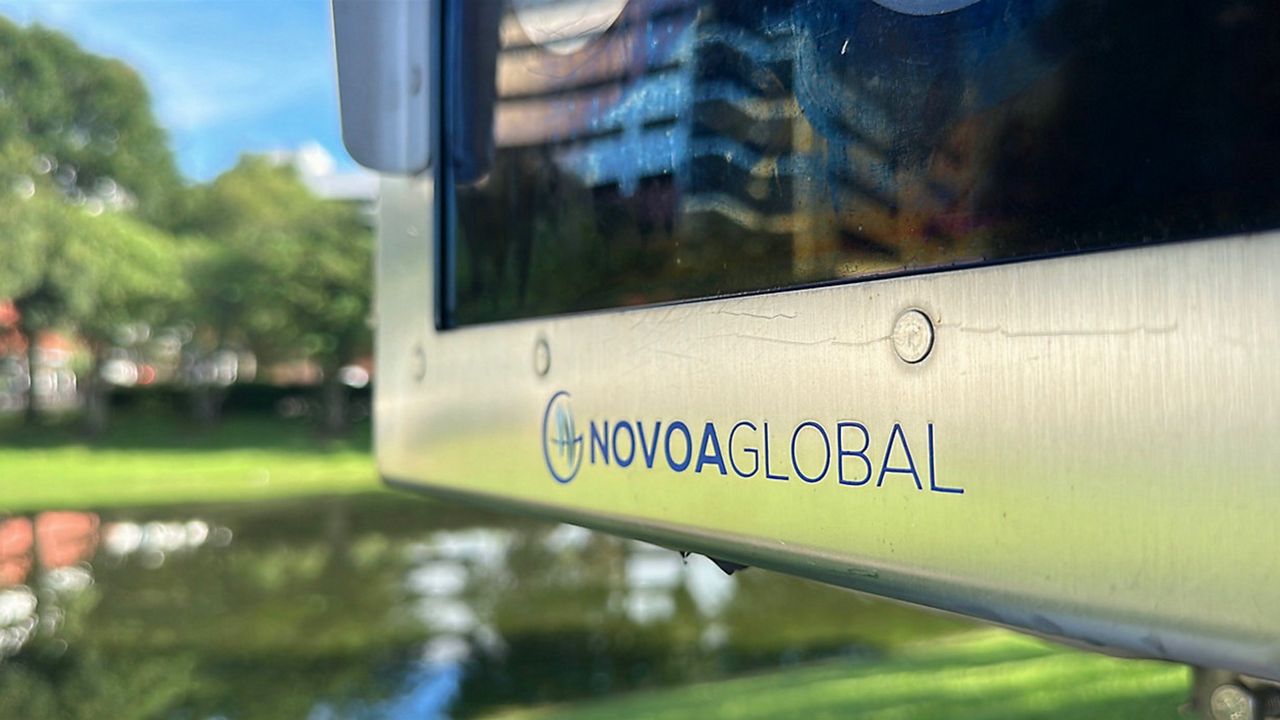
ORLANDO, Fla. — An Orlando-based company says its traffic camera technology is being used to enforce red lights, school zones and railroad crossings, while also expanding its use at stop signs and crosswalks amid continued debate over privacy and automated enforcement.
NovoaGlobal has 600 traffic monitoring cameras across the United States. The company, based in Orlando for more than a decade, assembles its cameras locally.
Carlos Lofstedt, president and chief executive officer of NovoaGlobal, said the system uses tracking radar to detect a vehicle’s movement, time, direction and speed.
“It’s like a multi-tracking radar, very similar to a military radar,” Lofstedt said.
Belle Isle Police Chief Travis Grimm said the city has eight red light cameras, and the cameras have contributed to fewer crashes at intersections.
“We got asked why the numbers are down, and it’s because they’re working,” Grimm said. “We’re having less crashes in the intersections, so that’s helping us out.”
Several jurisdictions also use the cameras to capture drivers speeding in school zones, including Lake Helen.
At Princeton Street in Orlando, the technology is used to send warnings to drivers who go around lowered crossing arms at railroad tracks.
Lofstedt said the company is looking at additional uses, including cameras at stop signs and crosswalks.
“So, a normal pedestrian walk, we can multi-track the vehicle and the pedestrian,” Lofstedt said.
The technology is already being used elsewhere to capture drivers who do not stop at stop signs or for pedestrians in crosswalks, but not yet in Florida.
“The politicians are a little bit slow-moving in that respect and with pressure from constituents because it’s still, you cannot forget that (there’s) some amount of people that are against this kind of technology for different reasons,” Lofstedt said.
Privacy concerns have followed traffic camera technology since its introduction. The issue has drawn renewed attention in recent months with competitor Flock, which is known for cameras that read license plates.
Red light cameras also have critics. This past spring, a judge in South Florida ruled that a competitor’s red-light cameras were unconstitutional because they take photos of a vehicle’s license plate, but not the driver.
Sergio Cruz, an attorney with theticketfighter.com, said he is waiting to see what happens after the ruling was appealed.
“It’s like we’re outsourcing law enforcement to the digital world and not being sure that the person that was driving is the one that is receiving the citation,” Cruz said.
Grimm said Belle Isle could consider additional cameras as another enforcement tool if Florida law changes.
“These cameras, while they are for red lights, it’s like having eight other officers out here 24/7,” Grimm said.
NovoaGlobal said it has successfully tested license plate reader technology but does not currently have any customers using that system.