
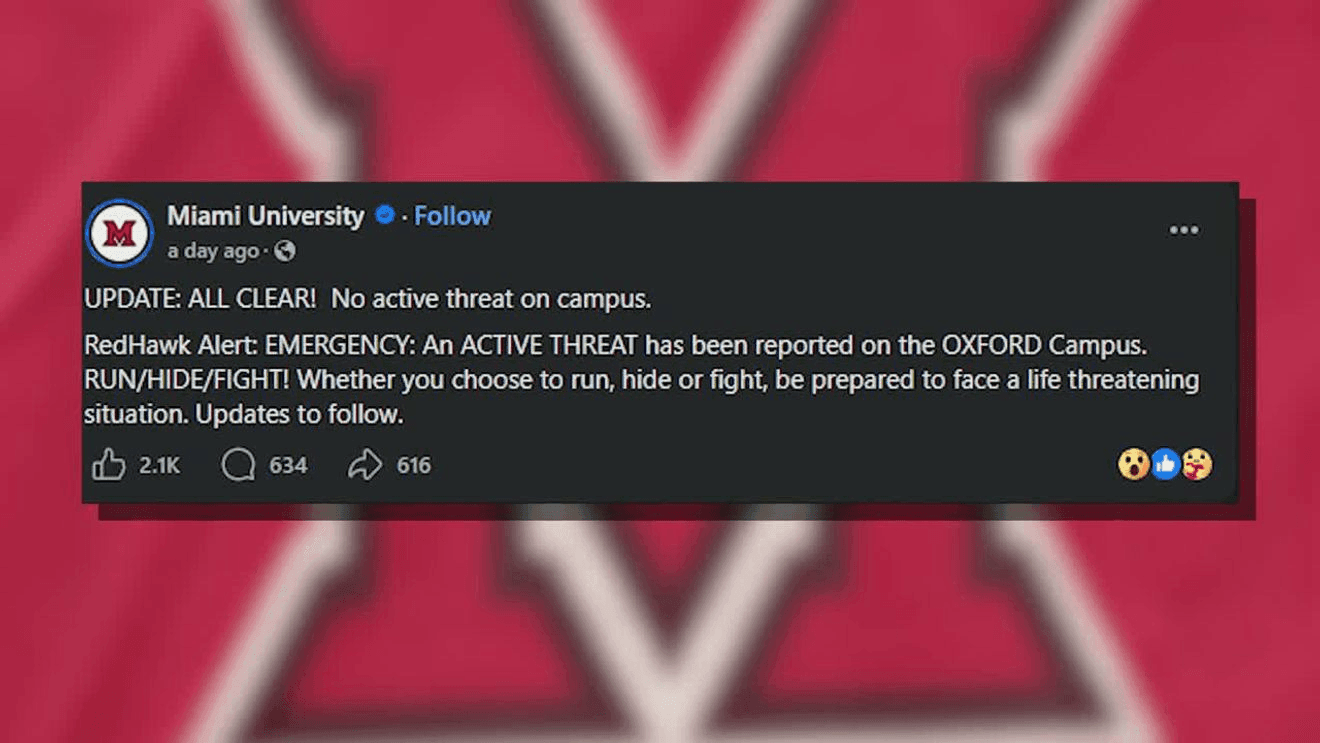
OXFORD, Ohio (WKRC) – Students at Miami University are still processing the fear and confusion sparked by an active threat alert Thursday that ultimately turned out to be a false alarm.
Miami’s RedHawk Alert system sent a series of messages over about 30 minutes warning of an active threat on campus. As the situation unfolded, some students said they didn’t know what was happening and took immediate steps to protect themselves.
Students at Miami University are still processing the fear and confusion sparked by an active threat alert Thursday that ultimately turned out to be a false alarm. (WKRC, Provided)
“I heard people who were in McGuffey were terrified,” Senior Colin Carr said.
Another student described how quickly classmates moved to find cover: “My friend hid in the bathroom.”
Carr said the alert’s instructions were stark. “It said run, fight, hide, and do whatever you can to avoid the threat,” Carr said.
With uncertainty spreading, some students barricaded themselves in place. “The one buddy I know that was in there did the same; he just barricaded the doors and tried to find some sort of shelter, because no one knew what was going on at the time,” Senior Matthew Butera said.
The alert drew criticism from some students who said the messages lacked clarity. Freshman Cameron Shoemaker said, “It wasn’t exactly super specific. And so that initially caused some confusion and some panic.”
Online, others criticized what they viewed as an overreaction. But Troy McCanna, chief security officer for Robotic Assistance Devices and a security expert with more than eight years of experience in school safety, said emergency messaging during fast-moving situations is rarely perfect.
“Understand that this is an imperfect approach to a chaotic situation that is never going to be perfect,” McCanna said.
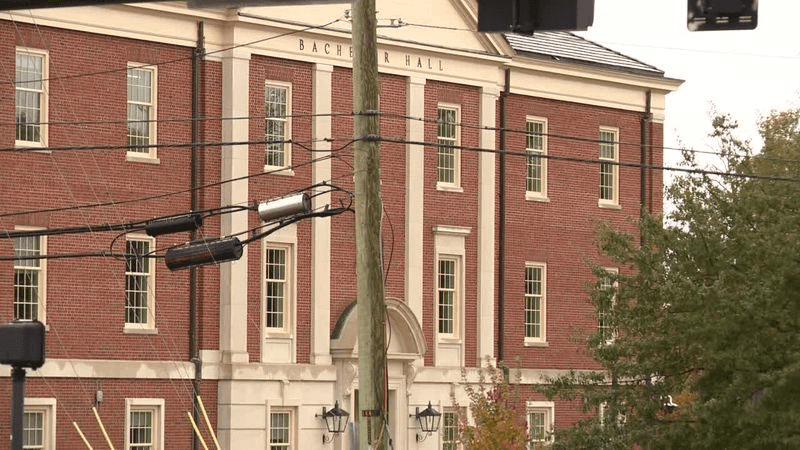
Students at Miami University are still processing the fear and confusion sparked by an active threat alert Thursday that ultimately turned out to be a false alarm. (WKRC)
McCanna said he supported the approach because the priority is safety. “What I would say is these are the kind of scenarios that if you’re going to want to err on the side of more reaction versus less,” he said.
The university said fireworks mistaken for gunshots prompted the alert Thursday. No one was hurt.
For some students, the incident was another reminder of the risks they feel can exist on a college campus. “I’m glad that there was no threat, but it’s very disappointing that gun threats are a possibility here,” said junior Timothy Ashworth.
The university president, in a message to the community, acknowledged the fear students may have felt and said the university will review Thursday’s incident to further strengthen emergency response in the future.
In a statement to Local 12, the university said its “emergency messaging in an active shooter situation follows the nationally recognized and federally recommended response framework by the Department of Homeland Security.” The university added, “As part of orientation, all Miami students are required to complete online training describing what to do in an active shooter situation; the framework advises run, hide, and fight, which is language our students are familiar with.”