
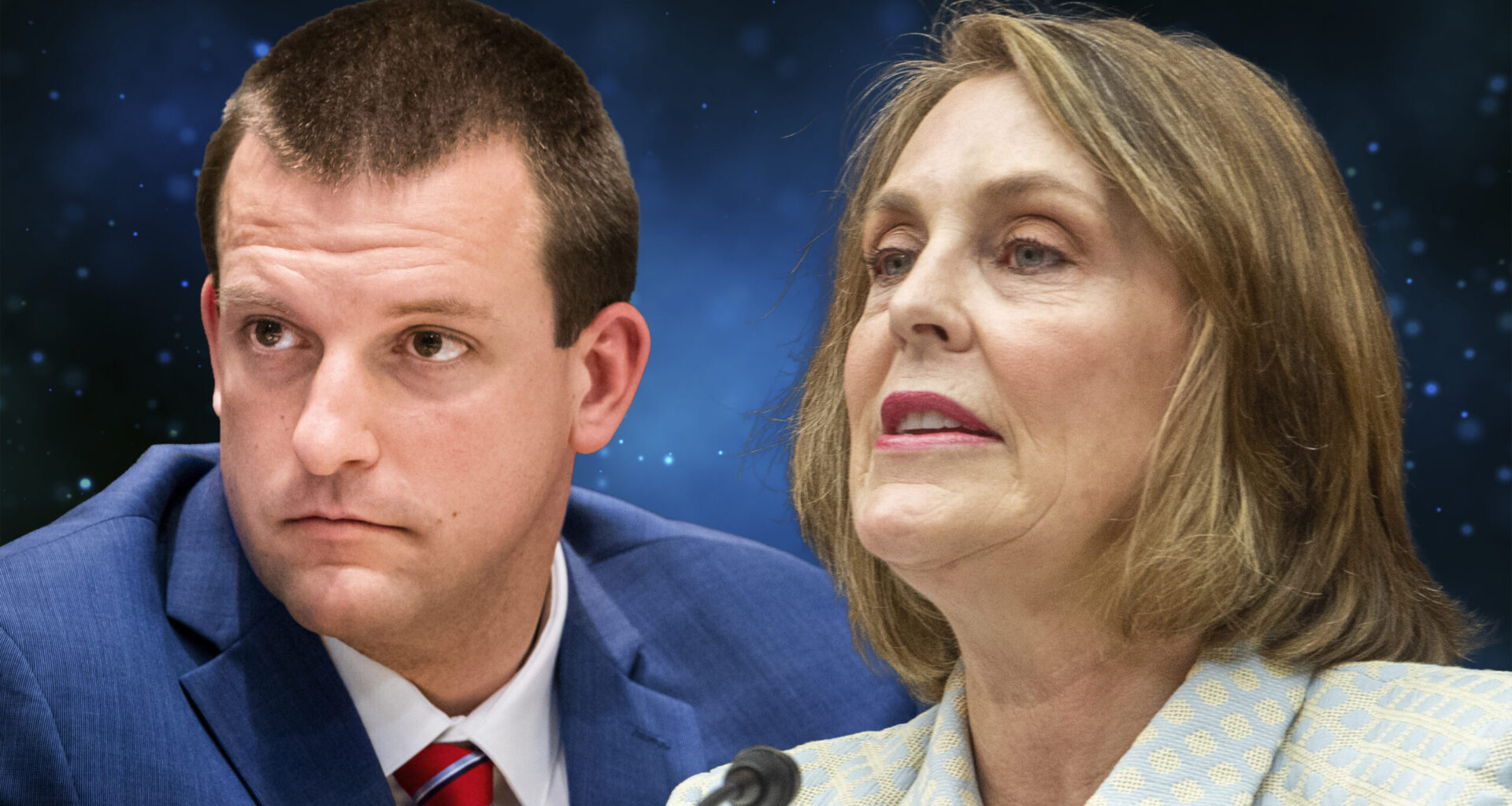
U.S. Rep. Kathy Castor and Republican challenger Mike Beltran traded sharp accusations over corporate influence, campaign contributions and their political records Friday during a combative congressional candidate forum in Ybor City.
The two repeatedly challenged each other’s credibility at the Tampa Tiger Bay Club forum, where Beltran also took aim at Hillsborough County’s nearly $796 million commitment to the Tampa Bay Rays stadium deal, calling the taxpayer investment a “boondoggle.”
Their exchanges came less than three weeks before the Nov. 3 General Election, with Castor facing one of her toughest re-election fights in years. Florida’s redrawn 14th Congressional District favored President Donald Trump by 11 percentage points in 2024, and the Cook Political Report rates the race a Toss Up.
Corporate interests
Castor, a Democrat who has represented Tampa in Congress since 2007, repeatedly accused Beltran of siding with insurance companies, utilities and other corporate interests during his six years in the Florida Legislature.

Castor accused Beltran of accepting campaign contributions from insurance and utility companies while holding stock in those industries, arguing that his legislative votes benefited the same corporate interests.
“Mike, your rhetoric does not match your record because it is very clear that you accepted thousands and thousands of dollars from utility companies and insurance companies and then voted for their interests while you own stock in those companies at the same time,” Castor said.
Beltran rejected her claims, saying he frequently opposed insurance industry interests and supported legislation requiring state-backed reinsurance program savings to be passed along to policyholders.
The exchange began with Castor defending her support for banning congressional stock trading.
Beltran turned the fundraising criticism back on Castor, accusing her of accepting more than $1 million from political action committees this election cycle while attacking the roughly $150,000 he said he raised from businesses throughout his legislative career.

Beltran pointed to transactions disclosed during her congressional tenure and challenged her position. The confrontation eventually grew heated enough that the moderator intervened.
“She has a net worth four or five times what I do,” Beltran said. “She has a lot more stockholdings than I do.”
The candidates returned to questions about corporate influence during a discussion about regulating kratom and other potentially dangerous products.
Castor accused Beltran of supporting legislation favorable to tobacco companies while owning stock in the industry. Beltran disputed the accusation, acknowledging tobacco investments inherited from his grandmother but saying he had not traded the shares.
Beltran defended his legislative votes as efforts to regulate vaping products and protect minors.
Amendment 3 and the Tampa Bay Rays
In response to an audience member’s question about a proposed constitutional Amendment 3 providing property tax relief, Beltran urged voters to support tax cuts and dismissed warnings that reducing property tax revenue would threaten emergency services. He then attacked Hillsborough County’s approval of the Rays stadium deal.
Beltran called the project a “boondoggle” and questioned why taxpayers should help finance a stadium benefiting a privately owned baseball franchise, even as local officials warn that tax relief could jeopardize government services. Hillsborough County approved its nearly $796 million contribution in August.
Castor cautioned that property tax reductions could affect services including law enforcement and firefighting. She instead highlighted federal hurricane recovery assistance and efforts to lower household costs.
Public transportation
The two also clashed over Hillsborough County’s long-standing struggle to fund public transportation.
Castor accused Beltran of helping prevent transportation sales tax revenue from being invested locally after the Florida Supreme Court struck down the voter-approved tax. She argued that the money could have supported transit improvements and attracted additional federal funding.
Beltran defended his opposition to the transportation tax, arguing that the extra penny charged on every dollar spent placed an unfair burden on working families while benefiting projects in downtown Tampa.
“Why should a single mother in West Tampa or Riverview be paying for downtown special interests?” Beltran asked.
After the Florida Supreme Court struck down the tax, Beltran said he fought to return approximately $570 million already collected through rebates and a temporary sales tax break. He also argued that Tampa Bay doesn’t have enough people concentrated in one area to justify expensive mass transit projects.
Public education
The two candidates offered different assessments of the federal government’s role in public education.
Asked about accountability for Florida’s school voucher programs, Beltran said education policy should remain primarily under state and local control.
“To be very honest with you, as a Congressman I’m not going to do that much on education,” Beltran said.
He defended Florida’s school choice system and cited his legislative work on teacher pay and school security funding.
Castor disagreed, pointing to federal investments in Title I schools, Pell Grants, assistance for students with disabilities and research funding for institutions including the University of South Florida. She argued that private schools receiving public voucher money should face accountability requirements comparable to those imposed on traditional public schools.
Healthcare
Healthcare produced another disagreement over Trump’s sweeping federal tax and spending law.
Castor accused Republicans of cutting Medicaid and other health services to finance tax reductions benefiting wealthy Americans. She defended her work on the Affordable Care Act and legislation allowing Medicare to negotiate prescription drug prices.
Beltran defended the law, arguing that its Medicaid provisions target able-bodied adults who refuse work, education or volunteer requirements. He also touted tax provisions benefiting tipped workers, overtime earners and small businesses.
Castor countered that the tax benefits were temporary while reductions in federal healthcare spending would remain lasting consequences.
Trump oversight
The forum also exposed differences over congressional oversight of Trump.
Beltran warned that returning Castor to Washington could help Democrats regain control of the House and spend the next two years pursuing impeachment proceedings rather than passing legislation.
Castor argued that Congress has failed to exercise its constitutional authority, particularly over military action in the Middle East. She accused Republican lawmakers of refusing to challenge the President while federal spending continues to grow.
Artificial intelligence
The candidates found some common ground on protecting residents from the energy and water demands of artificial intelligence data centers—though they disputed each other’s records.
Beltran pointed to Florida legislation enacted this year to protect utility customers from bearing data center costs, while Castor highlighted bipartisan federal legislation requiring data centers to cover their own energy and infrastructure expenses.
Castor accused Beltran of previously supporting tax breaks for the industry. Beltran acknowledged voting for a 2021 state tax package that extended a data center sales tax exemption but also repealed taxpayer subsidies for professional sports facilities that he had spent years pursuing.
Congressional District 12 and District 15 races
Two other congressional candidates participated in the forum.
Former Hillsborough County Commissioner Kimberly Overman, the Democratic nominee challenging Republican U.S. Rep. Gus Bilirakis in Congressional District 12, called for greater federal investment in public transportation, stronger oversight of Florida’s school voucher programs and protections for healthcare and retirement benefits.
“Social Security and Medicare are earned benefits. You paid for it. You worked your life for it,” Overman said.
She also advocated requiring data center developers to take financial responsibility for long-term environmental damage.
Robert People, the Democratic nominee challenging Republican U.S. Rep. Laurel Lee in Congressional District 15, called for stronger congressional oversight of Trump — including impeachment and removal from office.
He also opposed federal Medicaid cuts, advocated a ban on data centers over concerns about electricity costs and community input, and supported expanding access to healthcare.
“I’m an advocate for Medicare for All,” People said.