
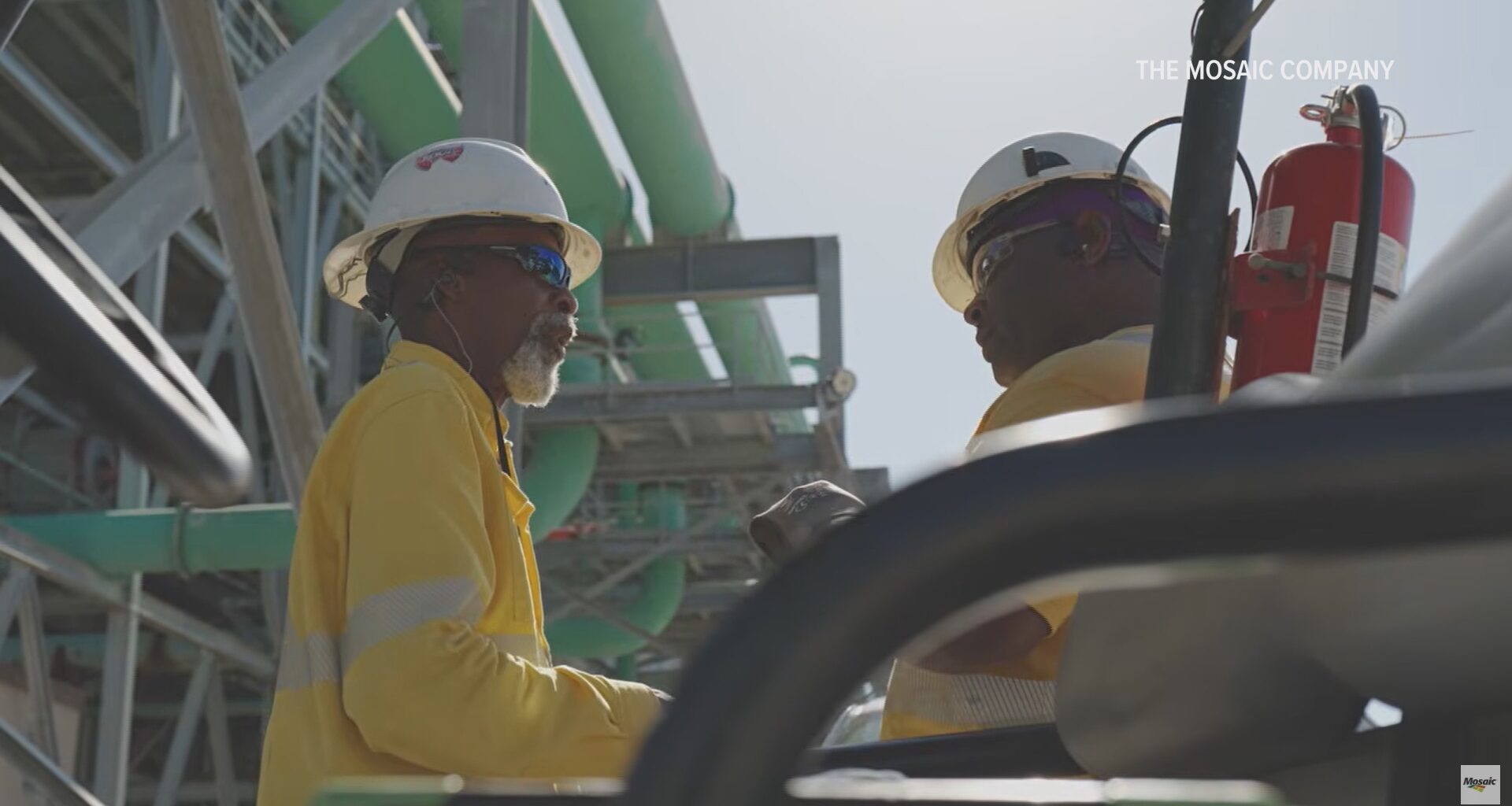
The layoffs come as the ongoing war involving Iran and disruptions to major international shipping routes constrain the global sulfur supply.
TAMPA, Fla. — A global sulfur shortage linked to disruptions in international shipping is forcing one of the world’s largest fertilizer producers to idle a Central Florida plant and lay off 199 workers, raising concerns about the ripple effects on the region’s agricultural industry and food prices.
The Mosaic Co., headquartered in Tampa, plans to begin laying off workers at its South Fort Meade facility on Dec. 8, according to a notice filed with the Florida Department of Commerce. The company expects operations to remain idle for more than six months, although it says it will consider restarting production when market conditions improve.

This story continues below.
More in Regional
10 Tampa Bay News at 12:00 pm D
St. Pete votes on parking fee increases
The layoffs come as the ongoing war involving Iran and disruptions to major international shipping routes constrain the global sulfur supply. Sulfur is an essential raw material used to manufacture phosphate fertilizer, which farmers rely on to grow crops.
Mosaic said the combination of limited supplies and soaring prices has made it increasingly difficult to produce phosphate fertilizer profitably.
“Mosaic is navigating ongoing challenges related to the availability and affordability of domestic sulfur, an essential raw material for phosphate fertilizer,” company spokesperson Jackie Barron said in a statement. “This reality has required the difficult decision to temporarily idle operations at our South Fort Meade facility.”
The company said a dedicated team will remain at the site during the shutdown to maintain it safely.
The decision affects nearly the entire workforce at the facility, which has operated in Polk County since 1995. The South Fort Meade location is one of two Mosaic facilities in the county.
War and shipping disruptions squeeze sulfur supplies
Sulfur is largely recovered as a byproduct of oil refining and natural gas processing. Although the United States produces sulfur domestically, fertilizer manufacturers remain exposed to global market prices and the challenges of transporting supplies to where they are needed.
The Strait of Hormuz, a strategic waterway connecting the Persian Gulf with the Gulf of Oman, is a critical route for global energy and commodity shipments. Disruptions to shipping through the strait, along with a more recent blockade affecting supplies from Kazakhstan, have contributed to tightening sulfur availability and pushing prices higher.
Mosaic CEO Bruce Bodine discussed the problem during the company’s most recent earnings call, describing the effect of shipping disruptions on the global sulfur market.
“The ongoing Strait of Hormuz closure and the more recent Kazakhstan blockade continue to impact the global flow of sulfur, and spot prices remain unsustainably high,” Bodine said.
The company has already reduced production in the United States and Brazil because phosphate fertilizer production has become uneconomical at prevailing sulfur prices.
Tom Gaitens, an agricultural commodities trader in Sarasota, said the problem extends beyond the amount of sulfur produced domestically. Getting supplies to manufacturers at affordable prices is another challenge.
“It has to be put on ships and moved offshore that way,” Gaitens said. “So the problem domestically is what we call a logistics problem.”
Even when sulfur is available in the United States, domestic manufacturers are affected by international prices and the ability to move commodities through global shipping lanes.
Mosaic’s decision to idle the South Fort Meade plant reflects the difficulty of absorbing those higher costs while keeping fertilizer production profitable.
Fertilizer costs could reach grocery stores
The consequences could extend beyond the workers losing their jobs and the communities that depend on the plant.
Fertilizer is a significant expense for agricultural producers. When the cost of essential ingredients rises, fertilizer manufacturers may raise their prices, passing some of the additional expense to farmers.
Those higher production costs can eventually affect the prices consumers pay for food.
Ben Carson, a third-generation operator of Chemical Dynamics, a Plant City liquid fertilizer manufacturer that supplies local strawberry farms, said businesses throughout the fertilizer industry are dealing with forces largely beyond their control.
“Some of these things are outside of the control of fertilizer companies, not just Mosaic, but Chemical Dynamics and any other company that’s like us,” Carson said.
Strawberry growers and other farmers must weigh fertilizer costs alongside expenses for labor, fuel, transportation and other inputs. If fertilizer becomes more expensive, growers may have to absorb the additional costs or pass them along through higher prices for their crops.
The extent to which consumers ultimately feel the effects will depend on how long supply disruptions persist and how fertilizer prices affect agricultural production.
The shutdown also comes at a difficult time for Mosaic’s phosphate business. The company reported that its phosphate segment’s operating loss increased from $48 million in the first quarter of 2026 to $104 million in the second quarter, while net sales fell from $3 billion to $2.8 billion.
Mosaic says it hopes to resume operations
Despite the shutdown, Mosaic said it remains committed to the region and to supplying American farmers.
The company said it has spent months evaluating alternative supplies and ways to sustain production while preserving jobs. But with sulfur prices remaining high, the company has concluded that temporarily idling the South Fort Meade operation is necessary.
“This does not change Mosaic’s longstanding commitment to both Polk and Hardee Counties,” Barron said. “For generations, our employees have called this area home, and Mosaic is proud to be a leading employer and community partner.”
Barron said the company will continue maintaining the facility while it is idle and evaluate opportunities to resume full operations when market conditions allow.
“Our South Fort Meade operations have long contributed to both the local economy and America’s agricultural supply chain,” she said. “As an American company, Mosaic is proud to provide phosphate fertilizer supporting farmers across the United States and protecting our domestic food security.”