
Maybe they just need to start calling it the Orange County Tourist Development and Political Mayhem Tax.
Because whenever the topic of Orange County’s ever-filling green spring of bed-tax money is discussed, shenanigans seem to proliferate. Contemplation of this tax — which produced $384 million in the last fiscal year — has consumed endless hours of work from some of the county’s most respected leaders, and drawn earnest public testimony from dozens of people. Yet there always seem to be last-minute surprises.
Not the good kind of surprises. The “how did that bug get into the butter dish?” kind of surprises.
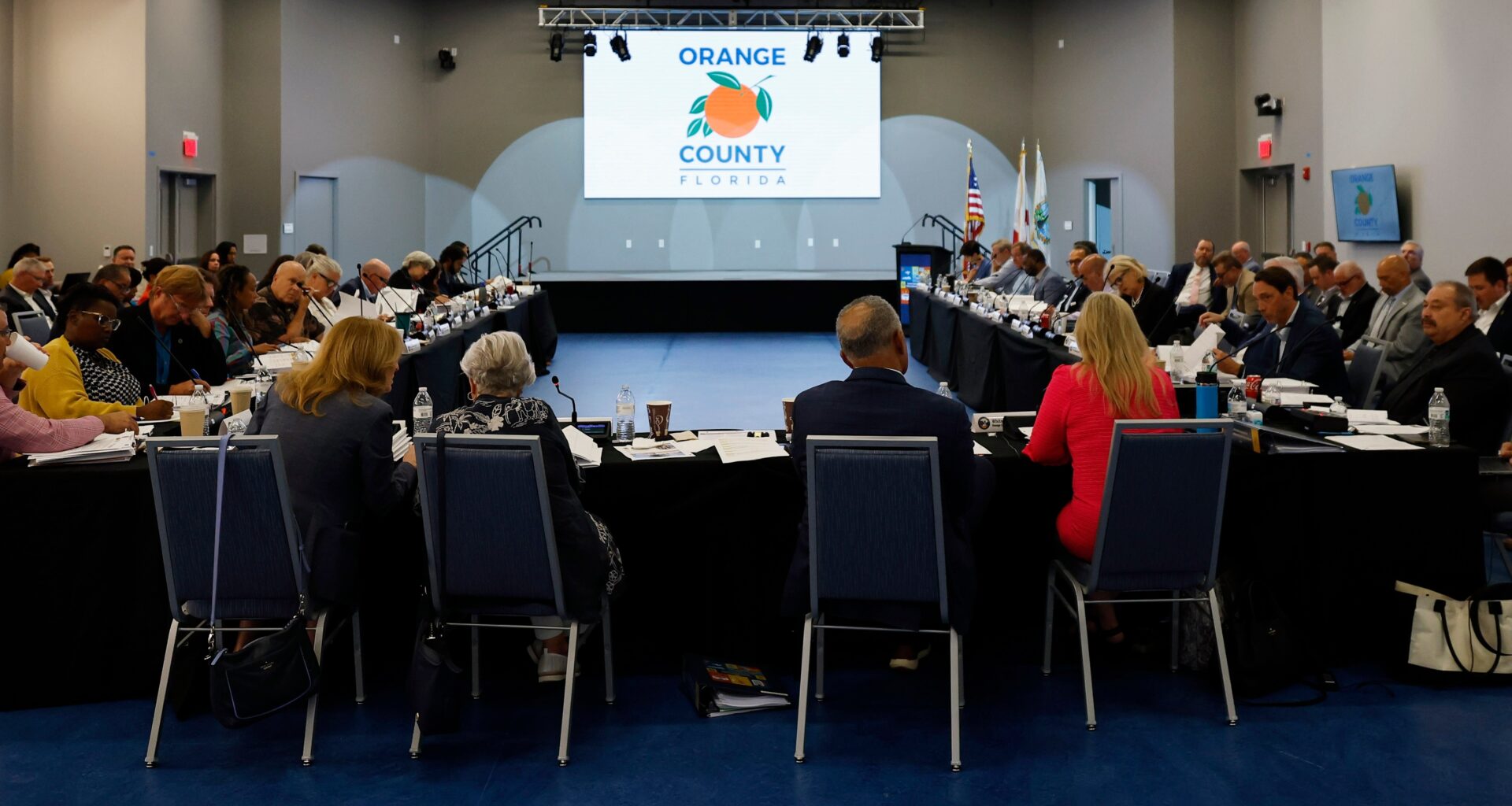
So maybe folks should have been on their guard about a proposed discussion of TDT spending that was slated for a special County Commission workshop Monday afternoon. Originally, most people believed that the commission would only be discussing the recommendations of the most recent task force, which were finalized in August.
There was an anticipated vote to approve funding for four relatively small-dollar proposals that had received the unanimous approval of the TDT task force: An allocation of $5 million a year apiece to two grant programs created to boost ecotourism; an increase of about $3 million a year in funding for an arts and cultural affairs grant program and $75 million for the next five-year cycle of a program known as ARC, which provides grants for facilities and events across the county.
Rush to action
But beyond that, the plan was to leave big-ticket items to be decided on later, including a $750 million request from Dr. Phillips Center for the Performing Arts that would add theater space, an 800-seat banquet venue, parking and an amphitheater; a $60 million ask for a museum in Eatonville and a $54 million plan for a “parking and events center” near Camping World Stadium.
In total the task force forwarded a list of 12 projects that it thought deserved consideration — though several task force members said they were reluctant to attach specific dollar amounts to any of the requests. The task force ruled out other proposals, including nearly $1 billion for a new stadium that could help Orlando land a Major League Baseball team, and more than $500 million for yet another expansion of the Orange County Convention Center (because apparently, some local officials won’t be satisfied until the convention center covers every square foot of land area in Orange County). The task force also rejected a $119 million request by the University of Central Florida that would have funded multiple projects including upgrades that would help the university attract more televised events, expanded softball facilities and separate facilities for soccer and track and field.
Knight move
That UCF proposal — which had so little support that a motion to add it didn’t even draw a second — was the first bug to show up. Last week, when Orange County Mayor Jerry Demings released the list of projects he wanted the commission to discuss, UCF was back in the mix — with a revised soccer/track facility that would send $46 million in the university’s direction.
This raised eyebrows — and questions. The task force wondered why a sports facility at a state university wouldn’t be funded by state appropriations and university boosters’ clubs. And Commissioner Kelly Martinez Semrad wants to know why UCF was allowed to revise and resubmit its proposal (apparently after the task force had completed its work) when other groups that had been rejected were not given the same opportunity.
Don’t get us wrong. UCF has been a major and undeniably beneficial force in Central Florida. And we firmly believe that soccer has the potential to become even more of an economic driver to the region. But adding this project back into the mix — without notice or public discussion, after agreeing that the task force review was the best way to “de-politicize” the selection of projects — was a slap in the face for the members of the 2026 task force.
The whole shebang
But the real surprise hit Thursday and Friday, when people across the county started to realize that Demings was going to be pushing for an up-or-down vote on the entire 13-project package. On Monday. With almost no notice, during a time that had previously been advertised as a “work session.”
That’s a problem. For multiple reasons, starting with the obvious premise that the county shouldn’t commit on the handout of hundreds of millions of dollars with just a weekend’s notice — especially since Demings’ list includes full funding for every project with the exception of the Dr. Phillips performing-arts center, which was cut back to $400 million.
That gets to the next big objection raised by Semrad and some members of the task force,. If the commission approves the so-called “full slate” of projects on Demings’ list, and tourism revenue trends remain consistent, almost all of the TDT money will be spent each year. That goes directly against the wishes of the last two task forces, both of which recommended that the county explore additional uses of tourist-tax money such as transportation projects that could help both tourists and the low-wage workers who make the beds tourists sleep in, cook the food tourists eat, load them into theme-park rides and sell them souvenirs adorned with mice, whales and teenaged wizards.
That’s unfortunate, because now’s the right time to make a move: Both candidates for governor have said they are open to proposals that would allow tourist-laden counties to expand the use of their bed tax revenues.
In fact, one of the very last motions the task force voted on was offered by co-chair Linda Chapin. “I would be prepared to make a motion that the TDT task force recommends that the County Commission explore every avenue to advance alternative uses of the tax, including but not limited to transportation and affordable housing,” she said. It passed overwhelmingly. Now she’s worried that UCF (and perhaps even the convention center) could be back in the funding mix.
Strange bed-tax fellows
She’s not alone. Ella Wood, who was appointed to the task force by Semrad and serves as the political director for the two chapters of Unite Here, the union that represents a wide array of tourism and hospitality workers in Central Florida, has coordinated a letter that is signed by several local groups as well as members of Orange County’s legislative delegation. Meanwhile, the Sentinel received a letter from John Stine, board chairman of the International Drive Resort Area Chamber of Commerce and eight-year member of Orange County’s Tourist Development Council. Both are sounding the alarm about the rush to finalize TDT funding.
It’s entirely possible — heck, it’s likely — that Wood and Stine have different ideas about how they believe TDT money should be spent. But they are united in this message: Slow down. There is no need to rush approval of any list — not without plenty of opportunity for public debate on this new proposal, which does not reflect the task force’s recommendations.
Of course, there is one more factor to consider. In just a few weeks, voters across the state will be considering Amendment 3, which would nearly eliminate most property taxes for Florida homeowners. That impact could be devastating for Orange County, which was held up as an early example of why local governments deserved to have their revenue cut. The allegations hurled by state officials against Orange County were based on flat-out lies. But rushing recklessly into a plan to spend nearly $1 billion in tax revenue would underscore the narrative that the county is too rash in its spending. And it would choke revenue that the county might need to stay afloat if Amendment 3 passes.
For all these reasons, we urge Demings and the commission to pump the brakes on a plan to commit every available dime of TDT money with so little notice. Approving the four smaller grant programs is fine — in fact, it’s a good idea, because those programs are almost universally supported and spread tax revenue across the county. But obligating $1 billion in spending without a chance for open, engaged debate would be a mistake, and we hope commissioners see that.
The Orlando Sentinel Editorial Board consists of Opinion Editor Krys Fluker, Executive Editor Roger Simmons and Viewpoints Editor Jay Reddick. Use insight@orlandosentinel.com to contact us.