
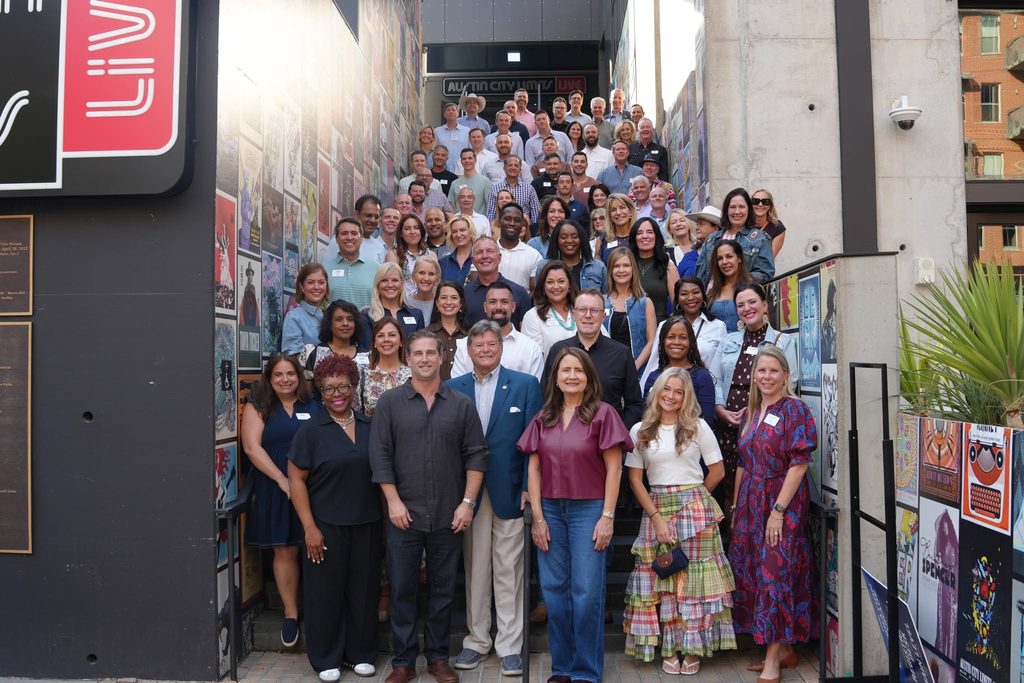
Austin’s economic development experience offers Orlando a framework centered on collaboration, retention, workforce alignment, innovation, strategic focus, and continuous adaptation. These takeaways translate Austin’s practices into proposed priorities for Orlando’s FY 26/27 agenda and longer-term regional vision.
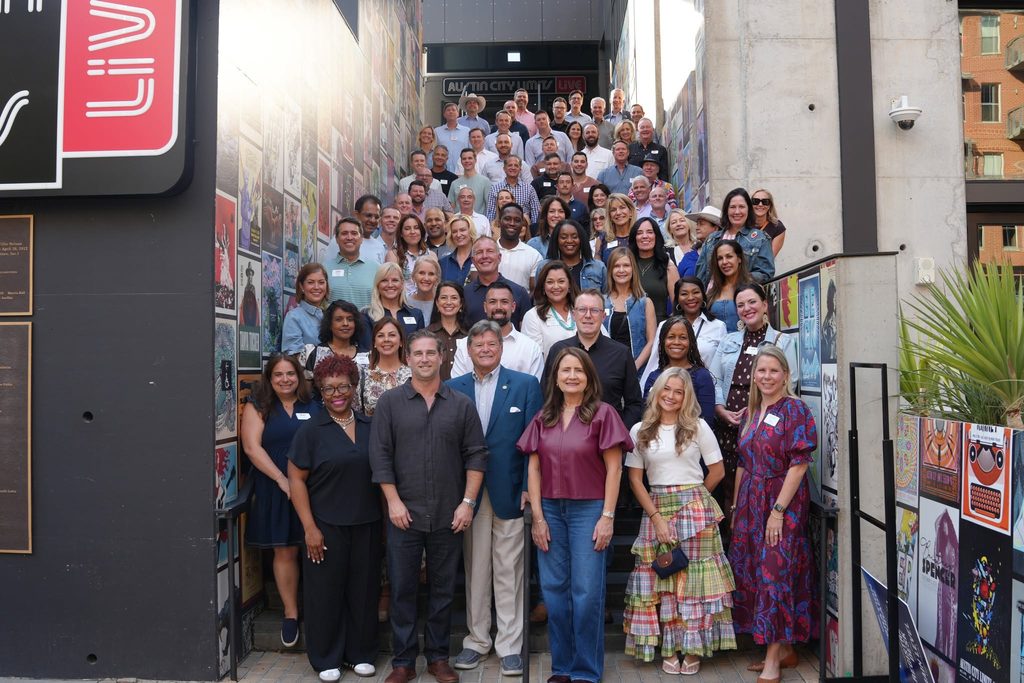
1. Collaboration as the Default
The mindset in Austin – across its civic, political, and business worlds – is to ‘grow the pie, not your share.’ In economic development, Opportunity Austin, the Austin Technology Council and the wider ecosystem operate as one aligned system rather than competing interests, and that alignment runs through everything: collaboration is how the region actually functions, with everyone invested in everyone else’s success and a willingness to throw away the labels that can divide partners.
Orlando Takeaway: The OEP’s new Account Management approach to economic development – visiting local companies regularly and asking how we can help them grow – is the perfect mechanism to build greater alignment across Orlando’s organizations. Account Management should not be an OEP-only agenda but a framework the whole region can rally behind, participate in and benefit from. The path forward in FY 26/27 is to activate this approach to its full potential, to include participation from local government, key community partners and other stakeholders to ensure we’re all working collaboratively to grow our economy.
2. Turning Visitors into Taxpayers
Austin has leveraged its momentum and the extraordinary power of a globally recognized event – SXSW – to accelerate its economic development agenda. Local partners collaborate to make sure at least some of the people and companies that visit the city each year consider making Austin their next home, always keeping each other informed about upcoming visits and engaging in ‘warm hand-offs.’
Orlando Takeaway: Orlando is the most visited destination in the U.S. but has never quite figured out how to convert that unique exposure into economic development wins. A coordinated inbound convention strategy, designed to fully capitalize on the region’s national and global visibility, is overdue and should be pursued as a source of ongoing lead generation.
3. Downtown as a Focal Point
Austin recognizes that ‘first impressions matter’ and has been deliberate about treating downtown as its front door. The City has established a dedicated downtown strategy office, pursued world-class civic spaces like the central library, and kickstarted retail to serve ‘the lawyers, bankers and real estate folks’ who previously anchored downtown. Such actions all reflect the same view that downtown is an economic asset worth investing in.
Orlando Takeaway: The Orlando 2045 Regional Vision recognizes that a healthy downtown Orlando benefits the entire region. Now, the region must continue to make the case that place-making IS economic development and push to make sure major civic and corporate investments are made in downtown.
4. The Importance of Retention
Austin prioritizes looking after the companies and people that already call the region home. Opportunity Austin emphasized that existing companies often represent the next expansion project while the Mayor of Austin articulated his goal of making it ‘so students don’t want to leave because they can see a family and a future in the region.’ Retention has driven much of Austin’s playbook: for companies, it has meant nurturing an environment where entrepreneurs can connect and engage from day one; for talent, it has meant seeking to manage affordability to keep the next generation of workers in place – by changing code to build more housing, for example.
Orlando Takeaway: Orlando must view the companies and talent we already have as key to our future success. The OEP’s new Account Management approach will bring the region closer to existing businesses than ever before, helping to facilitate local company growth, while we must also take proactive steps to make sure we retain our best and brightest. Last year’s Closing the Gap talent report highlighted a net outflow of young talent from the region and if this trend persists, we must seek to understand the root cause – and then respond accordingly.
5. Building A Workforce around Industry Demand
Austin has flipped the traditional higher education model on its head – moving from the typical mindset of ‘here are the graduates we produce’ to delivering a workforce trained to companies’ custom needs. Austin Community College has been at the heart of that shift by positioning itself as an outsourced HR partner to companies rather than just a training provider. Thousands of skilled workers later, specialized workforce development has become a competitive advantage for the Austin region.
Orlando Takeaway: The Orlando region is already home to some of the most industry-aligned colleges and universities in the country – Valencia, Seminole State and UCF – yet recruitment challenges and skills shortages persist. Moving forward, one option to consider is to explore the creation of a Regional Talent Guarantee, whereby companies seeking to add a certain number of employees in the region are offered a custom training solution by one our educational providers.
6. Turning Innovation into Companies
Austin has succeeded in building and scaling great companies, evident in the 80+ unicorns highlighted by Opportunity Austin. Venture firm Capital Factory, whose approach is to ‘go big and go fast’ by backing the start-ups with most potential to scale, has undoubtedly played a role in that success. Yet by its own admission Capital Factory’s real value lies just as much in acting as a connector and advisor as it does as a source of capital – raising genuine questions about how young markets should best seek to scale home-grown companies.
Orlando Takeaway: Orlando is home to significant innovation and typically ranks highly on entrepreneurship but has historically struggled to scale companies. The region must therefore ask the question – what is preventing companies from scaling in Orlando? If the market failure is visibility and/or capital, we should consider establishing an event that showcases Orlando’s innovation to a highly curated audience of funders. If the issue is more about relationships, the path forward may be to bring in connected advisors to help founders plug into the right networks.
7. Playing to Your Strengths – Including Defense
Several speakers in Austin noted the importance of a region taking the time to study who it is and being honest about what it’s known for, to allow it to build from genuine strengths rather than chasing what others already own – and in Austin’s case, that has included connecting the local tech ecosystem to the military to help the Army deliver mission-critical capabilities. At the same time, we heard from Major General Kevin Lambert that ‘Orlando is already doing it’ and is ‘the center of gravity for simulation.’
Orlando Takeaway: Leaning into what we do best is direct validation of the OEP’s capability-led strategy. In FY 26/27, this refined approach – developed on the type of self-assessment Austin recommended – will see us narrow our focus around the key technical strengths the region has developed over many decades. As in Austin, Orlando’s technical capabilities are in part the result of our defense community, and so the priority in FY 26/27 must be execution and consistency: every pitch, proof point and publication should reinforce the same strengths until they become what Orlando is known for.
8. Building a Narrative of Success
Austin recognizes that momentum builds on itself and has made a point of celebrating what’s working and telling others about it. Early wins, whether the initial Samsung investment, everyday exemplars like the food trucks that have graduated to physical locations, or the first (partial) funding for the library, are shared and communicated in the knowledge that these successes can then act as catalysts for additional wins.
Orlando Takeaway: Celebration must be part of Orlando’s economic development strategy. That means communicating and amplifying all wins and telling the region’s story by highlighting every success. Wins shared early and far – particularly in the tech space – can create a snowball effect and begin to rewrite Orlando’s story.
9. Being Unashamedly Aggressive
Texas makes no apology for competing hard. While recognizing that economic development ‘starts long before a company calls’, the state has also gone firmly on offense – using incentives and tools like the Texas Enterprise Fund to successfully close deals. In Texas, state-level commitment is accompanied by ‘an unwillingness to fail’ – and a recognition that ‘if you’re not growing, you’re dying.’
Orlando Takeaway: Orlando must acknowledge that incentives DO play a role in economic development. Part of that is being honest about where Florida’s incentive toolkit currently falls short and making the case for closing the gap at the state level. Yet the region must also seek creative local ways to communicate that Orlando wants businesses to locate here and recognize that the presence of even small incentives sends an important message.
10. A Culture of Evolution & Adaptation
Austin’s story is one of turning challenges into opportunities: Opportunity Austin emerged from a tech downturn, and SXSW started from a goal of increasing demand during Spring Break. At the same time, the region keeps adapting and learning – integrating quantum into its current economic development strategy, reforming land use to allow three homes where one once stood, and continually managing the friction between the tech community and the creatives who give the city its character.
Orlando Takeaway: The Orlando 2045 Regional Vision sets out a clear vision for Orlando’s future – to become a global, creative capital – and in the months ahead OEP staff will add the specificity and milestones necessary to make that vision fully actionable. Yet the pace of technological change is accelerating weekly and Orlando must remain flexible and focused on always meeting the moment in economic development. The challenge is to always keep evolving as new challenges and opportunities emerge.