
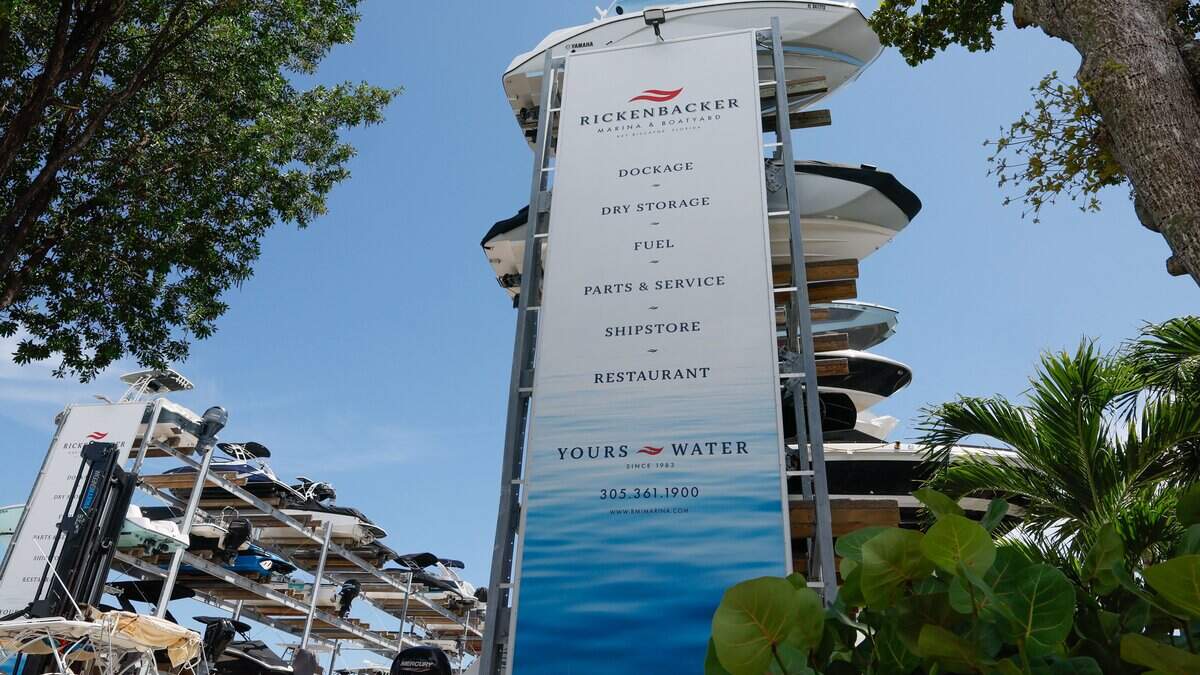
A November ballot referendum will ask voters to green-light a new operator for the Rickenbacker Marina on Virginia Key in Miami.
PHOTO BY AL DIAZ
adiaz@miamiherald.com
In the Nov. 3 election, voters in the city of Miami will be asked to decide three referendums. Here is the Herald Editorial Board’s recommendation on Referendum 3:
You can read our recommendations on Referendums 1 and 2 here.
Referendum 3: Voters are being asked to approve a lease of city-owned property on Virginia Key to redevelop existing Rickenbacker and Marine Stadium marinas.
Click to resize
Our recommendation: Vote NO
Why? This is a 10-year-old redevelopment deal to lease 27 acres of public waterfront property to private developers, a measure even some Miami commissioners weren’t happy about putting on the ballot. The two marinas on Virginia Key may need renovation — may even need it badly — but this proposal has dragged on for too long due to prolonged legal wrangling.
A judge ultimately ordered the city to put the proposal, which is a lease for 45 years plus two potential 15-year extensions, in front of voters this November. City-owned waterfront leases or sales need to be approved by voters through a referendum, an important safeguard for land that is limited and precious. However, voters are now in the untenable position of trying to decide on a deal that was first proposed in 2016.
Virginia Key LLC, a partnership involving RCI Group and Suntex Marinas, says it wants to invest $80 million in private money for the project. The project includes wet and dry boat storage, restaurants, retail, parking and waterfront improvements, and it would be done in an “environmentally sensitive manner.” The new operators would pay the city a minimum base rent of $2.2 million a year, plus a percentage of revenues.
The current Rickenbacker marina operator, Aabad Melwani, has been there for 40 years, and his family’s lease expired back in 2016. That’s not a good situation, either. He’s on a month-to-month lease now, leaving his business in limbo and raising questions about whether it’s time for someone else to manage the property.
Over a decade ago, when the city put out a bid request to redevelop the site, Melwani’s team, Biscayne Marine Partners LLC, submitted a bid, but that bid was ranked second by the city’s selection committee, behind Virginia Key LLC. Melwani’s team sued over the bidding process and lost.
The city subsequently rejected all the proposals for the site and put a referendum on the ballot in 2021 asking voters to approve a no-bid lease for Melwani’s team. Voters rejected the ballot item. And Virginia Key LLC sued the city.
In 2023, a judge ruled that the city had acted “arbitrarily and capriciously” by rejecting all bids and favoring a lower-ranked bidder. That brings us to this summer, when commissioners, forced by the courts, voted reluctantly to put the Virginia Key LLC proposal on the ballot for voters to decide.
The delay might not have been fair to the bid winners, who might have had their project approved a long time ago, but ultimately this is about what’s best for the public.
Gramps Getaway, a waterfront bar on Virginia Key, has become one of the most visible faces of the opposition. Even though Virginia Key LLC has said Gramps would be able to stay at the Rickenbacker marina, owner Adam Gersten has called this a “fight for the soul of Miami.”
There is a far amount of truth to Gersten’s words. Miami is in danger of losing its sense of place and the things that make it special, including waterfront access. With the influx of the ultrarich during and after the pandemic, we have worried that our city could become a place that only the wealthy can enjoy. Gentrification and soaring property values have continued driving the city in that direction.
The marine redevelopment deal going before voters may truly provide a “waterfront for all,” as the developers have been promising. That would be great. But then there’s the question of the value being assigned to this land. Virginia Key LLC notes that there are two appraisals from early 2026 that determined the deal on the ballot goes “above fair-market value.” The opposition takes issue with the methodology and independence of the appraisals.
As Miami Commissioner Miguel Angel Gabela said at a commission meeting in June, “I think this is a bad deal for the city.” He said he didn’t “feel comfortable with the numbers dating back 10 years.”
The answer to all of these questions — about the value of the land, any outdated conditions in the lease and the worry that Miami might lose another piece of its specialness — isn’t to lock down the use of the land, no matter how many delays the bid winner has had to put up with.
The answer is harder than that: The city needs to figure out what makes sense for Virginia Key’s marinas in the Miami of today. Once the land is leased, it’ll be too late.
BEHIND THE STORY MORE Who decides the political endorsements?
In advance of local and state elections, Miami Herald Editorial Board members interview political candidates, as well as advocates and opponents of ballot measures. The Editorial Board is composed of experienced opinion journalists and is independent of the Herald’s newsroom. Members of the Miami Herald Editorial Board are: Amy Driscoll, opinion editor, and Isadora Rangel. Read more by clicking the arrow in the upper right.
What does the endorsement process look like?
The Miami Herald Editorial Board interviews political candidates to better understand their views on public policy and how their policies will affect their constituents. Board members do additional reporting and research to learn as much as possible about the candidates before making an endorsement. The Editorial Board then convenes to discuss the candidates in each race. Board members seek to reach a consensus on the endorsements, but not every decision is unanimous. Candidates who decline to be interviewed will not receive an endorsement.
Is the Editorial Board partisan?
No. In making endorsements, members of the Editorial Board consider which candidates are better prepared to represent their constituents — not whether they agree with our editorial stances or belong to a particular political party. We evaluate candidates’ relevant experience, readiness for office, depth of knowledge of key issues and understanding of public policy. We’re seeking candidates who are thoughtful and who offer more than just party-line talking points.