
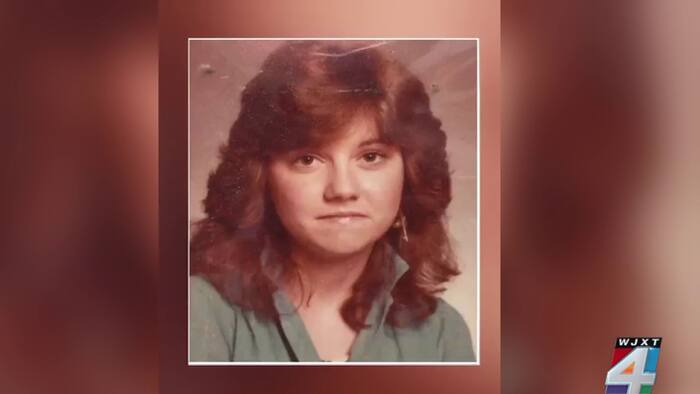
JACKSONVILLE, Fla. – Nearly 41 years after 17-year-old Leslie McCray was kidnapped from her Jacksonville apartment on Christmas Eve 1985 and found sexually assaulted and stabbed to death hours later, David Nelson Austin is standing trial for her murder.
After both sides rested their cases, closing arguments will begin Thursday at 10 a.m.
Investigators say advances in DNA technology helped link Austin to the cold case decades later. He was indicted on a first-degree murder charge in August 2021 and has opted for a bench trial. That means his case will be decided by a judge and not a jury.
In addition to the first-degree murder indictment, Austin was also charged in 2021 with two counts of armed kidnapping and one count of armed sexual battery.
Prosecutors had previously indicated they would seek the death penalty if Austin is convicted, but they waived that in favor of the bench trial.
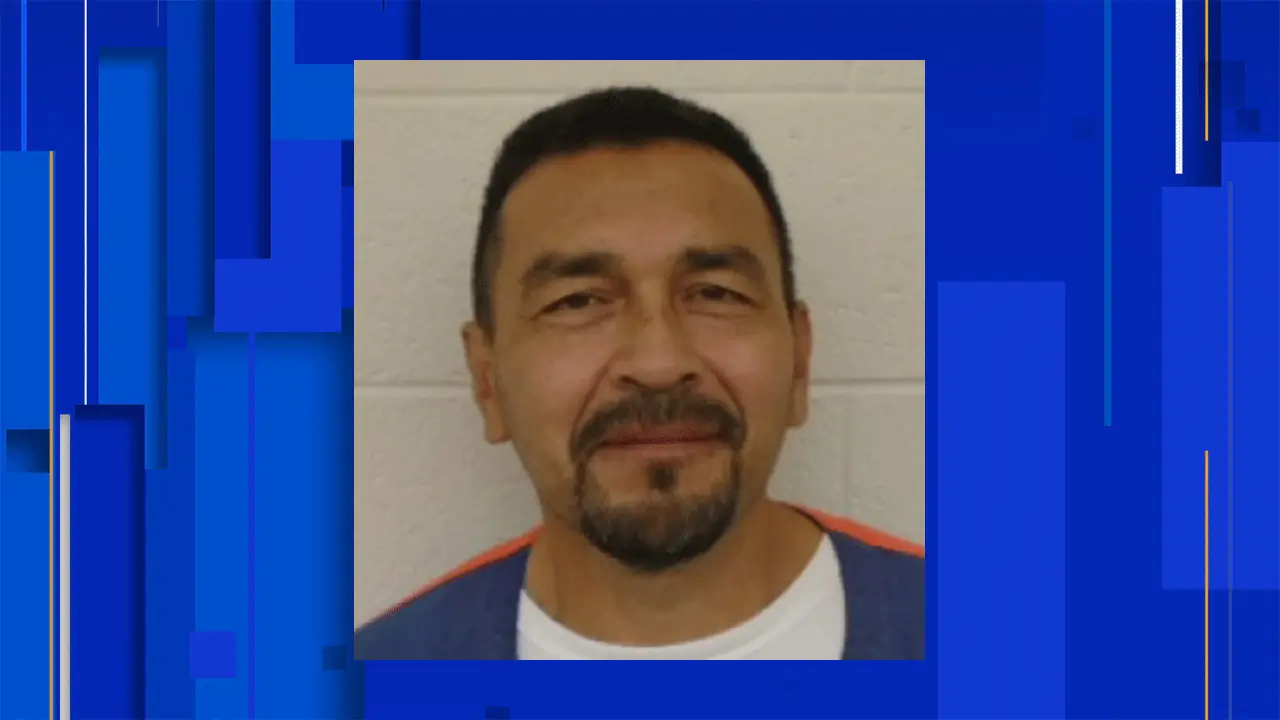 David Nelson Austin (Michigan Department of Corrections)‘I felt terrorized’: Survivor testifies
Testimony began Wednesday with the judge hearing from the surviving victim in the cold case.
Now 61 years old, he told prosecutors that he had just turned 20 in December of 1985 and was living with McCray, whom he considered a friend, when they were attacked in their St. Johns Avenue duplex.
NOTE: News4JAX is not naming the man because he is a surviving victim.
The man acknowledged that he and McCray had been intimate for “a week or two” but said the relationship was open and he would not consider them a couple.
He said that when McCray came home on Dec. 23, he had fallen asleep in her bed after taking cold medicine, although it was unusual for them to sleep in each other’s rooms.
He said McCray gave him another dose of cold medicine with codeine after she got home, and the two fell asleep in her bed.
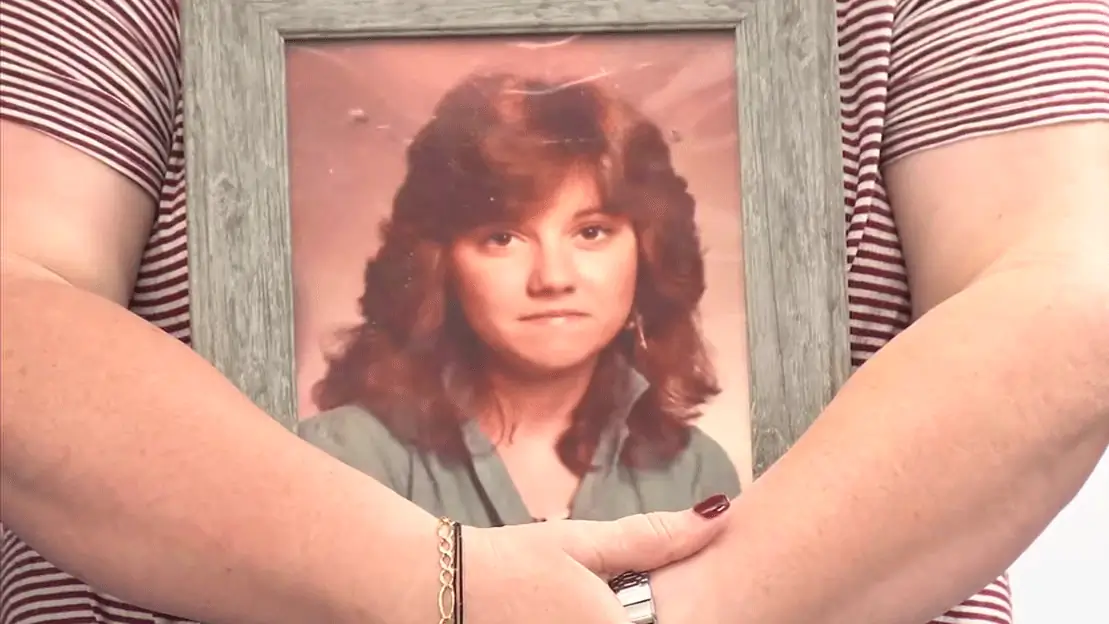 A photo of Leslie McCray is held at a news conference Thursday. (WJXT)
The man then described waking up in the early morning hours of Christmas Eve to a stranger hovering over McCray’s bed with a knife. He said it was too dark to make out any of the person’s features, but it was clearly a man.
McCray’s friend said the stranger told him to lie on his stomach, and then he took strong, canvas straps from the futon in the other bedroom and tightly bound his hands behind his back and his legs at the ankles.
He said he heard the stranger take McCray into his bedroom next door and heard her pleading with the stranger not to cut her. He said he heard them move downstairs and didn’t know what happened after that except that they left the apartment.
McCray’s friend said it took him a while to free himself from the bindings, but when he did, he called the police.
“I felt terrorized and scared and shaky,” he said.
Once the police arrived, a search began for McCray, and hours later, she was found stabbed to death on Old Middleburg Road.
McCray’s friend said he moved out of the duplex immediately because he didn’t feel safe there while the killer was not identified.
McCray’s friend was himself a prime person of interest in the case for decades because police questioned his account of what happened.
But when police began investigating the cold case again in 2019 and 2020, they contacted McCray’s friend, who provided a DNA sample for comparison.
It wasn’t a match to the 1985 sexual assault kit samples.
Solving the cold case
That sent cold case detectives in a different direction, concentrating on another name that had risen to the surface in the early days of the investigation: David Nelson Austin.
Austin had been behind bars in Michigan since 1991, serving a life sentence for convictions in sexual assault cases there, when investigators tracked him down to get a DNA sample.
When they compared Austin’s sample to the 1985 evidence, it was a match.
The lead cold case detective said Austin’s name first popped up in the case because he had previously lived at the duplex where McCray and her friend were attacked.
During opening statements, attorneys for both sides confirmed that Austin had lived there before McCray moved in.
The state implied that was the reason there were no signs of forced entry from the night of the attack. The defense, on the other hand, suggested that Austin’s previous residence in the apartment could offer an alternate explanation for why Austin’s DNA was found on one of the swabs from McCray’s sexual assault kit.
On Wednesday, prosecutors played an interview cold case detectives conducted with Austin in Michigan. During the interview, he said he didn’t know McCray and never had any contact with her.
Original investigation
Several criminal experts testified to their roles in the 1985 murder investigation that led to the discovery of McCray’s body and the DNA that later pointed to Austin.
Former medical examiner investigator Lou Eliopulos described in graphic detail what McCray’s body looked like when it was found in a vegetated ravine near I-295 and Old Middleburg Road hours after she had been taken from the duplex. He said he saw no obvious ligature marks or defensive injuries.
On cross-examination, Eliopulos said rigor mortis was present at the scene, which is generally seen within about 30 minutes of death, but he did not offer a more precise estimate of how long McCray’s body had been there.
Pathology assistant Arlene Monarch testified that she assisted with McCray’s 1985 autopsy and collecting evidence for her sexual-assault kit. She said samples were collected before the body was washed, but she could not recall whether outside investigators had collected other samples first or the exact collection sequence.
Those samples were preserved, and a grant from the U.S. Justice Department to JSO’s Cold Case Unit covered the cost of having them re-examined in 2019, after McCray’s family reached out to the Jacksonville-based group, Project: Cold Case, and the JSO Cold Case Unit.
Family reaction
McCray’s family said in 2021 that they were relieved to finally be getting answers decades after her death.
“She was a kid, you know? She had her whole life ahead of her, and she needed to live it, but she wasn’t given the chance,” Joey Bray, a cousin of McCray, said after the indictment was announced in 2021.
The DNA evidence was developed thanks to a grant to the JSO Cold Case Unit from the U.S. Justice Department.
“I always have that question in the back of your mind — what happened to her, why. I wanted justice for her,” Bray said. “I’m just glad we know. We have answers.”
Copyright 2026 by WJXT News4JAX – All rights reserved.