
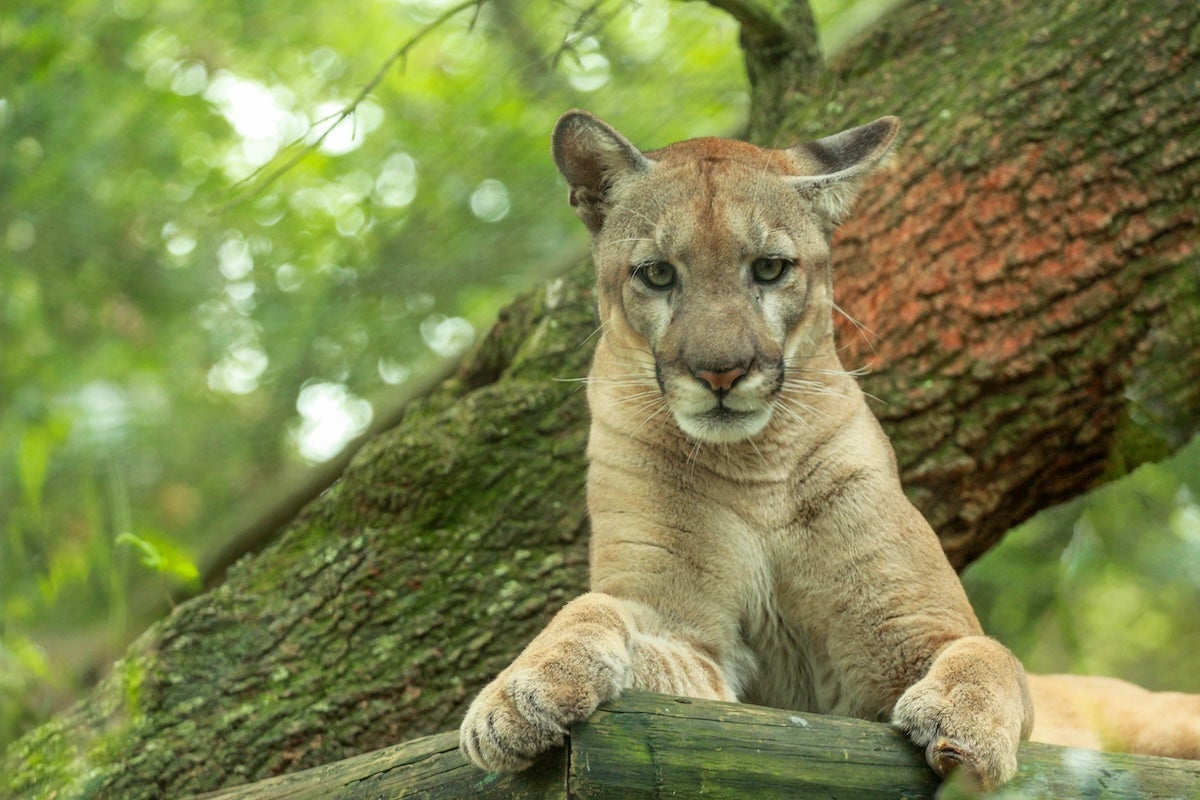
Highlights
Postdoctoral scholar and recent UCF grad George Zaragoza ’26PhD combined genomic data with habitat suitability models to examine how Florida white-tailed deer and panthers may respond to future environmental change.
The research found the southeastern Florida deer populations may be more vulnerable to changing environmental conditions than populations farther north. The findings could help wildlife managers make informed decisions about protecting habitats and vulnerable populations.
Florida panthers continue to have low genetic variation and limited adaptive potential despite a genetic rescue program in the 1990s, underscoring the importance of protecting suitable habitat.
Florida’s wildlife is closely connected to the environments it has inhabited for generations. But as temperatures rise and rainfall patterns shift, those conditions are changing, creating new challenges for species across the state.
For white-tailed deer and Florida panthers, those challenges may look very different. Southern deer populations could face greater pressure as rising temperatures and shifting water conditions alter their habitat, while Florida panthers’ limited genetic variety may restrict their ability to respond to future environmental change.
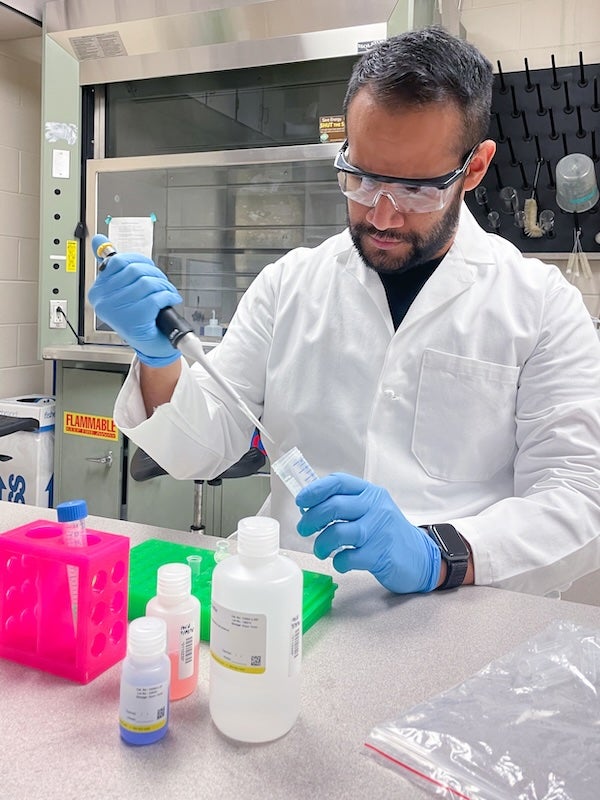 Postdoctoral scholar George Zaragoza ’26PhD works with samples in a lab. (Photo courtesy of George Zaragoza)
Research conducted by UCF College of Sciences postdoctoral scholar George Zaragoza ’26PhD combines genomic data with habitat suitability models to examine how suitable habitats may change and whether individual populations have the genetic variety and adaptive potential needed to respond.
“The main goal is putting this research on … the radar for wildlife managers so they can use it to implement conservation measures … ” — George Zaragoza ’26PhD, postdoctoral scholar.
The research revealed a latitudinal pattern among Florida’s white-tailed deer, with southeastern populations more vulnerable than those farther north. For Florida panthers, the concern is their low genetic variety and limited adaptive potential despite a genetic rescue program in the 1990s.
“The main goal is putting this research on these interconnected species on the radar for wildlife managers so they can use it to implement conservation measures that will help these species thrive in the future,” says Zaragoza, who earned a doctorate in integrative conservation biology at UCF.
South Florida Deer Face a Hotter, Drier Future
The greatest concerns for white-tailed deer are concentrated in South Florida and the greater Everglades, where projections indicate increasingly dry conditions over the next 50 to 100 years.
“The ecology of the South Everglades relies a lot on water dynamics and how populations respond to higher or lower water levels,” Zaragoza says.
For deer, those changes can affect the plants they rely on for food.
“If water levels are lower than historically expected, those nutrient-rich food sources may become less available,” he says. “Too much water can create a different challenge by making low-lying areas unreachable to deer.”
Central and northern Florida deer populations are projected to face similar conditions, though the shift is expected to be less pronounced than in South Florida.
Genetics Reveal How Deer Are Adapted to Their Environment
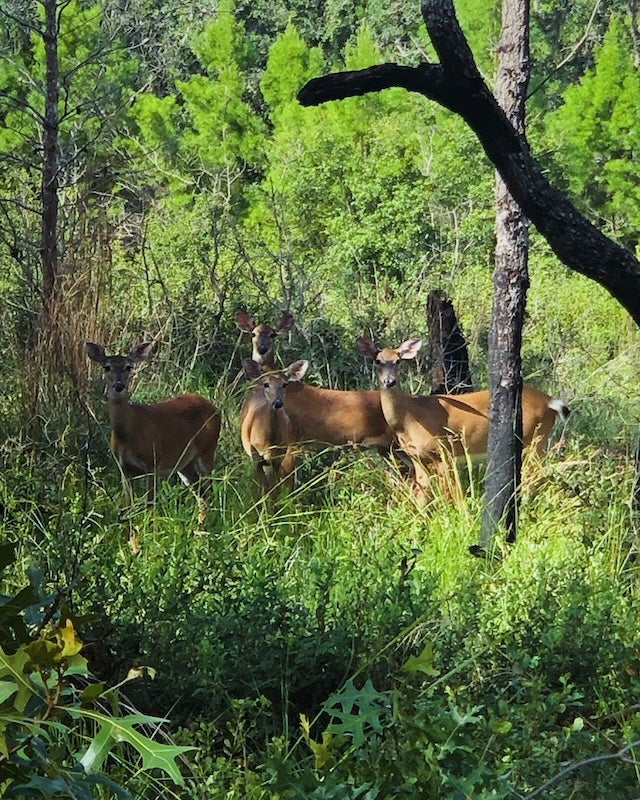 White-tailed deer in southeastern Florida face an uncertain future as rising temperatures and changes in essential resources like water and food alter their natural habitat. (Photo courtesy of George Zaragoza)
Zaragoza’s research also examined genetic characteristics that may help explain how Florida deer have adapted to their environments.
Two genes of particular interest related to circadian rhythm are THADA, associated with metabolism and thermoregulation, and PROK2, associated with the timing of nocturnal activity.
Zaragoza says the findings may point to a role in regulating seasonal metabolic energy use and reproduction-related physiological processes.
“There are consistently these sort of genes that are involved in the timing of these physiological processes that have to do with how deer are storing energy,” Zaragoza says.
Zaragoza also identified genes associated with immune processes more often than expected by chance. This may be particularly important in Florida, where deer are exposed to a wide range of viruses, including those transmitted by arthropod vectors such as ticks, mosquitoes and biting flies.
The research may also help explain why Florida deer have a different reproductive timeline than populations farther north. Differences in sunlight, temperature and other environmental conditions may have contributed to adaptations in these cycles.
Florida Panthers Face a Different Challenge
For Florida panthers, the primary concern is whether the species has enough genetic variety to respond to future environmental conditions.
The population experienced a severe genetic bottleneck, leading to a genetic rescue program in the 1990s that introduced Texas pumas into the Florida population.
While subsequent research has shown that Florida panthers remain a distinct population, Zaragoza’s research indicates that genetic variation remains low.
“With limited genetic variation, Florida panthers have limited adaptive potential, especially as their habitat is also threatened,” he says. “It highlights the importance of suitable habitat and ensuring that it remains for the future.”
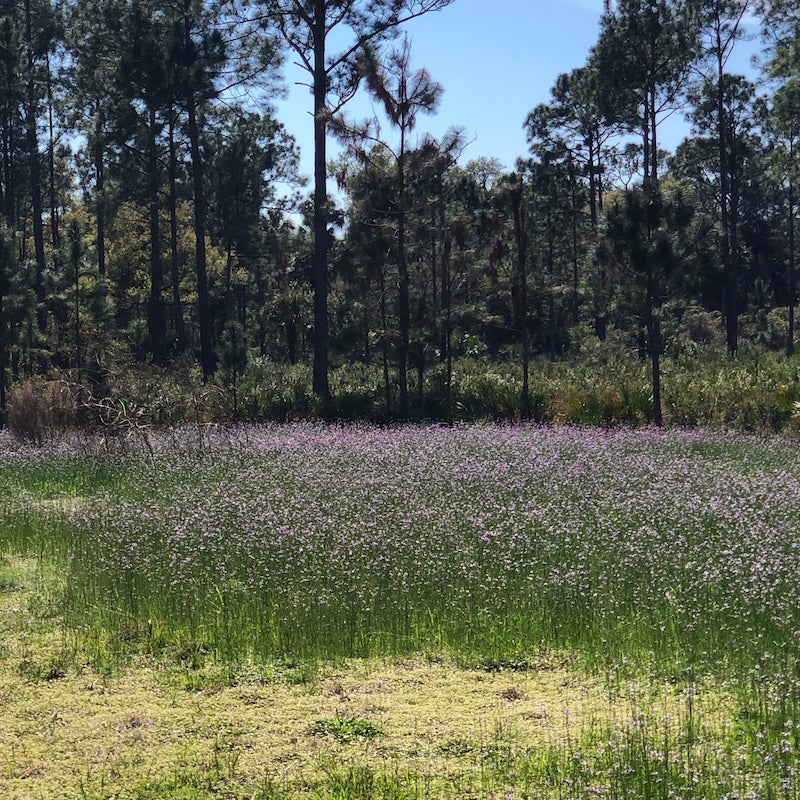 Zaragoza’s research indicates that Florida panthers lack the genetic variation needed to adapt to environmental changes and stressors. This analysis emphasizes the importance of protecting habitat to conserve Florida panthers and white-tailed deer. (Photo courtesy of George Zaragoza)
The research identified genetic variants involved in regulatory processes, including how and when genes are expressed. While this does not provide direct evidence of epigenetic mechanisms, it raises questions about whether epigenetic mechanisms could contribute to the panthers’ ability to respond to environmental changes despite their limited genetic variety.
“If a population with low genetic variation is able to use these epigenetic mechanisms to respond to future change, then that gives that population another potential way to adapt to future change that we’d like to better understand,” Zaragoza says.
For now, habitat protection remains particularly important for the species. Some South Florida habitats remain at risk of development or conversion, including in protected areas and wildlife refuges.
Connecting Genetics and Habitat
A central part of Zaragoza’s research brings together two types of information often studied separately: genetics and ecology.
By comparing projected changes in suitable habitat with genetics and adaptive potential, researchers can begin to prioritize populations based on vulnerability.
A population experiencing a substantial shift in suitable habitat may be better positioned to respond if it has high genetic variation and adaptive potential. Conversely, a population facing a similar environmental shift but lacking genetic variation could be at greater risk.
Zaragoza says this approach could give wildlife managers another tool for making decisions about Florida’s wildlife.
“There has been some work before, but especially in terms of environmental change, there really haven’t been these vulnerability assessments done with white-tailed deer and Florida panthers in the past,” Zaragoza says.
Making this information accessible could help managers identify populations that may need additional support, minimize habitat loss and consider strategies to protect vulnerable species.
An Integrative Approach to Conservation
For Zaragoza, the work also demonstrates the value of combining disciplines to answer complex conservation questions.
“There are so many tools and technologies available that really help us merge ecology and genetics into more of an integrative perspective,” Zaragoza says.
For him, understanding wildlife is ultimately about using science and technology to improve humanity’s relationship with the natural world.
“It comes down to realizing that we’re part of this greater ecosystem and we have a responsibility to steward it,” Zaragoza says.