
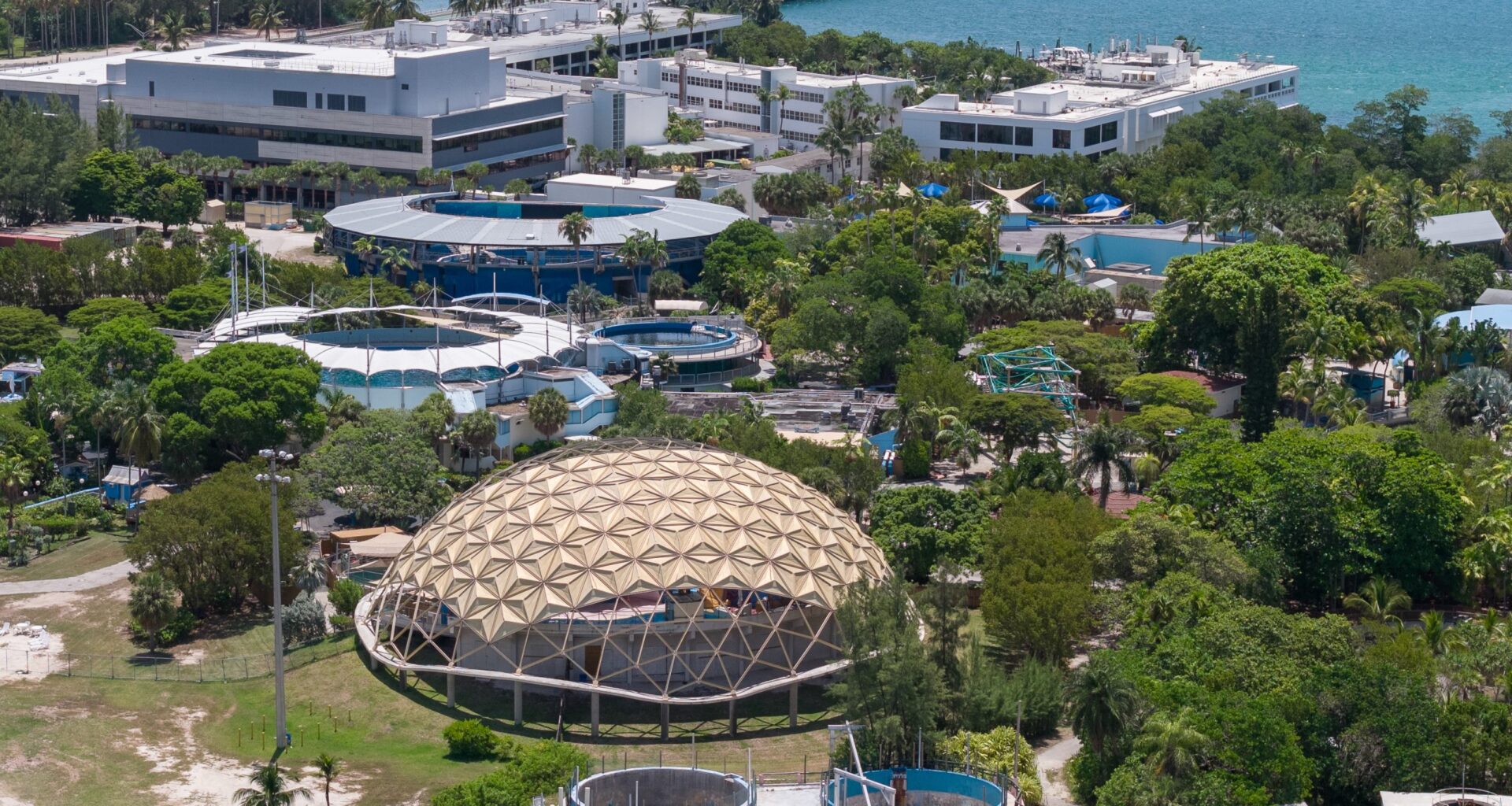
Developers hosted a webinar Wednesday evening on a $100M plan to renovate the Seaquairum on Virginia Key amid a lawsuit that claims voter approval is required for the proposal to go through.
County Commissioner Raquel Regalado, who represents Key Biscayne, was joined by developer David Martin, architect Walter Meyer and environmental lawyer Spencer Crowley, outlining the project’s components and commitments to conservation.
Martin said there’s been a year of stakeholder engagement with boaters, anglers, conservationists, Key Biscayne neighbors and marine experts.
Key Biscayne Mayor Joe Rasco has called a workshop meeting for October 27th to get a briefing from the planners.
“We have an opportunity to preserve a place Miami recognizes and give it a future that brings more people into a relationship with Biscayne Bay, and we want families to come here for years from now, and feel that we cared for this place, and took our responsibility seriously,” Martin said.
Martin said the Seaquairum will include:
An ocean walk that will wrap around the shoreline
A sculptural seaquarium trail with overlooks
The Seaquarium itself will feature shell-like architecture and living exhibits
A marine research center partnered with University of Miami where visitors encounter active science conservation and ocean technology
The signature geodesic golden dome will turn into a venue for performances, exhibitions, festivals and gatherings.
A world-class surf lagoon for recreation or competitions
A “harbor house” for food and drink
Martin and Meyer emphasized environmental commitments and conservation the most throughout the presentation. The aquarium itself will not hold marine mammals, and the County intends to responsibly source their fishing collection.
“We actually go above and beyond the requirements of law to insert both environment, restoration — back to sort of previous ecosystems in the area, ” Martin said.
Developers plan to expand sea grass management to support species that depend on it for nutrition, and increase oyster wetlands that polish stormwater. They also aim to use sponge docks on the project that could clean tens to hundreds of millions of gallons of water per day depending on distribution.
Never miss a story! Sign up for our FREE newsletter
Planners reiterated that they will not be dredging in this project, meaning they will not excavate sediment underwater that could destabilize habitats.
“That’s the reason we don’t have these super yachts and 300 foot boats that you’ve heard about that are not true,” Meyer said. They mentioned they have a shortage of public marina slips and they’ve designed the marina so that 85% of the fleet is under 60 feet and the dry stack will be solar powered.
Crowley said water will be managed to restore a steady-state flow of fresh and saltwater which will revise coral ecosystems. He also said the project will keep sewage off the bay, prevent chemical/oil spills, reduce stormwater pollution and cut marine debris.
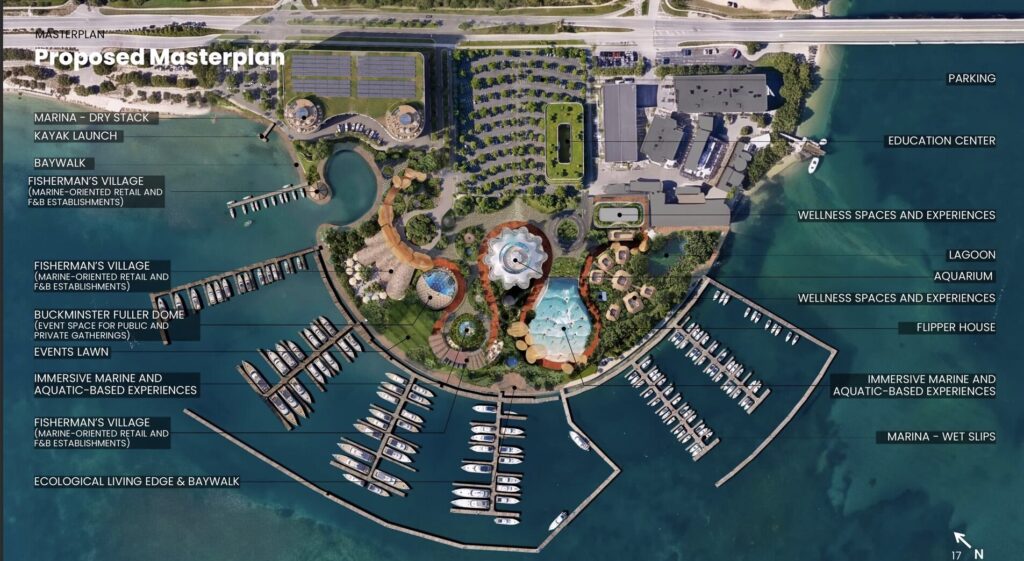 Graphic of the proposed Seaquarium overhaul, shown in a master plan slideshow during a Oct. 21 webinar hosted by county developers.
The pending lawsuit
Lawyers Gregory Frankel and Aaron Stauber are suing the project, arguing a referendum is required to decide whether Martin can renovate the park.
Frankel and Stauber, who both have backgrounds in environmental advocacy, say the development extends beyond the existing Seaquairum site and into Biscayne Bay where more than 300 boat slips will be built.
They said in Article 7 of the County Charter, voters must grant permission whether the waterfront site should be leased to a private developer for commercial use. Martin’s Resilient Aquarium LLC told the Miami Herald that Article 7 “specifically exempts both the Seaquarium and marinas from any referendum requirements.”
Still, Frankel and Stauber argue the exemption does not apply because the project is a commercial enterprise that would extend beyond the Seaquarium’s existing lease boundary into submerged lands in Biscayne Bay.
The County Commission is expected to vote Nov. 19 to finalize approval of the $100 million project, which was part of a deal involving a bankruptcy case of the former tourist attraction.
The lease would be 99 years.

Ava Menkes is a senior reporter with the Independent, covering local government and accountability. She graduated from the University of Wisconsin-Madison with degrees in journalism and political science, and minors in history, European studies and Eastern European/Central Asian studies. She is originally from Asheville, NC, and has interned with theRaleigh News & Observer,Wisconsin Watchand Isthmuscovering state politics. She also worked withThe Nation,and served as managing editor of her university’s paperThe Daily Cardinal, leading 2024 presidential coverage.