
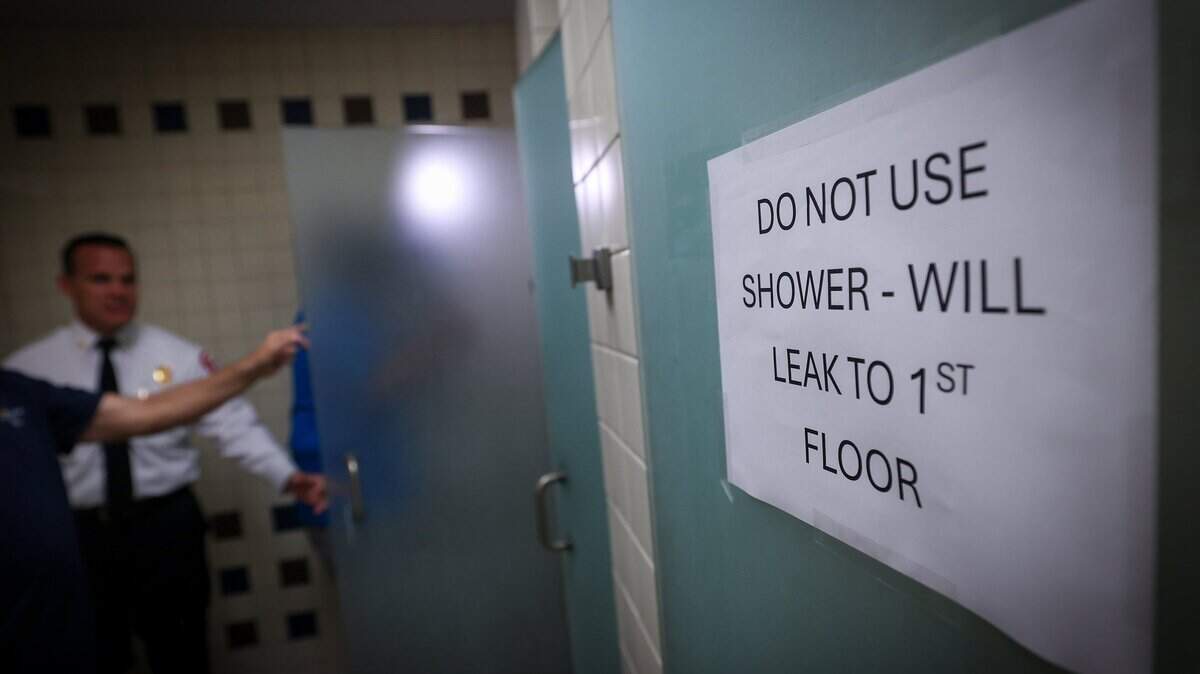
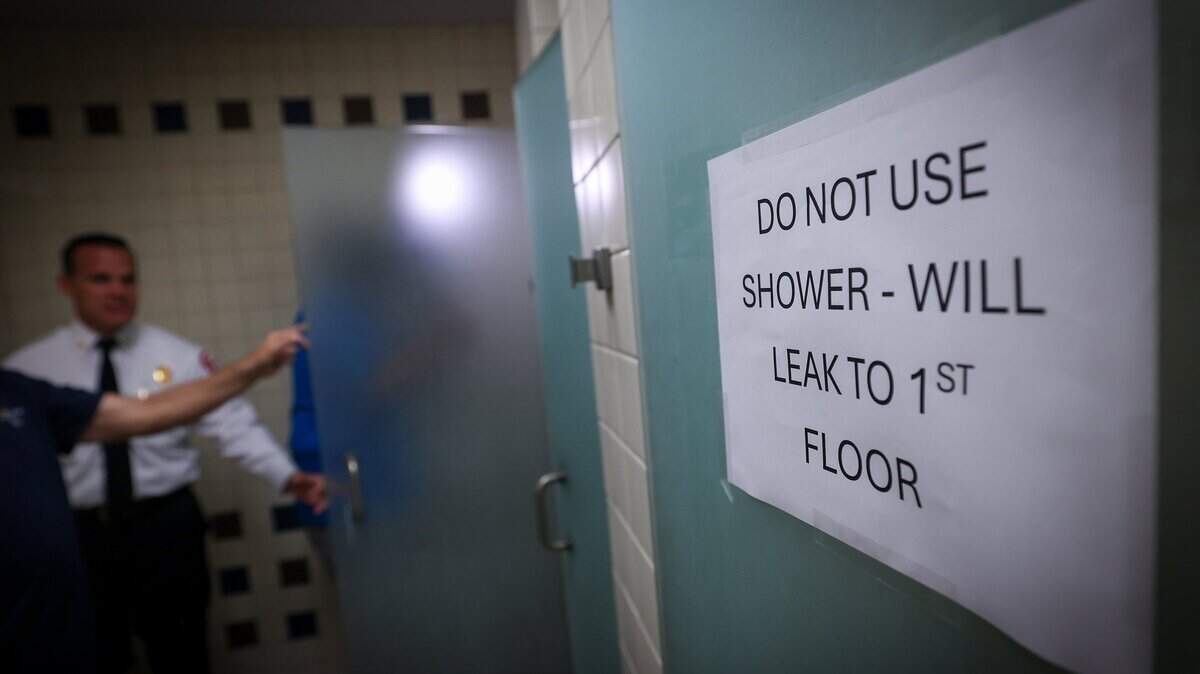
Miami Fire Chief Robert Hevia tours the shower and restroom of Fire Station 1, built in 1964, where mold, water intrusion and outdated equipment are hampering effective emergency response. Miami Mayor Eileen Higgins is proposing a general obligation bond to fund repairs and upgrades to aging public safety buildings.
Carl Juste
cjuste@miamiherald.com
When I took office as mayor of Miami, I promised residents I would take a hard look at what was working in our city government and what wasn’t. I’m an engineer by training. When I see a problem, I look for a solution.
What I found when I toured our police and fire facilities was horrific.
At Fire Station 1, a nearly 65-year-old building, electrical equipment is so outdated that replacement fuses have to be purchased from collectors on eBay. More than half of Miami’s fire stations are over 50 years old, with mold, leaking roofs and corroded plumbing. At police headquarters, officers have spent years putting trash cans under leaking ceilings. One veteran officer told me it’s been raining inside the building for 20 years.
These conditions are unacceptable for the men and women who put their lives on the line to protect ours.
Yet what concerns me even more is what happens outside those buildings.
Miami has neighborhoods where we haven’t built a new fire station in decades, even as our population has boomed. That means residents in places like South Grove, Allapattah and Liberty City can wait nine, 10, 11 or even 12 minutes for emergency help — far beyond the national six-minute response-time benchmark for life-threatening emergencies. (Residents can check their response time on the Safe and Ready Miami website.)
Think about what that means when your husband is having a stroke, your grandmother is having a heart attack or your child can’t breathe. Every minute matters — and when emergency responders can’t get there quickly enough, lives are at risk.
That’s why I proposed the Safe and Ready Miami public safety bond. If approved by city voters in November, the city will issue $450 million in general obligation bonds to pay for new public-safety buildings and upgrades at existing ones.
This isn’t about building fancy new headquarters or giving government something it doesn’t need. It’s about replacing deteriorating facilities, building fire stations where they’re needed most and giving our first responders the tools and infrastructure to do their jobs.
It’s also about doing so responsibly. I know Miami families are struggling with the cost of housing, groceries and everyday expenses. I think about that every time we make a decision involving taxpayer dollars.
When we break down the cost and share it as a community, our city’s finance department estimates the investment would cost approximately $2.38 per month in the first year for a typical homeowner. That’s less than the cost of a cup of coffee. I would gladly give up a cup of coffee each month if it meant helping save one of my neighbors’ lives. On average, households would pay $9.20 monthly for the life of the bonds beyond year one. Once the city sells the land the aging downtown police headquarters sits on, average costs would then reduce by $0.70 to $1.18 per month depending on the sale price, which is estimated between $70 and $100 million.
Of course, residents deserve to know exactly what they’re paying for. Unlike the Miami Forever Bond, approved by voters in 2017, this proposal identifies specific projects, so residents can see what will be built and where. It also includes independent annual audits and would not increase the city’s current debt millage rate. Accountability and transparency aren’t optional when we’re spending public money.
While borrowing money comes with a cost, so does waiting. Our estimates show that every year we delay adds approximately $20 million to the cost of these projects. Wait five years, and we could be spending $125 million more to address the exact same problems. Meanwhile, our facilities continue to deteriorate and families in zip codes across the city continue waiting too long for emergency help.
The city has known about these problems for decades. No one has offered a concrete alternative, and waiting isn’t a solution. I wasn’t elected to keep kicking problems down the road. I was elected to fix them.
We have a responsibility to spend taxpayer dollars wisely and protect the people who live here. I’m not comfortable leaving Miami families at risk for another five or 10 years, especially when delaying these improvements will only make them more expensive.
The least expensive time to address these problems is now. More importantly, acting now can save lives.
Eileen Higgins is the mayor of Miami.