
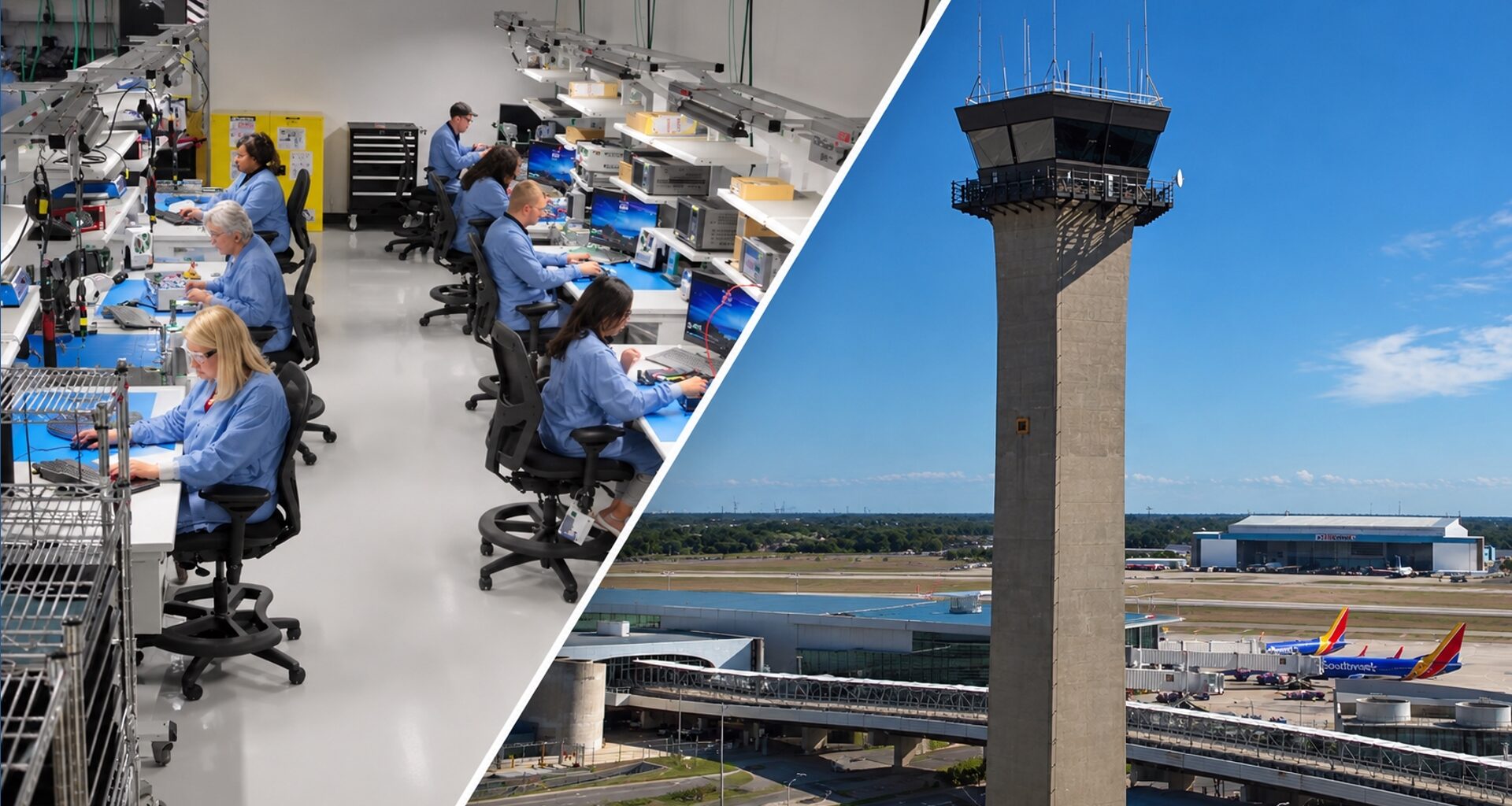
U.S. Transportation Secretary Sean Duffy visited the RTX radar manufacturing plant in Largo on Thursday.
LARGO, Fla. — The Tampa Bay region will play a key role in the Trump administration’s push to modernize the nation’s aging air traffic control system.
U.S. Transportation Secretary Sean Duffy and FAA Administrator Bryan Bedford visited RTX’s radar manufacturing plant in Largo on Thursday to see how the facility will contribute to the nationwide overhaul.

This story continues below.
The administration aims to replace aging infrastructure, including radars, software, hardware and telecommunications networks, by the end of 2028.
The Federal Aviation Administration says the current system remains safe, but equipment failures can cause delays as officials take steps to maintain safety.
In 2025, flight-delay minutes attributed to equipment issues were about three times higher than the average from 2010 through 2024, according to the FAA.
“If we do nothing, that makes our system less safe,” Duffy said. “To drive safety, we have to upgrade the systems.”
RTX, one of the world’s largest aerospace and defense companies, announced a $26.5 million investment in its Largo facility in May. The expansion is expected to add more than 100 jobs and accelerate radar production.
The company has had a presence in Florida for more than four decades and employs more than 7,000 people across eight major locations in the state.
But Duffy says RTX is now bringing its radar manufacturing back to the U.S. after years of doing so overseas.
“For 30 years, we haven’t built radar in America,” Duffy said. “As we’ve done this build, we’ve said it is imperative that if you want part of this contract, you’re going to build the radar with American tax dollars in America with American workers.”
Duffy said the broader modernization effort also includes new radars, radios, voice switches, surface awareness systems and telecommunications infrastructure.
He also pointed to the Tampa air traffic control tower as a priority for investment, saying it was among the facilities with the greatest need.
Congress approved $12.5 billion in funding for the modernization effort in 2025. However, the administration is now seeking an additional $30 billion to complete the project.
The proposed Modern Skies Act, introduced in September, would authorize the additional funding. As of Thursday, no vote had been scheduled.
Duffy said he hopes Congress will approve the money by the end of the year, expressing confidence that the effort has bipartisan support.
“American infrastructure is a bipartisan issue,” Duffy said. “I’ve seen a lot of Democrats and Republicans all supportive of what we’re trying to do.”
The administration’s goal is to complete the system upgrades by the end of 2028.