
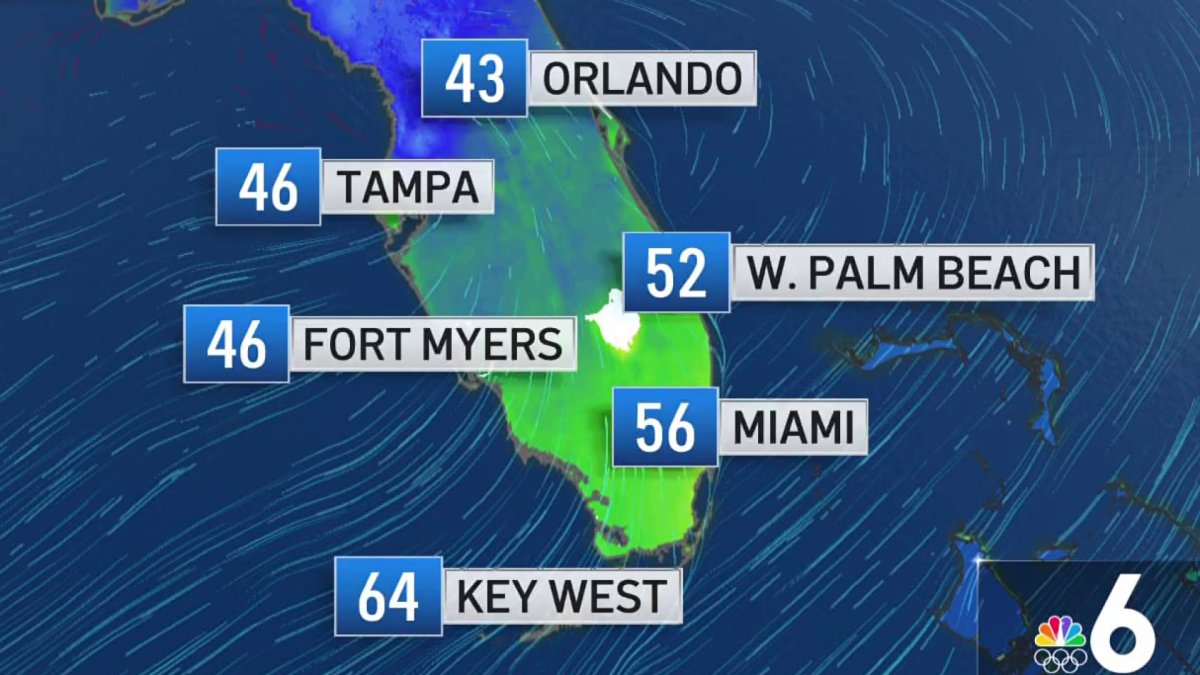
There’s a lot going on as far as weather this Wednesday: cooler-than-usual temperatures, and two different displays could light up the night sky (if you’re in the right place to see them).
Another chance to see the northern lights?
A strong geomagnetic storm recorded on Tuesday allowed the northern lights, or aurora borealis, to be seen across much of the northern United States, offering a rare spectacle at mid-latitudes.
According to the National Oceanic and Atmospheric Administration (NOAA), solar activity reached G4 levels — classified as severe — strong enough for the auroras to be visible much farther south than usual.
Throughout Tuesday night, numerous sightings were reported in states such as Kentucky, Indiana, Utah, Wisconsin, Wyoming, Colorado and even in Florida, where the sky was painted in shades of green, purple, and red, astonishing thousands of observers and astronomy enthusiasts.
Photos of the aurora came in as far south as Tampa with Tuesday’s magnetic storm, though it was not visible this far south with the naked eye. It was captured on camera, though!
G3 conditions are currently being observed. G4 conditions with a chance for higher levels remain possible throughout the day as another CME is expected to arrive midday (EST). pic.twitter.com/XcBmeNns4J
— NOAA Space Weather Prediction Center (@NWSSWPC) November 12, 2025
The last time South Florida saw the northern lights was May 10-11, 2024, during a stronger and rare G5 storm. The aurora wasn’t visible with the naked eye then, either. But photos did capture purple on the horizon in Key West and in the Bahamas.
The G4 storm continues on Wednesday night. However, it overperformed on Tuesday night, so South Florida should probably temper expectations.
The Taurid meteor shower
The Northern and Southern Taurids are sister meteor showers which have been going on from Nov. 5 to 12.
While the two showers only produce around five visible meteors per hour under ideal viewing conditions, they are often very bright fireballs, said Sally Brummel, planetarium manager at the University of Minnesota’s Bell Museum, last year.
“Unfortunately, in 2025, this display has — so far — been seriously hindered by the presence of a brilliant moon,” Joe Rao wrote in space.com. “This Wednesday night (Nov. 12) is probably the best night to watch, as there will be about 4 hours of dark, moonless skies to look for Taurids. Moonrise will come just after midnight, early Thursday morning.”
Wednesday highs to stay below-normal
It was still very cool on Wednesday morning with temperatures in the mid-50s! We’ve held the temps at this point since 11 p.m. Tuesday night.
But a slow warm up is to be expected Wednesday, as the air in place isn’t as dry. The dew points are up, so the temperatures can’t fall as low as they did Tuesday morning.
Highs on Wednesday remain below normal, but are expected to go into the mid-70s. This is still below average for this time of year, which is usually closer to 82 degrees. It won’t be as windy, but we do keep a light breeze.
Wednesday night, it will remain cool but temps should stay in the low- to mid-60s. Once the northeast wind takes over, the ocean temps are going to help us warm back up.
High temperatures by Thursday get closer to the upper-70s and by Friday, we’ll be back in the low-80s.
Each day is a touch warmer than the day before with no rain in the forecast.
Future forecast
Today
Partly sunny, with a high near 75. North wind 8 to 11 mph, with gusts as high as 18 mph.
Thursday
Mostly sunny, with a high near 78. North wind 8 to 11 mph.
Friday
Mostly sunny, with a high near 81. North wind 7 to 10 mph.
Saturday
Sunny, with a high near 81. Northeast wind 6 to 10 mph.