
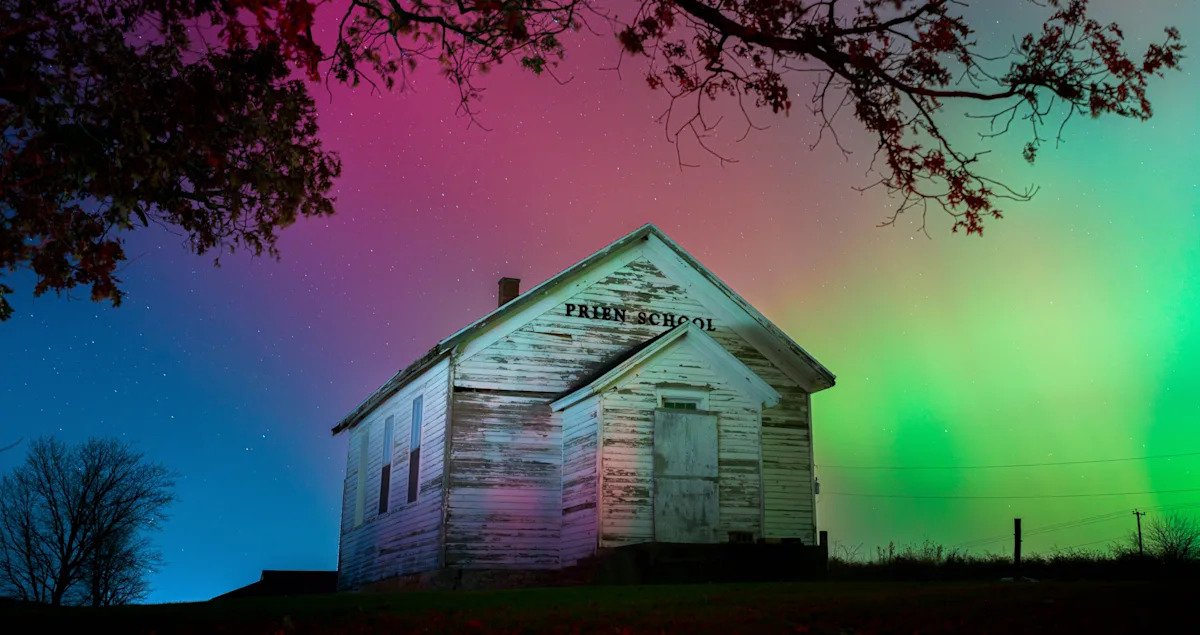
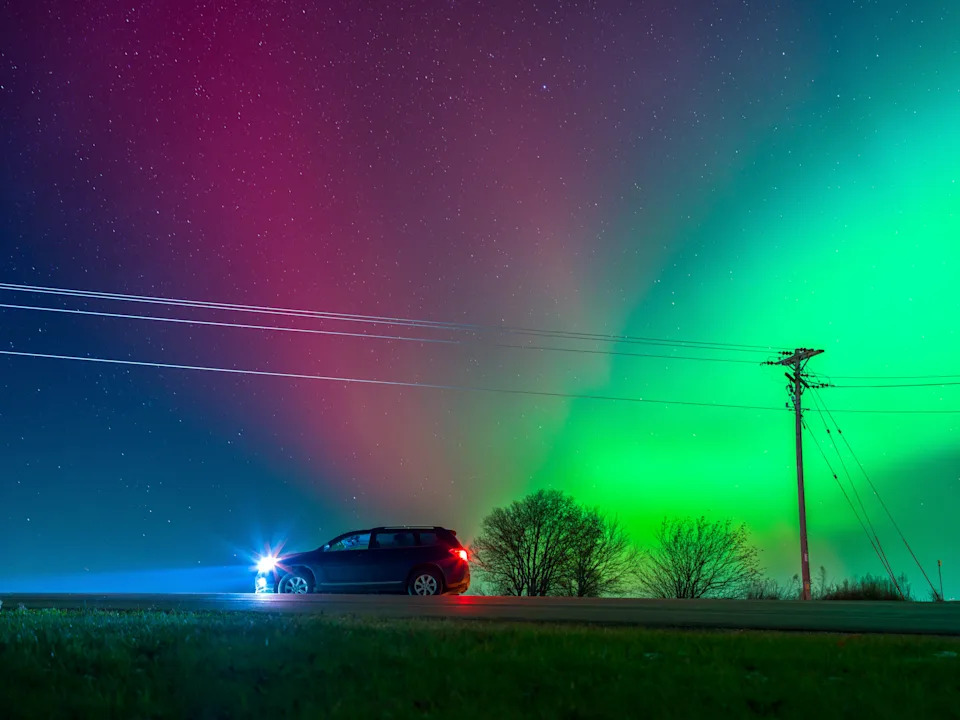
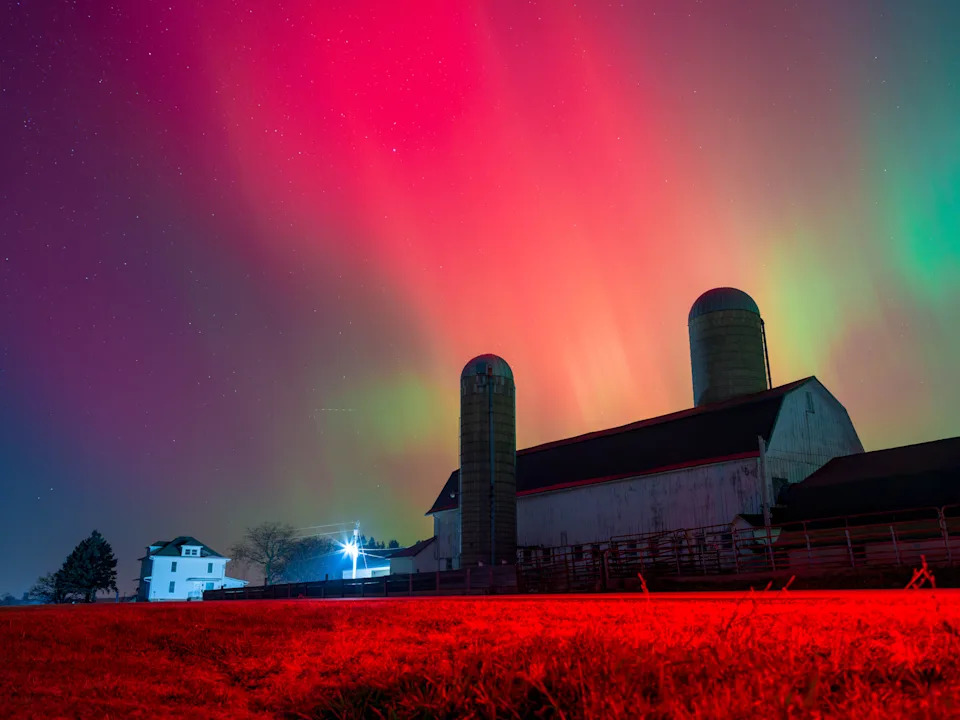
The northern lights put on a stunning show across a huge swath of the U.S. the night of Nov. 11, stretching from Wisconsin all the way to Florida.
The northern lights, formally known as the natural phenomenon of the aurora borealis, can project colorful lights best seen in the night sky. It happens when there’s an interaction between the sun’s plasma and Earth’s magnetic field, the National Weather Service explains. The sun has emitted charged particles toward Earth in the last few days, known as coronal mass ejections, or CMEs, which have been creating geomagnetic storms over North America.
For skygazer enthusiasts who may have missed the chance to see the northern lights on Tuesday, NOAA’s Space Weather Prediction Center says another illuminating night is in store for about two dozen states that could get another chance to see the spectacle again tonight, Nov. 12.
Advertisement
Advertisement
Advertisement
Advertisement
The following states could catch a glimpse of the aurora, according to NOAA’s forecasted view line, which is the southernmost point where the northern lights can be seen on the northern horizon. The best view of the aurora borealis is within an hour or two of midnight local time, per NOAA.
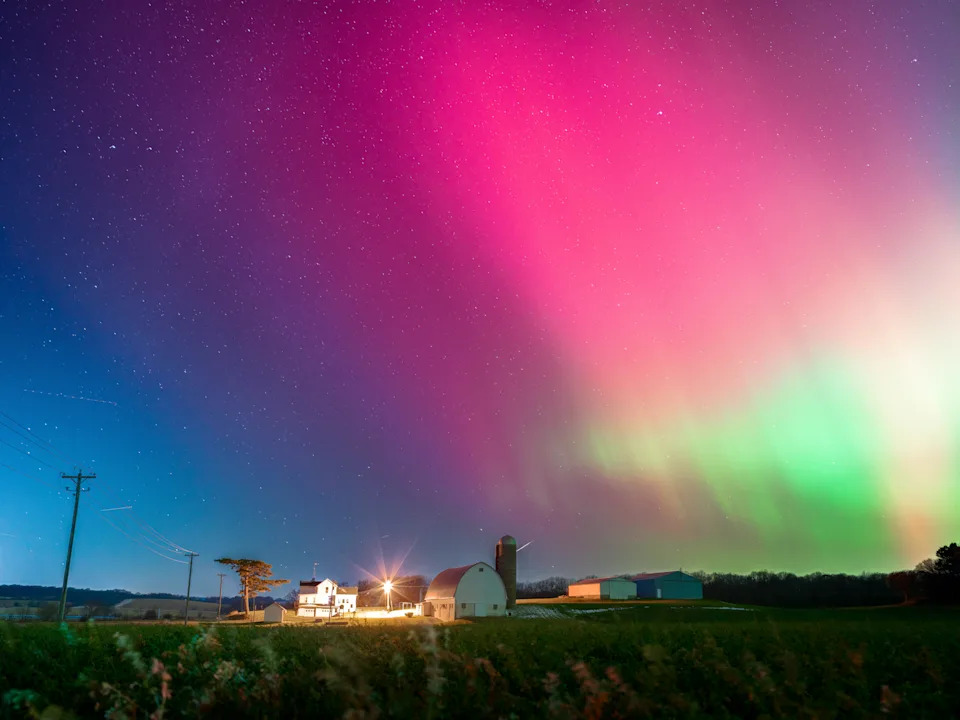
Ross Harried/NurPhoto via Getty Images
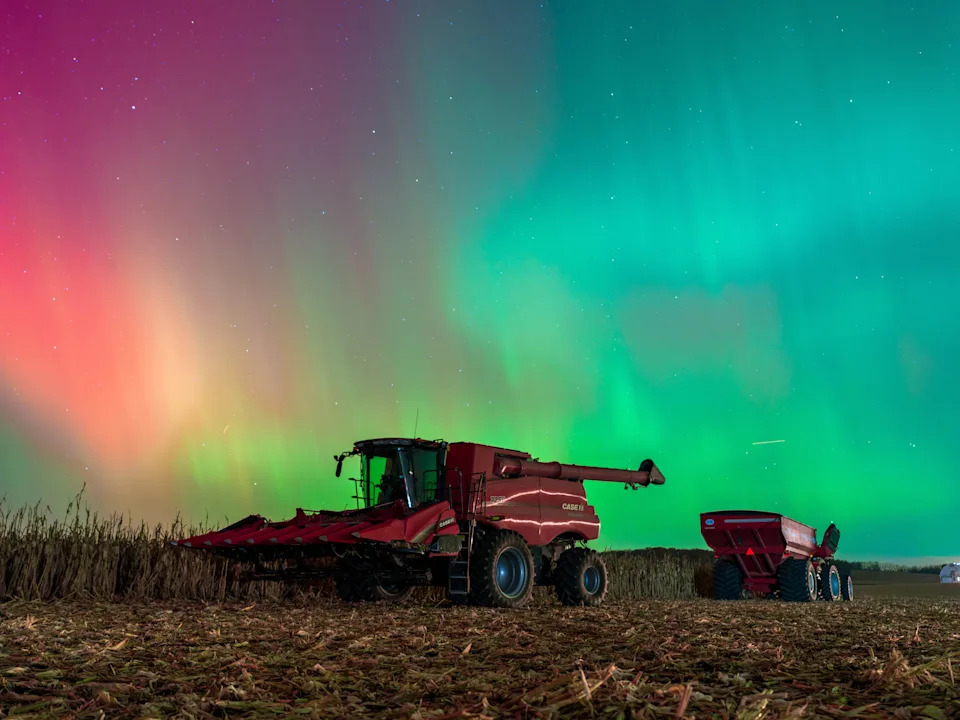
Ross Harried/NurPhoto via Getty Images
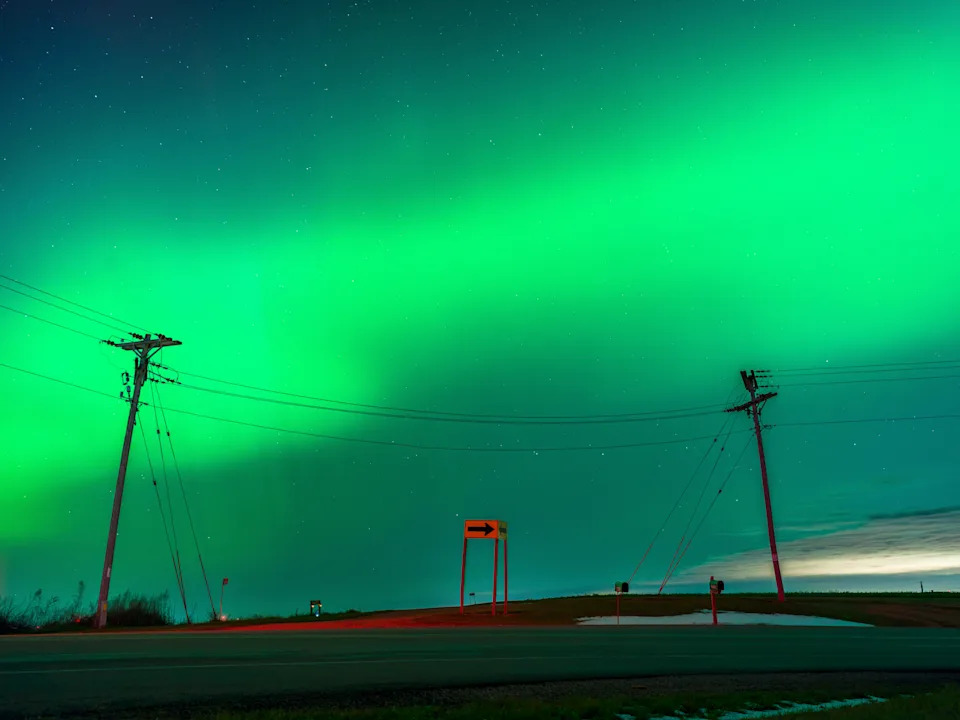
Ross Harried/NurPhoto via Getty Images
Ross Harried/NurPhoto via Getty Images
Advertisement
Advertisement
Advertisement
Advertisement
Ross Harried/NurPhoto via Getty Images
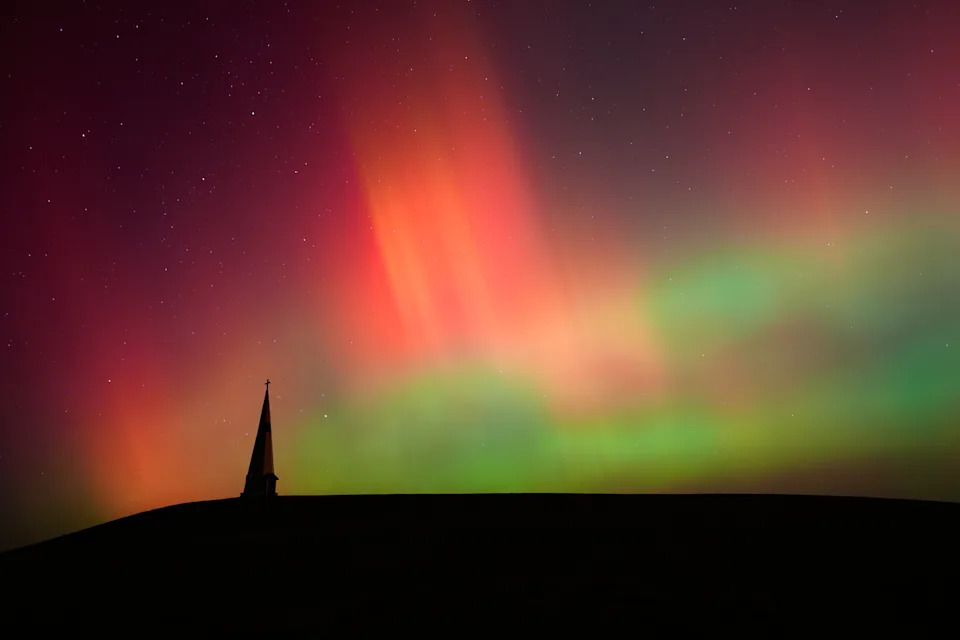
The northern lights fill the sky behind the Saint Joseph the Woodworker Shrine on Nov. 11, near Valley Falls, Kan. (Charlie Riedel/AP)