
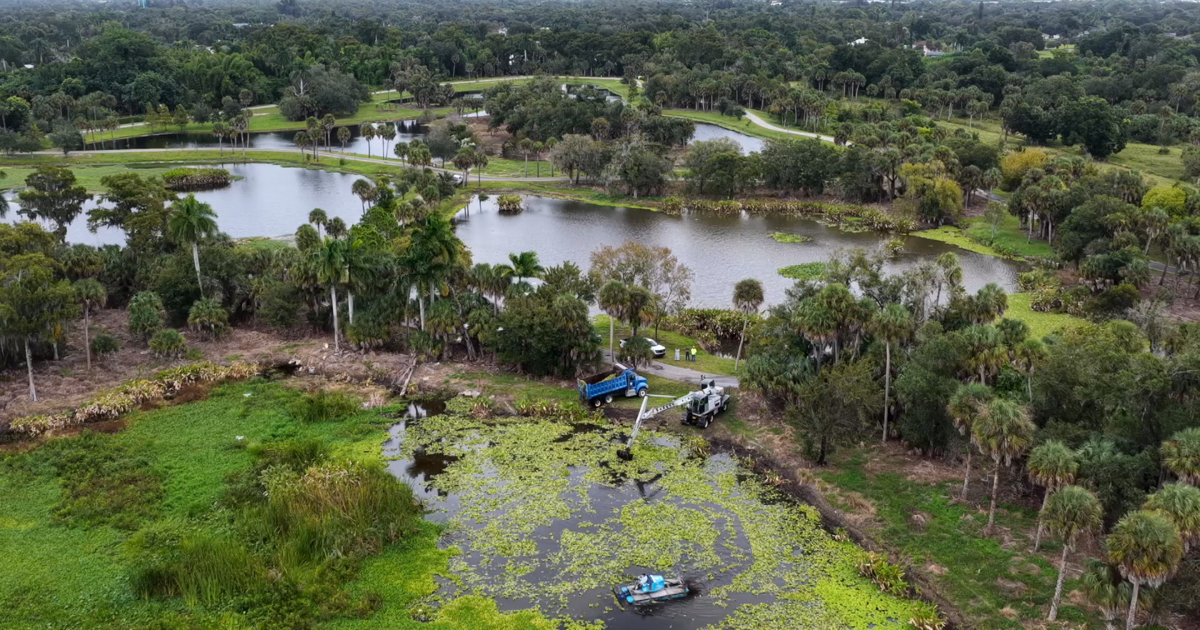
FORT MYERS, Fla. (WINK)—Fort Myers continued a multiday cleanup of Billy Creek’s filter marshes as crews removed overgrown plants from a system built to keep pollutants out of the waterway.

WINK News joined crews as they worked in the wetland filtration system, which treats stormwater runoff from surrounding urban areas before it reaches the Caloosahatchee River.
Derek Spoerl, Fort Myers stormwater resource manager, said Billy Creek has been absorbing runoff from Fort Myers and parts of Lee County for decades. As population and urban development have grown, that path has created a pollution problem.
“All the nutrient runoff from your urban runoff creates blue-green algae and your red tides and things like that,” said Spoerl.
The clearing process filled more than 30 truckloads with plant material in the first three days, and city leaders expected that total to double by the end of the week. Last month crews removed more than 30 truckloads from another filtration marsh near Billy Creek.
The cleanup effort required careful coordination. Tim Farrell, a contractor, worked on an aquatic weed removal boat to separate tangled roots and break up clusters of plants. Farrell pushed those plants towards land where city crews were waiting to scoop the debris into truck beds to be disposed of.
The city said it spent more than $10 million over six years on projects to improve water quality around the creek, including infrastructure upgrades, erosion control and wetland treatments, like spraying to prevent plant overgrowth.
Fort Myers also received $6 million from the Department of Agriculture to help clean polluted waterways, including Billy Creek, with work expected to wrap up in November.
The restoration effort includes removing sediment, trash and debris that stall water flow and support bacteria growth. It also includes cutting away tree canopies to increase sun exposure.
Billy Creek has faced pollution and evidence of potential fecal bacteria for decades.
“When those bacteria are found, it can be an indication of human or animal waste in the water, which can pose a risk to human health,” said Jason Pim, president of the Calusa Waterkeeper board.
Testing by Calusa Waterkeeper showed levels of potential fecal contaminants are down 57% from this time last year. Pim says, despite the improvement, the creek still poses a risk for recreational use.
“Some of these waterways need more work before they’re totally fishable, swimmable, and that’s our goal,” Pim said.
City crews will continue clearing overgrown plants from the water’s surface through the end of the week.