
The pollster projects an electorate that leans 13 points Republican.
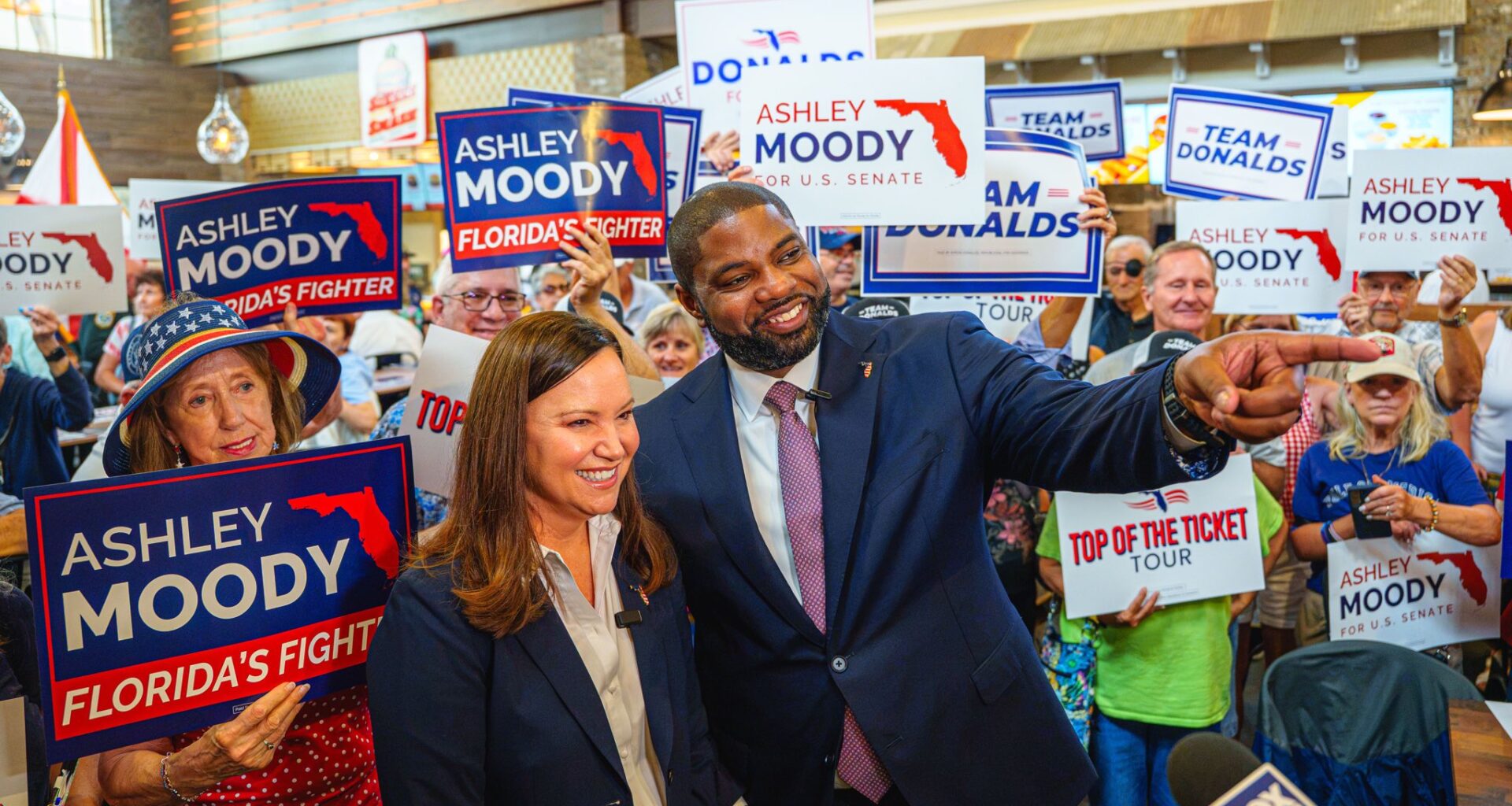
U.S. Sen. Ashley Moody holds a lead on Democrat Angie Nixon in the highly respected New York Times/Siena University poll. Perhaps more important, it shows the Republican appointed incumbent at the critical 50% support level.
That survey shows the Plant City Republican as the preference of 50% of likely voters, while 44% favor the Democratic challenger.
The same poll also shows Republican Byron Donalds winning 48% of the vote to Democrat David Jolly’s 44%.
According to the Times index of publicly available polling, the Moody lead is consistent with other pollsters’ findings. The numbers were published the same day as a Florida Politics-commissioned poll by St. Pete Polls showing a more modest lead of 49% to 45% for Moody. Additionally, ActVote published a survey with a more robust Moody lead of 53% to 47%.
The St. Pete Polls survey found Donalds leading Jolly by a narrow 48% to 46%.

New York Times analyst Nate Cohn said the polling was the least surprising result from Siena of the day. The pollster also found a tied Senate race in South Carolina between Republican Darline Graham and Democrat Annie Andrews and a 14-percentage-point lead for Democrat Peggy Flanagan in Minnesota.
“It’s worth observing that the poll suggests there will be a relatively robust turnout of Florida Republicans — reflecting the turnout history of Republicans in the state, even though Democrats have gotten off to a strong start in early voting,” Cohn wrote.
The poll of 813 Florida voters was conducted from Oct. 19-26, and pollsters report a 3.9-percentage-point margin of error.
Of note, the same pollsters in early October 2024 found Republican U.S. Sen. Rick Scott leading Democrat Debbie Mucarsel-Powell 49% to 40%, a wider margin than Moody currently enjoys but still putting the incumbent under 50%. Scott ultimately won the race by nearly 13 percentage points.
The most surprising finding from the new poll may not be Moody’s lead but that it suggests the electorate in Florida will lean 13 percentage points Republican in terms of turnout. That suggests far more Republicans will vote than have already done so by mail or through in-person voting.

Democratic strategist Steve Schale on Tuesday noted that GOP turnout in the state is below 2022 levels while Democratic and nonpartisan turnout is up, though he stressed observers should not read too much into early voting numbers.