
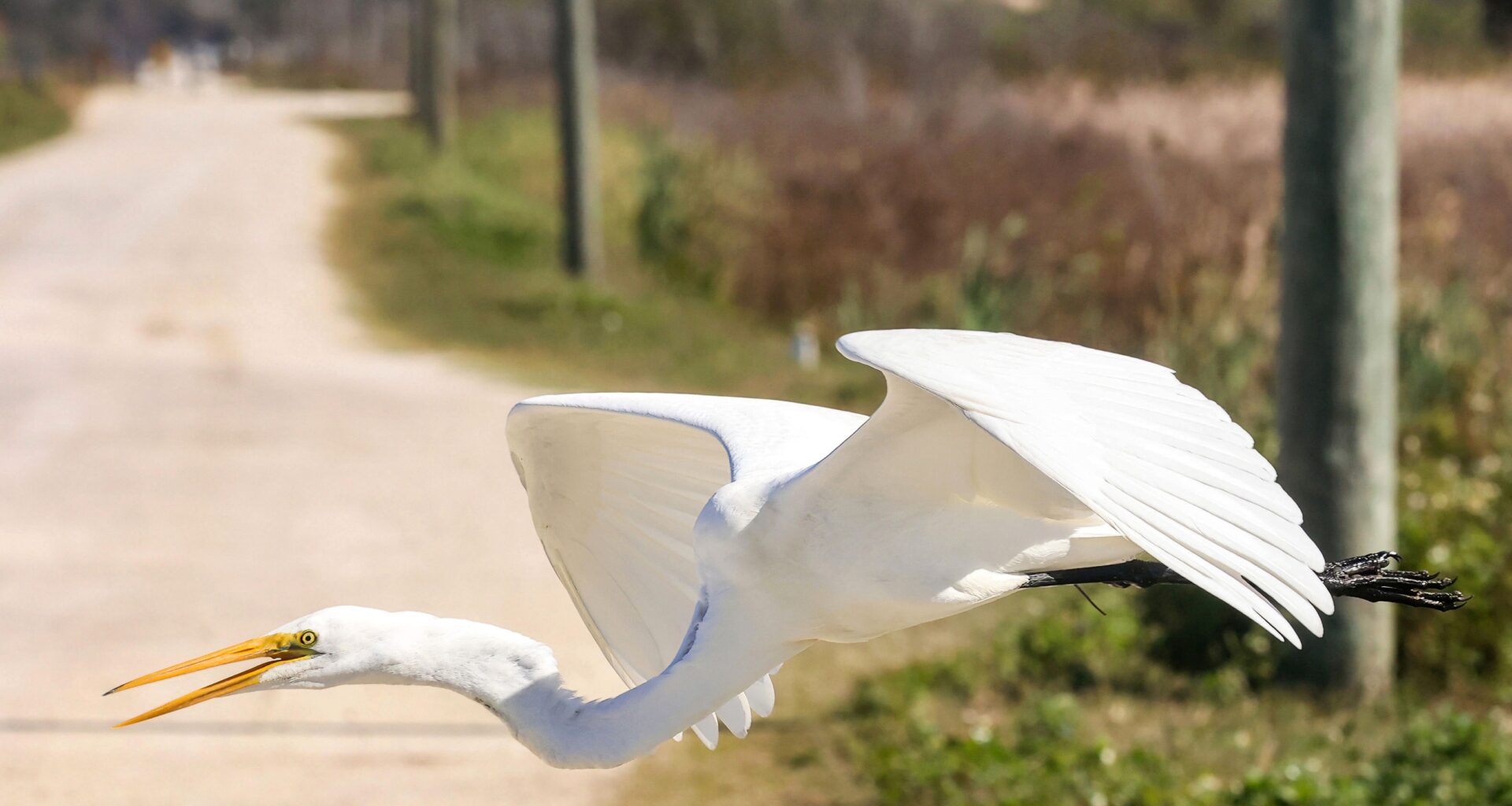
The Lake Apopka Wildlife Drive draws visitors from around the country and world, despite not being set up or promoted as a tourist attraction. It is an 11-mile drive through the Lake Apopka North Shore wetlands on old berm roads from the farming days. The big attractions are the abundance of alligators and, for the luckiest visitors, a river otter or even a bobcat — and the birds. The Drive winds through the eastern part of 20,000 acres of St. Johns River Water Management District wetlands, being restored to improve water quality in Lake Apopka. It feels really wild, although it is surrounded by some of Florida’s fastest growing communities. As you drive in, even just a few city blocks in distance, the quiet begins. All you hear is the chicken-like clucks of the gallinules, the liquid whistles of Boat-tailed Grackles and insistent chirps of Ospreys.
Public pressure for access was fostered by Orange Audubon that co-sponsored the Birdapalooza festival that introduced the North Shore. The Wildlife Drive was opened by the St. Johns River Water Management District in 2015. It is an anomaly among the District’s recreationally available properties in being so widely visited. The Drive is free, since it is a restoration area, not a park, and has limited amenities. Some people donate online, and donations are used for amenities on the Drive, as agreed by the District’s governing board. The District spends over $100,000 on road upkeep, for its restoration activities but also to accommodate all the visitor traffic. Portalets are kept clean.
The days that the Drive is open — Friday, Saturday, Sunday and federal holidays — are thanks to a change in schedule by District staff and contractors to a four-day work week. Construction activities for Lake Apopka restoration are carried out during the week; but the inner gates are carefully locked on Thursday after work, so the Wildlife Drive visitors, starting Friday, can enter but stay to the designated route.
Without staff there on the weekends to orient visitors, Orange Audubon stepped up with a Lake Apopka Wildlife Drive Ambassador program. Starting in 2020, volunteers staff an entry shelter on Saturdays and Sundays and give visitors the map and tips. A sign steers first-time visitors toward the shelter, while repeat visitors drive by. As visitation grew, from 27,000 in 2015 to over 10 times that in 2026, cars of first-time visitors frequently back up in lines. The Ambassadors must scramble and abbreviate their conversations.
When traffic is lighter, the Ambassadors have the opportunity to query the visitors where they are coming from. The volunteers ask how people heard about the Drive and even where they are staying. We have learned that these visitors — from Europe, South America, other states and other parts of Florida — have added the Wildlife Drive onto a planned visit to Central Florida’s attractions and stay an extra night or more to fit it in. To document this, our Ambassadors have started asking visitors to fill out a short survey as to where they are staying, where they heard about the Drive, etc.
Over time, we will see additional hotels built in West Orange County near the Wildlife Drive, but, at least for now, this visitation is a boon to hotels in the tourist district. As the Wildlife Drive is so close (35-40 minutes), many visitors simply extend their stay.
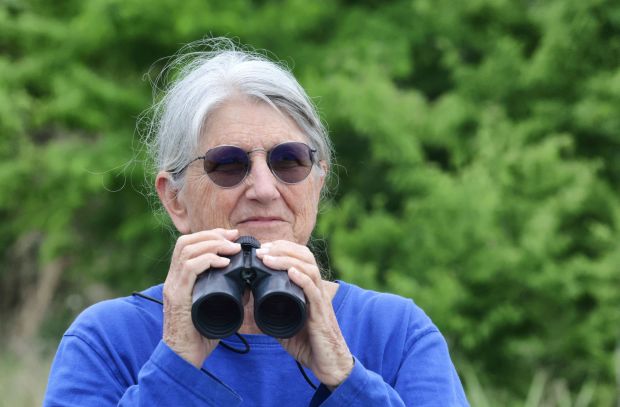 Deborah Green, president of Orange Audubon Society, bird watches near the entrance to the Lake Apopka Wildlife Drive on Lust Road in Apopka, Friday, March 22, 2024. The city of Apopka is working with the Orange Audubon Society and the Central Florida Chapter of the National Audubon Society to develop a 70-acre birding park adjacent to the entrance. (Joe Burbank/Orlando Sentinel)
Yes, the Lake Apopka Wildlife Drive is free and no one directly makes any money, but a 2018 Lake Apopka Wildlife Drive Ecotourism Study by the University of Florida, funded by the District, calculated that visitation brought $3.6 million into the local economy through expenditures for gas, food and lodging. That was when visitation was about 100,000 people a year. Extrapolating to the 2026 visitation of 329,801 people driving in and another 21,000 walking in, as of mid October, the economic impact of visitation to the Wildlife Drive could be over $10 million.
Orange Audubon has always promoted ecotourism as a way to economically justify conservation, and now with the possibility of Tourist Development Tax funding for a natural history museum at the entrance to the Lake Apopka Wildlife Drive, we are more motivated than ever to accumulate data. Hoteliers could survey their guests as to their destinations, to confirm our data. They may be surprised at how this quiet, almost accidental attraction is adding to their bottom line.
Deborah Green is the president of the Orange Audubon Society and chair of the Apopka Birding Park Working Group.