
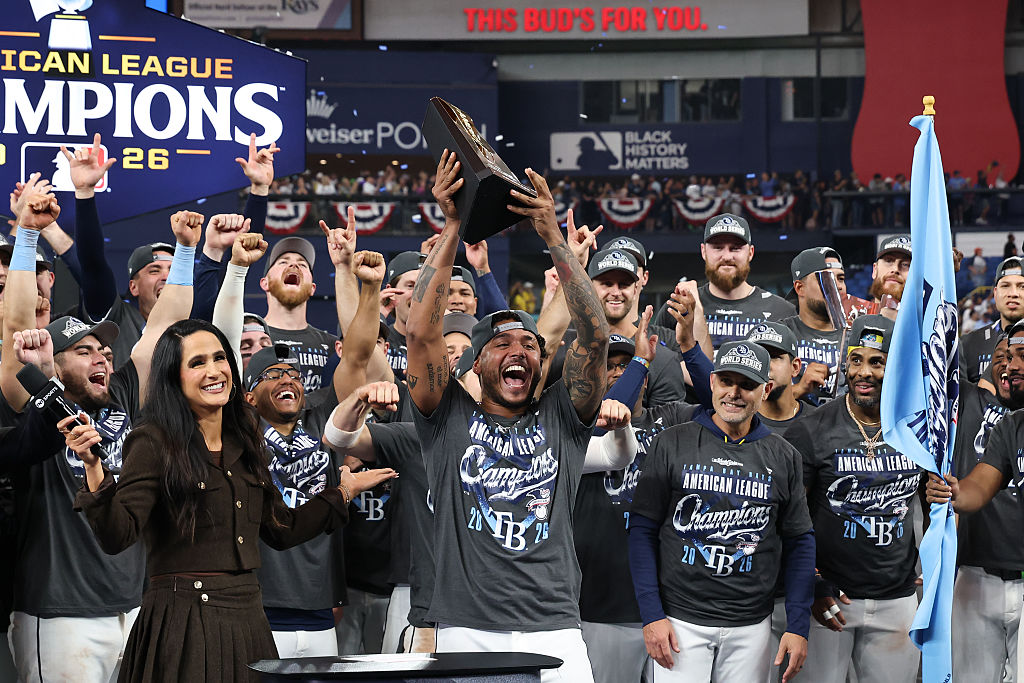
By the end of the season, Caminero had established himself as not only the face of the Rays franchise but also one of the faces of Major League Baseball. He delivered clutch home run after clutch home run during Tampa Bay’s late-season push toward the playoffs and came through on one of the biggest stages in October.
In Game 6 of the ALCS, Caminero helped put the finishing touches on the Rays’ victory with a massive home run off one of the game’s premier relievers, Cade Smith.
His emergence was about more than just the home runs, though. Caminero had officially arrived as a superstar, and he gave Tampa Bay the kind of middle-of-the-order presence that every championship-caliber team needs.
While the lineup provided its fair share of fireworks, the true catalyst behind the Rays’ World Series run was their pitching staff.
Tampa Bay’s arms were dominant throughout the season, finishing near the top of the league in the majority of major pitching categories related to run and hit prevention. They also issued fewer walks than any other team in baseball during the regular season, further highlighting the sound, fundamentally strong brand of baseball that has become synonymous with this organization.
Despite the overall quality and depth of Tampa Bay’s pitching staff, we would be remiss not to single out the ace and leader of this staff, Drew Rasmussen.
At 30 years old, Rasmussen is experiencing the greatest heights of his career. Throughout his 20s, he was plagued by arm injuries, including multiple UCL surgeries, which limited him to just one 100-inning season in his first five big league campaigns. At times, he was even transitioned into a bullpen role to limit the wear and tear on his right arm and keep him on the mound.
For Rasmussen, talent was never the concern. He had always shown the ability to produce front-of-the-rotation stuff. The lingering question, however, was whether he would ever be able to fully tap into that potential and become a true workhorse for Tampa Bay.